‛Do you have any ancestors who died in the War?” a sophisticate asks a naÏf in Whit Stillman’s The Cosmopolitans. Because that nosey question follows the socialite’s class-based dismissal about “the Civil War and you all losing so badly,” it’s quite a zinger. Vagaries of American social history always preoccupy Stillman’s characters. Background and tradition are subtly meaningful for them, which makes Stillman’s tales more surprisingly amusing than most other films.
Stillman’s characters — described as “doomed, bourgeois, in love” by the waggish filmmaker himself — appear refreshed in The Cosmopolitans, a short-film pilot for an anticipated Amazon.com web series. But moviegoers should already know them from Stillman’s four previous features — Metropolitan, Barcelona, Last Days of Disco, and Damsels in Distress — and, of course, from life.
How un-American that few American movies portray Stillman types — unapologetically white middle-class conservative strivers. That “unapologetically” is due to Stillman’s operating outside the usual filmmaking pretenses — Hollywood’s peculiar racial politics, which sentimentalize most other struggling ethnicities but never White Anglo Saxon Protestants. He belongs to the rare tradition of wags including Philip Barry and Preston Sturges, but with a tone and dialogue style all his own.
In The Cosmospolitans, four young American expatriates reside in Paris — a cultural escape that brings them face-to-face with themselves. Comic, heartfelt entanglements with Continentals (as lusty and avaricious as Americans) show what “doomed, bourgeois, in love” really means.
Each cosmopolitan is amusingly self-complicated: Best friends Jimmy (Adrian Brody) and Hal (Jordan Rountree) dub themselves “Parisians,” which describes their yearning to burrow “deeply within the French beast and infiltrate French society at its most resistant” — that is, hooking up with indigenous femmes. Their coterie includes Italian roué Sandro (Adriano Giannini), local opportunist Fritz (Freddy Asblom), and single girl Aubrey (Carrie MacLemore), newly arrived from Alabama (she’s the one descended from Civil War veterans). All privileged, all pale and good-looking, they all also have a quaint sense of doom — a romantic sensitivity and self-pity despite class and race advantages. Stillman recognizes their homegrown petulance. It’s not racist resistance to changing demographics, as Leftists pretend, but an inbred dread, born of an instinctual, romantic optimism that they fear will never benefit them.
This goes deeper than Philip Barry (Holiday, The Philadelphia Story) — deeper even than the contemporary TV programs and films that give superficial views of race or class. Damn Sex and the City, Friends, and Woody Allen’s deplorable Midnight in Paris, which all deliberately avoided bourgeois self-awareness and thereby cheated viewers of full social and psychological understanding.
Stillman appropriates Offenbach’s La Vie Parisienne rather than another cliché look at La Vie de Bohème. Since he is not a hipster like his American Eccentric contemporaries, his vision of middle-class Americans living poor (that squeezed view of the Seine from Aubrey’s flat) takes up where Wes Anderson left off in his startling short film Hotel Chevalier but then never returned to, retreating instead into the juvenile hijinks of The Grand Budapest Hotel. Stillman’s Europe is adult enough to observe earnestness and affecting foible within his characters’ desperation. Hal confesses, “One aspect of expatriate life never talked about: the loneliness. It’s something you experience in childhood and never expect to feel again. A feeling of being hollowed-out and a void inside that will ever be filled.”
Stillman’s sociological satire sticks out from our increasingly inane, childish commercial cinema (hence the overrated Boyhood and Budapest Hotel). His Amazon.com short might be the best series pilot since formalist master Walter Hill’s Deadwood (which immediately turned to dreck when Hill decamped). Only Stillman could do The Cosmopolitans because he’s the rare American filmmaker with both class-consciousness and self-effacing humor. (That means none of the mean-spirited, social-climbing self-absorption seen in films by hateful Stillman clone Noah Baumbach.)
The polished look of The Cosmopolitans (videographer Antoine Monod shoots Aubrey’s glass of kir as if peering through psychological amber) attests Stillman’s developed technique. He intercuts Hal’s flashback with Aubrey’s wandering along the Seine, combining their backstories and shared emotion. And Giannini’s older, jaded character (he calls himself “Parigi”) recalls the ancestral UHB (Urban Haute Bourgeois) who frightened the youths in Metropolitan by seeing through their callowness. This rascal, named Sandro, must refer to Gabriele Ferzetti’s spiritually exhausted stud in Antonioni’s L’Avventura, the ne plus ultra of Europe’s doomed, bourgeois, and in love.
Although Stillman had seemed to be falling into dreaded Mumblecore with Damsels in Distress, this short film outstrips Mumblecore in every way. Its cinematic essence can be seen in suspended moments like the entrancing introduction of Clemence (Clementine Beart) and the sneaky presentation of playboy Tom LeTombeur (Thomas Jouannet). These seed scenes are planted to bloom in upcoming episodes or just to exist as fascination. Every character mirrors the others so that flaws and innocence, ambition and folly attain a complicated humane balance.
Their captious dialogue is never merely clever but always telling. My favorite: Aubrey’s remark about fashion editor Vicky (Chloe Sevigny): “You expect journalists to be ugly because of the anger, but she’s quite attractive.” The humanity is in the words’ rhythm; speech rhythms release Stillman’s humor — as with his fondness for dance, reintroducing “The Sambola” from Damsels in Distress. It relieves his young WASPs’ formal stiffness: Catch Jimmy’s hunched, prayerful stance when desolate on the street after midnight — he is not praying for a cab (as Jackie Wilson’s supernal “To Be Loved” lets us know). Stillman’s musical choices throughout, such as pop-gospel singer Joan Osborne’s English and French versions of Jimmy Ruffin’s “What Becomes of the Broken Hearted” (Jimmy’s a totemic Stillman moniker), lift this brisk delight to Eiffel Tower heights.
***
Using R&B classics in a white folks’ reverie, Stillman achieves an ideal cultural crossover — a mix that makes you rethink how pop culture represents American class and race differences. That’s also the subject of two new films: Thomas Allen Harris’s documentary Through a Lens Darkly: Black Photographers and the Emergence of a People, and Tim Sutton’s impressionistic blues drama Memphis, which opens Friday in New York and next week in Los Angeles.
Harris, a personal filmmaker like Stillman, lets his own experience influence his form so that brief excursions into the hidden lives of gay people in family portraits are fascinating. Harris’s political argufying is less so, but by raising the issue of racial representation, he opens up the same fresh perspective on American class and social habits as Stillman.
Sutton works like a painstaking artiste, posing singer Willis Earl Beale wearing an Otis Redding Afro in rambling etudes of the Tennessee town, pondering his church background and musician career. It’s the old sacred/profane schism kept deliberately obscure. Sutton’s true aim is artsy patronization, like Portugese cineaste Pedro Costa’s detached stereotypes of African immigrants stuck in Lisbon ghettos.
Both these essays on historical and contemporary methods employed to capture black Americans in photographic images are symptomatic of the American filmmaking problem that objectifies race only when blacks are the subject. Harris analyzes his own intimate understanding of how these images affect one’s sense of self, while Sutton remains an outsider, depicting black American art and religion with beautiful compositions but less insight than early-20th-century music ethnologists. Harris feels exiled by his own art and attempts to do something about it while Sutton, by choice, is expatriated from his own country’s culture. He uses blues myth to trap his black characters in an art frieze.
These issues stir the heart of The Cosmopolitans — a story about Americans abroad that avoids rote bromides but keeps a lively, trenchant sense of authentic American character. Stillman reveals aspects of American behavior that Hollywood always misrepresents while cranking out films that condescend to working-class sentimentality even when characters are millionaires.
But Stillman’s approach (part Jane Austen, part Fitzgerald, part Eric Rohmer and part confessional) restores spiritual yearning to class consciousness. If The Cosmopolitans eventually becomes an Amazon.com series, it will be more than a career lifeline for Stillman, and it should help Americans understand themselves in a truly multicultural sense that most Hollywood and indie filmmakers just don’t get.
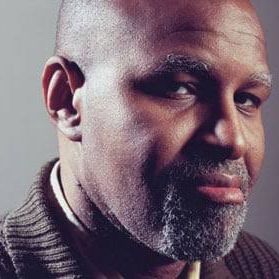
— Armond White, a film critic, writes about movies for National Review Online and received the American Book Award’s Anti-Censorship prize. He is the author of The Resistance: Ten Years of Pop Culture That Shook the World and the forthcoming What We Don’t Talk about When We Talk about the Movies.




Comments
On “Expats Abroad and at Home”