We owe to thinkers such as Michael Polanyi and Stanley L. Jaki — two brilliant Hungarian émigrés — a growing awareness over the last 75 years of the dangers of reductionist science: the view that the human person is “nothing but . . . ” something physically measurable or specifiable, and that everything else about the person is merely a false appearance or “epiphenomenon.”
Regarding the understanding and study of language, no specialist has been more important in counteracting this reductive scientific materialism, or “scientism,” than the linguistics scholar Noam Chomsky. Critiquing the attempts of Darwin, and implicitly of his followers, so to reduce the human language faculty as to assimilate it to animal behavior, Chomsky has written: “It is now understood that the linguistic achievements of infants go far beyond what Darwin attributed to them, and that non-human organisms have nothing like the linguistic capacities he assumed.” He goes on to say that “the property of discrete infinity is only one of many essential differences between human language and animal systems of communication or expression,” and, “for that matter,” between human language and all “other biological systems rather generally.” Commenting on and explaining Descartes’s dualistic view of human nature, Chomsky defines and defends his view that “thought” is “a unique human possession based on a principle that escapes mechanical explanation: a ‘creative’ principle that underlies acts of will and choice, which are ‘the noblest thing we can have.’ . . . The most striking example for the Cartesians was the normal use of language.” Chomsky adds laconically: “It is worth bearing in mind that these conclusions are correct, as far as we know” (On Nature and Language, Cambridge University Press, 2002).
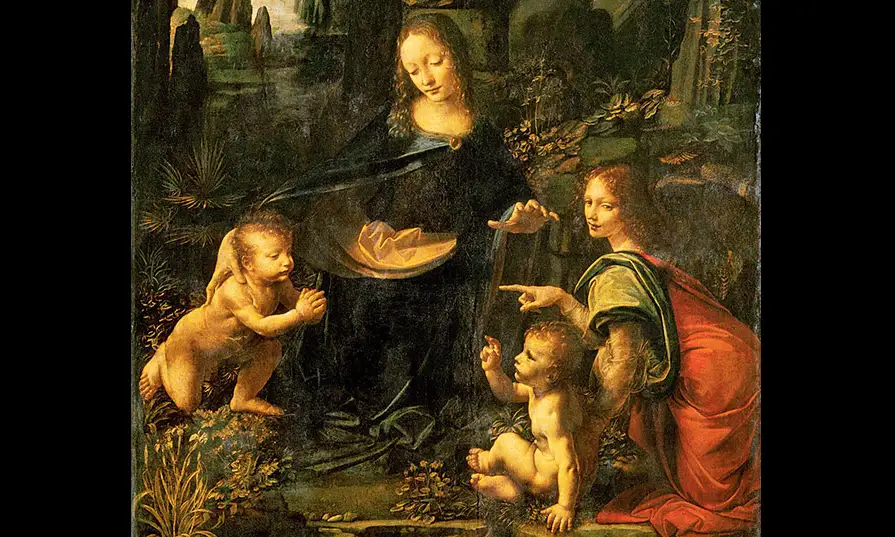
When we are born, we are inducted into a human landscape or matrix through the agencies of love and language — first of all, the mother’s love and language. The need and disposition of the child to trust, and of the mother to care and nurture, are the bases of the transmission of ethics and of civilization itself, as the philosopher Hans Jonas has argued in “Parent–Child Relation: The Archetype of Responsibility.” These needs and dispositions have the character of something “natural” only in the sense that they are native to human beings, analogous to but also quite distinct from the automaticity of animal behavior in nature. This form of culture is in fact “super-natural.” At least as far as we can determine — a large proviso — the analogy with even the highest primates is remote, partial, and intermittent. The word “instinct” denotes a set of mysteries and begs important questions, as the medical doctor and award-winning London science journalist James Le Fanu has recently argued in Why Us? (Pantheon, 2009); but it does denote an apparently innate automaticity of animal response. Chomsky quotes the Harvard ethologist Mark Hauser as concluding (reluctantly, we may imagine, as he is a specialist in nonhuman primates) that by comparison to human language “there is nothing analogous in the animal kingdom.”
If the mother herself is both at least minimally civilized and virtuous, “natural” in loving and caring for her child and inducting it into the human world, she inevitably conveys to it a tissue of valuations, through action, gesture, and language, that builds and elicits human personality and character in the child. This process includes habits of observation, of valuation, and of evaluation. There is no collective, social civilization and no individual rational maturation of the child without this actual, symbolic, and linguistic development of the child. In Aristotelian-teleological terms, the child moves from being an animal capable of reason (animal rationis capax) toward being an actual “rational animal.” Roger Shattuck’s very moving book on the fate of the feral French “wild boy of Aveyron,” The Forbidden Experiment (Farrar Straus, 1980), is an indispensable document in this regard, showing with great insight and pathos what happens if the child is denied this crucial maternal mediation in the early years.
The mother and, subsequently, the father, and an increasing number of other significant adults elicit from the child behavioral and linguistic responses that are, ideally, constantly corrected and augmented. But unless these adults and their older children themselves share a set of valuations that are evident in conduct and language — e.g., rewarding and encouraging the appropriate “stock responses,” as C. S. Lewis put it, and discouraging their opposites — there is no truly or securely human community. The “individuality” of the child is essentially his or her individuation as a human figure in the physical and social landscape, particularly through the growing apprehension and appropriation of language and the logical conceptualization and intensified perception that language both allows and stimulates. Montaigne has some early but enduringly valuable and felicitous insights into the reciprocal operation of perceptual and conceptual capacities in the human person.
The apprehension and appropriation of oral, denotative language can be plausibly described, as the literary theorist and educational reformer E. D. Hirsch argues, as a “natural” process, though the analogy with animal behavior, as suggested above, is limited and potentially quite misleading. One need not wish to demean or depreciate animals to point out the apparently unique character of human maturation. (I say “apparently” because we need a saving proviso of agnosticism in our epistemology; “How do you know,” Blake rightly asks, “but every bird that cuts the airy way is an immense world of delight, closed by your senses five?” Western thinkers from St. Francis to William James have entertained this possibility.)
Hirsch rightly argues that the appropriation of written language — the capacity to read and write — is “non-natural,” trying to recover the fundamental Socratic–Aristotelian insight about human behavior as symbolic/rational in its higher levels of individual and collective development. He probably wishes to avoid reviving the term “metaphysical” because of the concerted, incessant, increasingly militant attack on it (and Descartes) across the last two centuries in the interest of reductive, empirical naturalism of a scientific/scientistic/positivist type, by the “masters of suspicion,” as Paul Ricoeur called them (d’Holbach, Sade, Marx, Darwin, Nietzsche, Freud, John Dewey); but he surely knows, with thinkers such as William James, A. N. Whitehead, C. S. Lewis, Viktor Frankl, Hans Jonas, and, most recently, Thomas Nagel, that this dimension of humanitas is radically irreducible if we are to hold onto or recover and renew any of the sources of civilization in self and society, to understand and identify them so as to include them in our curriculum and maintain decent political constitutions. Page Smith’s The Constitution: A Documentary and Narrative History (Morrow, 1978) helpfully illuminates the importance of the residual momentum of the “classical–Christian consciousness” in the minds, efforts, and achievements of the American Founding Fathers. Lionel Trilling, Daniel Bell, Gertrude Himmelfarb, Roger Shattuck, Jacques Barzun, Irving Kristol, and Philip Rieff have been concerned with the transgressive, antinomian rage against civilization itself and with the post-human uses of rationality that Lewis anatomized in The Abolition of Man (Oxford University Press, 1944). Himmelfarb even had the temerity to quote and praise Lewis’s book in her extraordinary essay “Social Darwinism, Sociobiology, and the Two Cultures,” reprinted in her indispensable volume of essays Marriage and Morals among the Victorians and Other Essays (Knopf, 1986).
Whatever its authoritarian features, in The Republic Plato showed a remarkably early, clear, profound, intuitive, and conceptual grasp of the fundamental issues of curriculum for any society that would move from the oral stage of a kind of traditional tribalism to organized rational-ethical existence that can be transcribed in and transmitted by written texts in a systematic and long-term social-cultural endeavor — and, by analogy, for any individual who would grow or be educated out of merely competitive, present-minded, childish individuality into conscious, human, rational living, drawing on deposits of written thought and cumulative experience. Christopher Dawson argues incisively that Plato’s attack on traditional Greek pagan literature — Homer’s murderous Iliad – and polytheism — the childish, amoral, brutally primitive and irrational Greek gods — entails a corresponding “divinization” of reason itself, a divinization that can eventuate in the concept of a rationally and morally obligatory “logos,” a criterion that is both conceptual and linguistic, both epistemological and ethical. (In terms of intellectual history, the subsequent development of this trajectory acquires momentum in the writings of Philo Judaeus and the Alexandrian Jewish neo-Platonists, St. John’s Gospel, the Greek Church Fathers, St. Augustine, and the development of Christian doctrine, particularly “logos Christology,” and persistent assertions of and speculations on the rationality of the very cosmos, which were certainly prominent, if inchoate, in Socrates, Plato, and Aristotle themselves.)
It is worth remembering that speculations about “prehistoric” states of human being (and even to some extent of animal being) are so called precisely because we have inadequate evidence to discuss and describe them historically, i.e., reliably. In his lucid and profound Everlasting Man (Hodder & Stoughton, 1925), G. K. Chesterton showed great anthropological insight in this regard, properly warning against the simplistic retrospective reconstructions of pre-history based on Darwinian speculations and extrapolations that Chomsky later criticized. Almost inevitably employed in an anti-metaphysical, transgressively reductionist program, such speculations are a form of intellectual arrogance and incontinence — simultaneously self-contradictory, intellectually confusing, and ethically harmful. In the last respect, recall Whitehead’s lapidary formulation about skepticism: What reason could men such as Hume or Thomas Henry Huxley have given for any moral views they held “apart from their own psychological inheritance from the Platonic [i.e., Platonist-Christian] religious tradition?” The initial objection to the scientistic/reductionist program, so thrillingly attractive to the impatient modern mind, is a logical/epistemological one: It is invalid because self-contradictory. The distinguished contemporary philosophers Alasdair MacIntyre, Charles Larmore, and Thomas Nagel have also made this point very clearly, in related ways. Compare Bernard Lonergan’s powerful rational insight about thematic-performative self-contradictions; Michael Polanyi on moralistic “moral inversion”; and Roger Shattuck’s fine book Forbidden Knowledge: From Prometheus to Pornography (St. Martin’s, 1996). A useful, wide-ranging recent survey and critique of the scientistic/reductionist program is Le Fanu’s Why Us?.
The human figure in the landscape cannot even be properly apprehended as such, much less comprehensively or coherently understood and discussed, if the initial, invalid scientistic act of reduction is not consistently opposed and resisted, and not on fideistic or Gnostic grounds. (Traditional non-Western religious traditions and societies are right to fear and resist a demoralizing imperialism of reductive, functional rationality, though they often lack and need traditional rational criticism.) Appropriate rational abstraction has been fatally impersonated and replaced by the rationalistic subtraction of actually existing components from the human condition and situation, including the subtraction of human subjectivity and self-consciousness themselves. (Henri Bergson, John Silber, Hans Jonas, and John F. Haught have written well on this subtraction and perversion in respect to time and duration.) No true knowledge of the human figure in the landscape can be acquired or posited with such presuppositions and procedures, and their persistent use saps individuals and societies of self-knowledge, morale, and ethical and civic will. The American Agrarian Wendell Berry has written very well on this dynamic, which gives us a parching “waste land” internally and externally, psychologically and visibly. Consider his withering critique of the aimless, feckless experimentalism of modern “progressive” education: Contemporary state education systems, he writes in What Are People For? (North Point Press, 1990), “innovate as compulsively and as eagerly as factories.”
T. S. Eliot warned in 1920 that the educational and cultural “dropping” of Aristotle as the rational, navigational “pilot of the West” ought to be understood as a decision with major, disastrous consequences, and that it ought to be explained as such. What can he have meant? The image of Aristotle as a pilot (through ocean shoals and river narrows) is a useful shorthand for the Greek rationalist tradition and its many subsequent extensions and transformations in Western culture, not least but not only in Catholic and Anglican “scholasticism” (St. Thomas Aquinas, Hooker, Descartes, Samuel Johnson, Burke, Lewis). Locke and the American Founding Fathers were among its beneficiaries, as Jeremy Waldron has argued for the former in God, Locke, and Equality: Christian Foundations of John Locke’s Political Thought (Cambridge University Press, 2002).
But what can this mean for our argument? Maturity and civilization are mediated to the newborn child, the human figure in the landscape, by language and the freight of conceptualization and valuation that it inevitably bears. In the West (and elsewhere — e.g., Confucian China), this freight, this currency of valuations, started as something very simple for the young — either biologically, culturally, or morally young — but was susceptible to, and pregnant with, vast rational, moral, and cultural possibilities. Purged, ideally, over many centuries of its originally class-based, aristocratic, elitist disposition, Greek rationalism could become something much more universal; and purged it was, by a millennium and a half of preaching, and of depiction in art, of the radically egalitarian Gospel paradoxes that “the last shall be first, and the first last” (St. Matthew 20:16) and “He hath put down the mighty from their seats, and exalted them of low degree” (St. Luke 1:52). By 1300 in Europe the presuppositions, if not the realities, of slavery were dead. Serfdom existed, surely, but not slavery; its ideological superstructure was bound for destruction. Of course it went through endless, self-interested reiterations: Theological and moral literacy was slow, and egotistical atavism is always strong. But the rationale for the aristocratic triangle of an elite and fortunate few at the apex and beneath them a depraved and scorned multitude (the massa damnata) of “base mechanicals” — ignorant, superstitious, irrational, and ultimately childish — was doomed.
The newborn child inevitably inherits a currency of valuations but also an epistemology. Even in its incipient stages, the Socratic–Platonic–Aristotelian tradition of reason conveyed an epistemology to those who could understand it (a small minority in classical Athens, though larger by far than in ancient, Homeric Greece). Across many centuries, including Roman and Christian refinements (or vulgarizations, from the standpoint of the patrician snob), this epistemology, mainly mediated by the Christian scriptures, Christian preaching, and Christian art, was conveyed to and appropriated by more and more people. One may telescope history and say that Abraham Lincoln was one of its great descendants, proponents, and examples.
But Lincoln had little schooling and few books as a young man. Among them was Euclid, and the epistemology of Euclid was as important to his ultimate greatness as the Bible, Shakespeare, The Pilgrim’s Progress, Bishop Butler’s Analogy of Religion, the American founding documents, and Blackstone’s Commentaries on the Laws of England.
What would Lincoln have learned — or had reaffirmed and clarified — from Euclid and the classical/Christian culture of rationality of which Euclid was one important part? He would have learned the incipient paradigm of rational investigation, the assumption of the intelligibility of the universe, its extraordinary availability to exposure and understanding by elementary logic and theoretical and applied mathematics. Bacon, Newton, Descartes, and their beneficiaries had surely shown what applied science and applied rationality could achieve, but the logical rudiments of Euclid had long-term moral as well as epistemological and technological force. They augmented in one quarter the Socratic–Platonic–Aristotelian vocabulary of subjects/objects, ends/means, persons/things, existents/essences, and notions of lawfulness, evidence, proof, and generalizability.
What does this mean for the human child in the landscape of modern dissonance, confusion, and possibility? It means that the civilized cultural matrix will, however unconsciously and incompetently, mediate through actual human mothers and fathers and cultural/social institutions (ideally, churches and synagogues, schools and colleges, and features of civic education) an awareness, linguistic and logical, of primal rational realities that define what we mean by human status, awareness, sanity, decency: an ensemble of at least minimally proper and adequate mental and moral procedures and behaviors. The index is, or ought to be, almost a catechism or litany, the communicative matrix that Plato erects for all citizens in The Republic, but purged of Plato’s intellectual elitism. Its components: Subjects and objects exist, in sentences (grammar) and logic (concepts); human subjects are also physical objects (percepts); there are ends (nouns; objects of desire, agency, and striving) and means (verbs; methods of achieving them); but human persons, though inevitably objects (physical beings in space-time), and often, even usually, means to other persons’ ends, are also ends in and of themselves. Civilization and law enjoin fair treatment in law and courtesy in normal behavior toward even the simplest human subject, who is never merely an object, as a vegetable, a mineral, or even an animal might be. (St. Francis pioneered a more appreciative attitude toward nature, especially animals, as ends in themselves; the heterodox Protestant poet William Blake gave this view vivid representation in “Auguries of Innocence,” and the Anglican Evangelical statesman William Wilberforce founded the RSPCA, as well as helping abolish the British slave trade in 1807.)
The human child in the landscape inherits this linguistic, logical, and behavioral tradition by fits and starts, in an often partial, confused, and vexed manner, as this tradition always has faced, and faces today, different challenges from different directions, and the child may have missing, weak, or deficient parents and peers and a more or less corrupt cultural (e.g., advertising, television, films, music) and educational matrix. But inasmuch as the West (and the increasingly “globalized,” Westernized world) is still to any intelligible extent a civilization, as opposed to a mere aggregation of competitive, egotistical, subrational, and submoral individuals, groups, and nations, the decently situated child will indeed inherit the rudiments of this civilization, rudiments that are perennially hopeful because incipiently, implicitly convertible into decent, rational human thinking, speaking, and living. This normative conception of the human person can be denied, ignored, or neglected, and it often is, but — despite our obscenely successful academic faddists (e.g., “deconstructionists”) and their Caliban-mirror opponents in the mass-market culture — this conception of the human person cannot be rationally avoided or “debunked” if human persons wish to have any claim to the rationality that Socrates argued and died for, for which Aristotle was the “pilot” of “those who know” (color che sanno, in Dante’s words) for two millennia, which the Christian tradition purified, transfigured, and conveyed, on behalf of which the American founding documents were written, and for which Lincoln, the good popes, Martin Luther King Jr., and many other decent persons — a “great cloud of witnesses” without number and mostly without name — have lived and died, in service of the true and the good and at peace with God.
— M. D. Aeschliman (Ph.D., Columbia) is professor of Anglophone culture at the University of Italian Switzerland (Lugano), professor emeritus of education at Boston University, and author of The Restitution of Man: C. S. Lewis and the Case Against Scientism (Eerdmans).





Comments
On “Mother, Child, and Language”