Editor’s Note: The following essay originally appeared in City Journal. It is reprinted here with permission.
In the aftermath of the horrific shooting at Marjory Stoneman Douglas High School in Parkland, Fla., political debate has focused almost exclusively on the role of guns in American society. Largely ignored is the question of what role Broward County’s overhauled approach to school safety played in the total system failure leading up to the massacre, in which authorities took no action on repeated warnings about the eventual shooter.
In an effort to combat the “school-to-prison pipeline,” schools across the country have come under pressure from the federal government and civil-rights activists to reduce suspensions, expulsions, and in-school arrests. The unintended consequences of pressuring schools to produce ever-lower discipline statistics deserve much more examination.
[jwplayer Opnc0HLh-wKJ9CRQU]
Florida’s Broward County, home to Marjory Stoneman Douglas High, was among the leaders in this nationwide policy shift. According to Washington Post reporting, Broward County schools once recorded more in-school arrests than any other Florida district. But in 2013, the school board and the sheriff’s office agreed on a new policy to discontinue police referrals for a dozen infractions ranging from drug use to assault. The number of school-based arrests plummeted by 63 percent from 2012 to 2016. The Obama administration lauded Broward’s reforms and in 2015 invited the district’s superintendent to the White House for an event, “Rethink Discipline,” that would highlight the success of Broward and other localities in “transforming policies and school climate.”
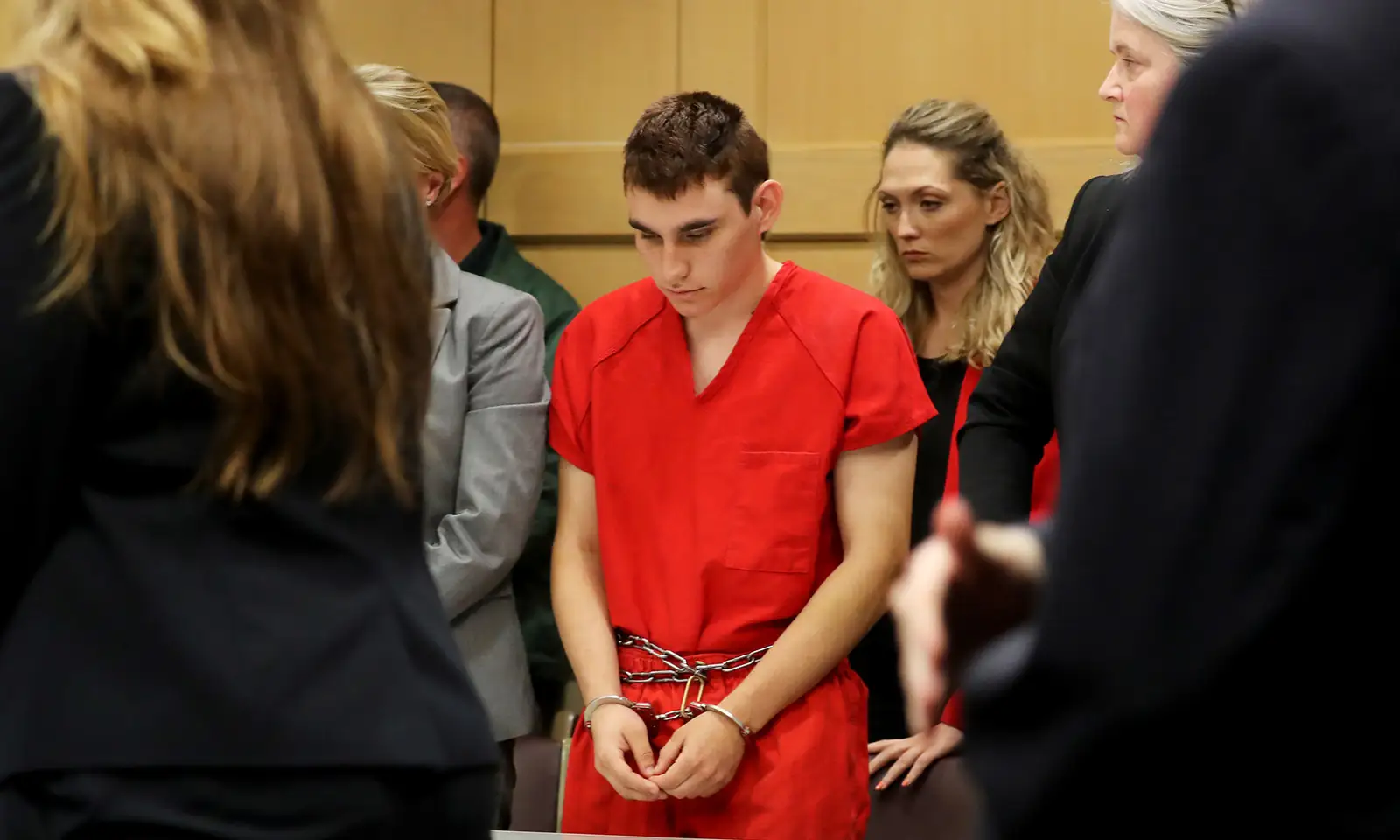
Confessed killer Nikolas Cruz, a notorious and emotionally disturbed student, was suspended from Stoneman Douglas High. He was even expelled for bringing weapons to school. Yet he was never arrested before the shooting. In a county less devoted to undoing school disciplinary policies, perhaps Cruz would have been arrested for one of his many violent or threatening incidents. When Cruz got into a fight in September of 2016, he was referred to social workers rather than to the police. When he allegedly assaulted a student in January 2017, it triggered a school-based threat assessment — but no police involvement. The Washington Post notes that Cruz “was well-known to school and mental health authorities and was entrenched in the process for getting students help rather than referring them to law enforcement.”
Would an arrest record have changed the judgment of the FBI agents who ignored the tip that Cruz wanted to kill his classmates? Certainly Cruz could not have legally purchased a gun if the 2016 social-services investigation determined that he was a threat to himself and others. That year, according to the Washington Post, the sheriff’s office was informed that Cruz “planned to shoot up the school.” The office determined that Cruz had knives and a BB gun and sent this information to the school resource officer (presumably the now-infamous Scot Peterson). It’s unclear whether Peterson investigated; if he did, neither he nor anyone else evidently filed a report.
When social services approached Peterson in its investigation of Cruz, the officer “refused to share any information . . . regarding [an] incident that took place.” Peterson and his colleagues appear to have been under pressure to post lower statistics on school-safety problems. This climate of disengagement could have allowed Cruz to slip through the cracks in the system.
CNN’s Jake Tapper pressed Broward County Sheriff Scott Israel about what role the new policies might have played in the county’s failure to respond to the many red flags that Cruz’s behavior had raised. “Were there not incidents committed by the shooter as a student,” Tapper asked, “had this new policy not been in place that otherwise he would have been arrested for and not able to legally buy a gun?” The sheriff praised the program. “It’s an excellent program,” he said. “It’s helping many, many people. What this program does is not put a person at 14, 15, 16 years old into the criminal-justice system.” The police, he said, can’t be faulted here because “there’s no malfeasance or misfeasance if you don’t know about something.”
[pullquote align=”left”]The explicit aim of Broward’s new approach to school safety was to keep students like Cruz off the police’s radar.[/pullquote]
Perhaps not. But the explicit aim of Broward’s new approach to school safety was to keep students like Cruz off the police’s radar. If the sheriff’s department didn’t know about his deeply troubling behavior, perhaps it was because they were no longer supposed to know about it.
Reporters should dig deeper into the implementation of a policy that prevented school officials from contacting the police, even when common sense would call for it, as it surely did in Cruz’s case. There remain more questions than answers at this point, but we owe the families of Cruz’s 17 victims better than another scripted culture war, with each side voicing the usual talking points. Hundreds of school districts, serving millions of students across the country, have followed Broward County’s dubious lead on school safety. Parents across the country need more answers about how this could happen, so let’s start asking the questions now.



Comments
On “How Did the Parkland Shooter Slip Through the Cracks?”