The demise of religion among American youth is greatly exaggerated. It turns out that America isn’t raising a new generation of unbelievers. Instead, rising in the heart of deep-blue America are the zealots of a new religious faith. They’re the intersectionals, they’re fully woke, and the heretics don’t stand a chance.
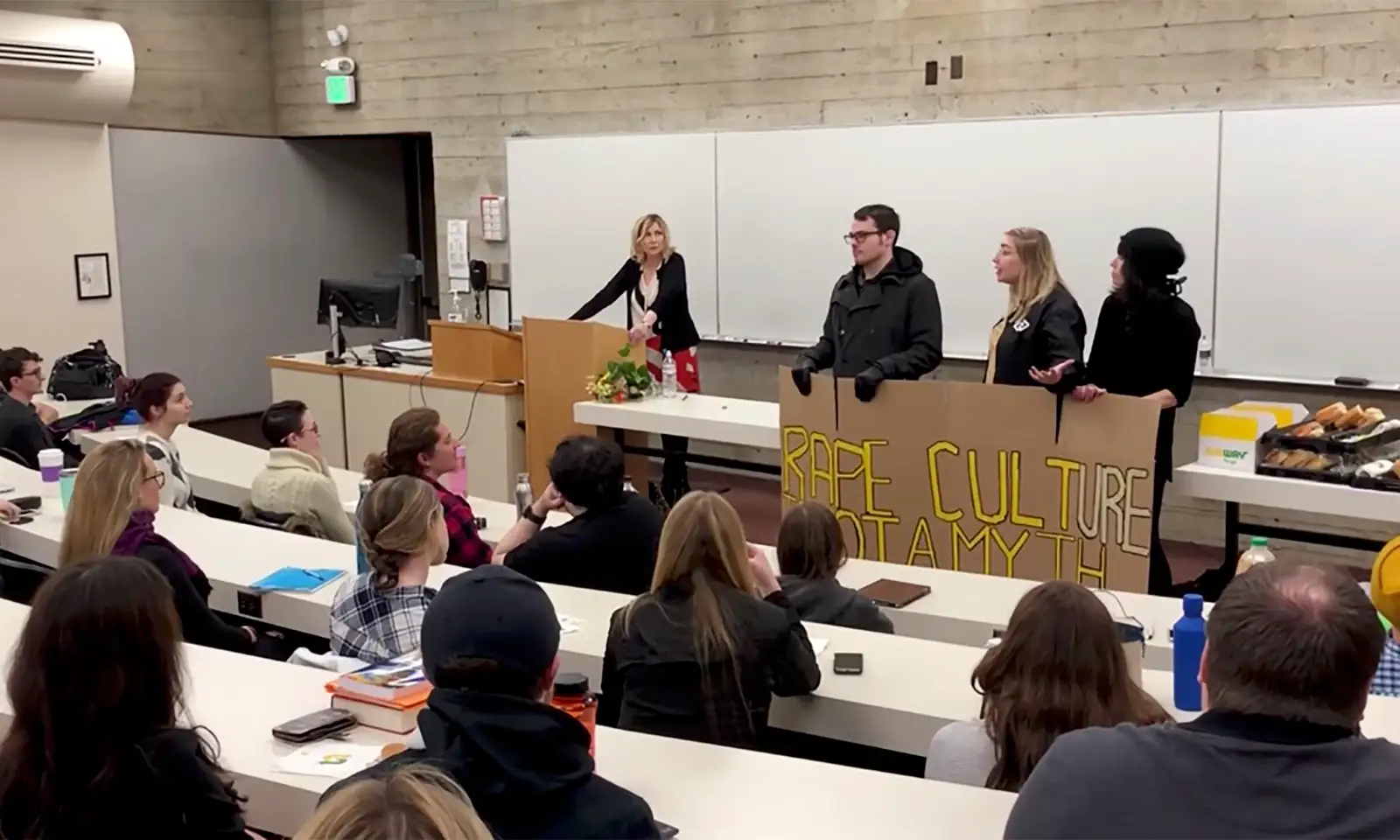
Just ask Christina Hoff Sommers. Yesterday she walked into the First Intersectional Church of the Lewis and Clark Law School and promptly experienced the congregation’s wrath:
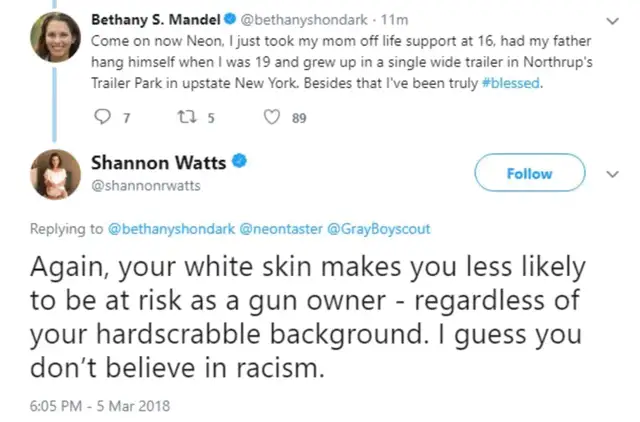
Just ask Bethany Mandel. Yesterday she published a harrowing story in the New York Times, describing an experience with a home intruder and how she, as a young Jewish mom, experienced a wave of threats from actual Nazis during the 2016 election season. But according to gun-control activist Shannon Watts, the real issue is white privilege. No, really:
Every day can bring new stories. College shout-downs are common. Online social-justice shame campaigns are a regular feature of Internet life. People who live in the cathedrals of intersectionality — the nation’s most progressive campuses and corporations — report that they risk their careers if they dare dissent.
[jwplayer SF4pwY7I]
America has struggled with university censorship before. Litigators have battled campus speech codes for a full generation. Intolerance in the name of tolerance has been a fact of campus life for a long time. But there’s something different about intersectionality. The virus has jumped from patient zero and is spreading like wildfire in blue culture. And it’s spreading in part because it is filling that religion-shaped hole in the human heart.
I’m hardly the first person to make this argument. Andrew Sullivan has noted intersectionality’s religious elements, and John Sexton has been on this beat for a year. Smart people know religious zeal when they see it.
While there’s not yet an Apostle’s Creed of intersectionality, it can roughly be defined as the belief that oppression operates in complicated, “interlocking” ways. So the experience of, say, a white trans woman is different in important ways from the experience of a black lesbian. A white trans woman will experience the privilege of her skin but also oppression due to her gender identity. A black lesbian may experience the privilege of “cis” gender identity but also oppression due to race and sexuality. It’s identity politics on steroids, where virtually every issue in American life can and must be filtered through the prisms of race, gender, sexual orientation, and gender identity.
Intersectionality privileges experiential authority, with each distinct identity group able to speak conclusively and decisively only about their own experience. So when an issue impacts trans rights, the trans community takes the lead. The responsibility of the rest of the community is to act, then, as their “allies.” If a racial issue comes to the fore — for example, in the context of protests over police shootings — then African Americans take the lead, and LGBT or women’s groups come alongside in support.
This is why you’ll often see activist organizations on the left tweet in support of people or causes that have little to do with the mission of the organization. When one part of the movement is threatened, the entire movement is threatened. This is what allyship looks like — a Planned Parenthood affiliate tweeting in support of trans identity:
Interestingly, however, the emphasis on experiential authority applies mainly to the experience of leaders and activists. Their experiences give them very real power. Their experiences define the narrative. Contrary experiences, then, represent a threat that must be extinguished. Dissenting women (such as Christina Hoff Sommers) or dissenting people of color often find that they’re vilified, shamed, and “no-platformed.”
For the in group, it’s easy to see the appeal of the philosophy. There’s an animating purpose — fighting injustice, racism, and inequality. There’s the original sin of “privilege.” There’s a conversion experience — becoming “woke.” And much as the Christian church puts a premium on each person’s finding his or her precise role in the body of Christ, intersectionality can provide a person with a specific purpose and role based on individual identity and experience.
The faith is fierce. Intolerance in the name of tolerance is the norm. Debate and dialogue are artifacts of scorned “respectability politics.” I’m reminded of the worst sorts of fundamentalist Christian sects, the kind that claim to take the Bible literally yet live as if mercy is alien to Scripture and that commands to “love your enemies” or “bless those who persecute you” somehow fell off the page. In the church of intersectionality, grace is nowhere to be found.
Indeed, you can often prove your faith through your ferocity. The right amount of rage, properly directed, can cover a multitude of sins. Do you wonder why the high priestesses of intersectionality — the leaders of the Women’s March — won’t condemn Louis Farrakhan? Because he’s been fighting their version of the good fight for generations. He’s an ally. He’s made all the right enemies.
Intersectionality is becoming so influential that it “haunts” much of blue America in much the same way that Christian beliefs and cultures haunt the South. Even those who aren’t full-on adherents have begun to adopt various intersectional habits, such as adjusting their language, deferring to experiential authority, and questioning the value of free speech. Just as southern Americans are more prone to “God talk” regardless of personal religiosity, increasing numbers of blue Americans sound more woke with each passing day.
[pullquote align=”left”]Just as southern Americans are more prone to ‘God talk’ regardless of personal religiosity, increasing numbers of blue Americans sound more woke with each passing day.[/pullquote]
In part this is because the leaders at the tip of the spear of the most potent progressive mass movements — Black Lives Matter and the Women’s March, to take two examples — have drunk deeply at the well of intersectionality. The millions who’ve marched at their events, including folks who’ve perhaps never even heard of intersectionality or barely know it exits, become plugged into a movement that’s animated by intersectional ideas.
It was foolish for anyone to believe that a less Christian America would be a less religious America. As Solomon said in Ecclesiastes, God “put eternity in man’s heart.” Traditional Christianity and Judaism aren’t just being removed from American life; they’re being replaced. The more passive person often fills his heart with the saccharine sweetness of Moralistic Therapeutic Deism. The angry activist often stokes the burning fires of intersectionality. And when commitment collides with confusion, commitment tends to win.
America’s traditional Christian and Jewish communities need to understand this reality. Intersectionality steamrolls right over the lukewarm, leaving them converted or cowed. The answer, of course, isn’t to steamroll back — after all, our faith is supposed to be full of grace — but rather to respond with calm conviction. Christianity has survived ancient heresies. It can prevail against modern fads. But don’t for one moment underestimate the depth of the zeal that drives our latest religious divide.





Comments
On “Intersectionality, the Dangerous Faith”