Editor’s Note: Jay Nordlinger began his “Japan Journal” yesterday, here. It concludes with Part II today.
Where were we? About to go from Tokyo to Kyoto, I think, on a “bullet train.” This baby is indeed fast — and smooth and clean. Every car is a Quiet Car. I’ll explain what I mean.
Back home, on an Amtrak train, you have a Quiet Car — one car designated for quietude. On a Japanese bullet train, they’re all like that: You can’t yak on your phone, for example.
When a conductor enters a car, he bows. As he leaves it, he bows again. This is civilized. One could get used to it (as I’ve said before here in Japan, and in this journal).
• Kyoto puts you in mind of Colonel Stimson — Henry L. Stimson, who was secretary of war under Taft; secretary of state under Hoover; and secretary of war again during World War II, under FDR and Truman.
He knew Kyoto, and loved it. That’s why he removed it from the bombing list in the war — preserving its historic treasures. Or so the story goes, and it seems to be true.
Kyoto was once the capital of Japan, and its name indeed means “capital.” According to some, it is the most Japanesey of all cities — the cultural heart of this country.
• From Kyoto’s city hall, at exactly 8 in the morning, bells ring out — playing chimes that sound like Westminster’s (though they differ).
• May I say that the Starbucks here — or at least one of them — is beautiful? Downright beautiful? A work of art, with long wooden tables.
• You see swastikas in India, of course, and also here in Japan. I have never quite — quite — gotten used to them. Probably never will.
• I might as well say this, too: It will always be hard for me, probably, to see the Japanese flag, that rising sun, in other than a negative, or at least ambivalent, light.
• Here in Japan, they speak to a foreigner — any foreigner — in English, automatically. Over the years, I’ve often thought how lucky I am to have been born into the world’s lingua franca.
• If you’re a white American, and in Europe, you might be marked out as a foreigner by your dress, your comportment — the map in your hand! But you might not be marked out as a foreigner at all. In Japan, there’s no question.
Do you see what I mean? It’s interesting.
• In Japan, I see, and hear, many Asian Americans, on vacation.
• I also see many mixed marriages, or mixed couples: Caucasian and East Asian. Strangely, I never see a couple in which the woman is the Caucasian. Not one. They’re all the other way. Kind of interesting.
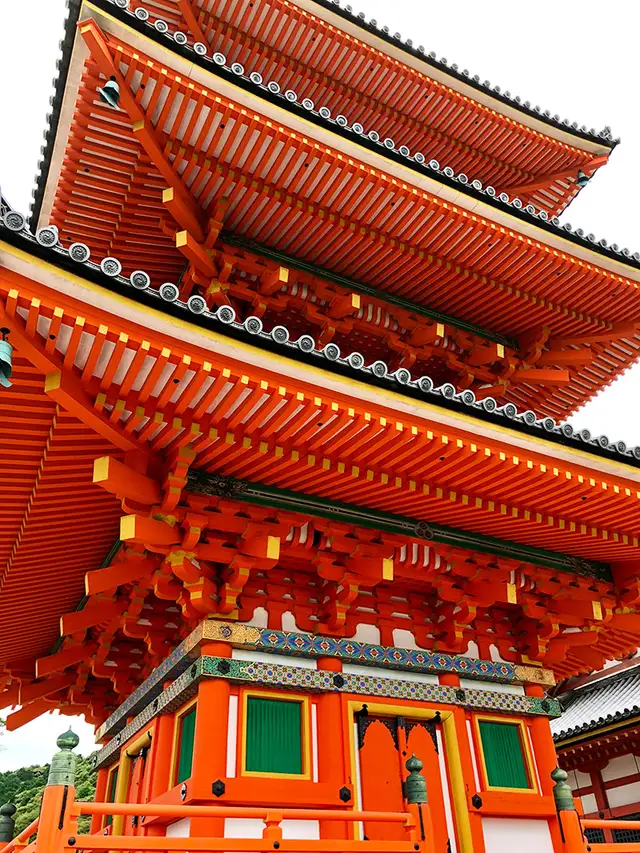
• Do you care to see an orange pagoda? Splendid idea.
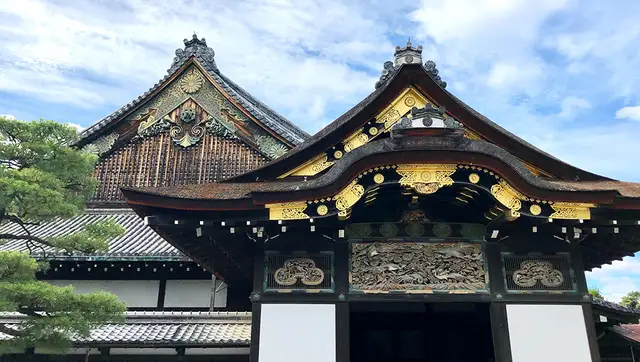
• How about a glimpse of Nijo Castle? Also splendid:
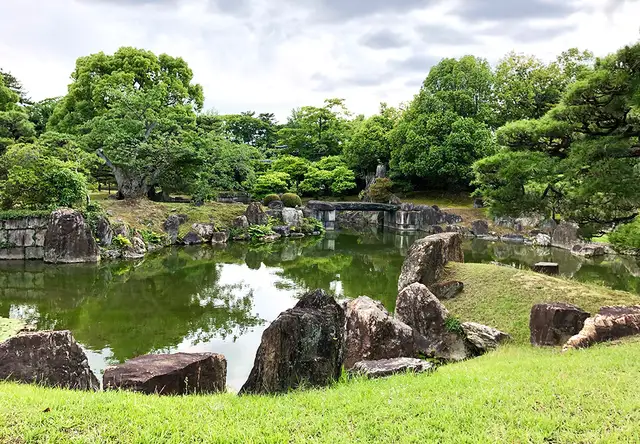
• And a little shot of the grounds:
• When it’s closing time at Nijo Castle, they play a song over the loudspeakers, though not loudly: “Auld Lang Syne.” Yes (though it’s not New Year’s Eve, and Guy Lombardo is nowhere in sight). The music gently ushers the people out.
• Ever had dandan noodles, doused in a black-sesame broth? Geezum. Just about the best thing I ever put in my mouth.
• Also — though not as spectacularly — East Asia is really, really good at shaved ice. Why don’t we have it, the same way?
• In Japan, there is no tipping. I hold this to be a great relief of stress. Years ago, when there were Saturns — Saturn cars — you did not haggle over them. They had a price, and that was the price: much like a loaf of bread in a store. I liked that.
• When I sign credit-card slips, I have a thought: I am using my alphabet, the Roman. When Asians visit Western countries, do they sign in their own alphabets? They must, right? But that had never occurred to me . . .
• Out on the streets of Kyoto, I see a political poster, recurringly. A candidate has a slogan, in English: “All for all.”
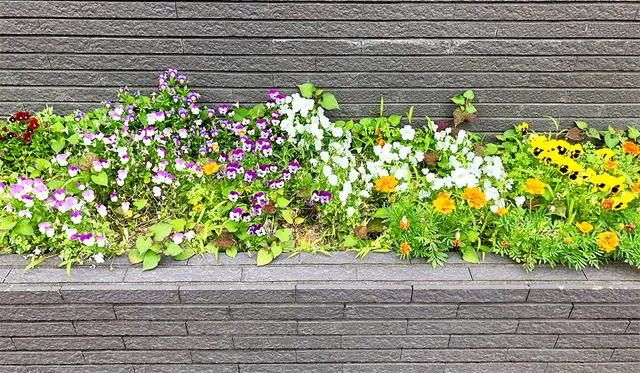
• Care for some flowers — cared for just so (in typical Japanese fashion)?
• The Japanese word for “street” is “dori,” so that Kawasaki Street, let’s say, is Kawasaki-dori. I remark that there ought to be a street named “Hunky.” This does not go over very well.
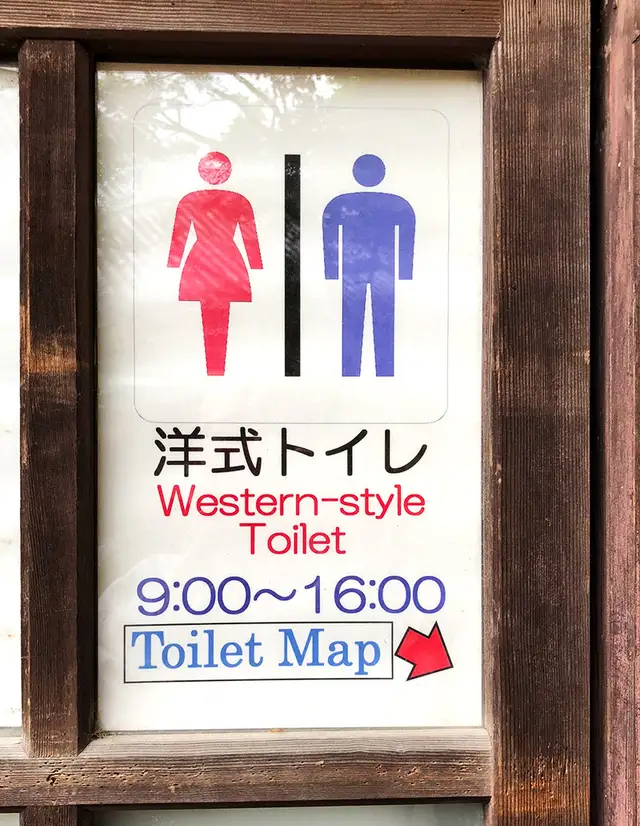
• Below is a sign at a temple (or shrine — they tend to blend in my mind). Years ago, when I was in India, I remarked that these were the most welcome words in the English language:
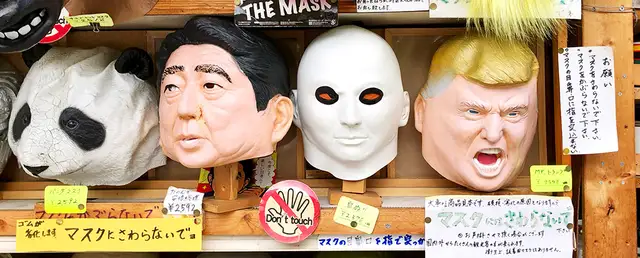
• Check out some masks for sale. There’s a panda on the far left. Next to him, or her, is the prime minister of Japan, Abe. At the far right is President Trump. But the white guy next to him? No clue.
• I notice baseball in Japan — more than I do at home, frankly. A mother emerges from the house, to play catch with her kid. The kid whips it, enthusiastically. The mother stoically catches and throws back. Soon, the father comes out, wearing a mitt. It’s a family affair.
I’m sure this still happens in America. I know it does. I guess I wish it happened a little more . . .
• Many years ago, Anthony Daniels, the writer who also works under the name Theodore Dalrymple, made an observation that rang perfectly true to me: The pop music of other countries is almost invariably better than ours — “ours” meaning the pop music of Britain and America. I think of this, hearing music come from radios in Japan.
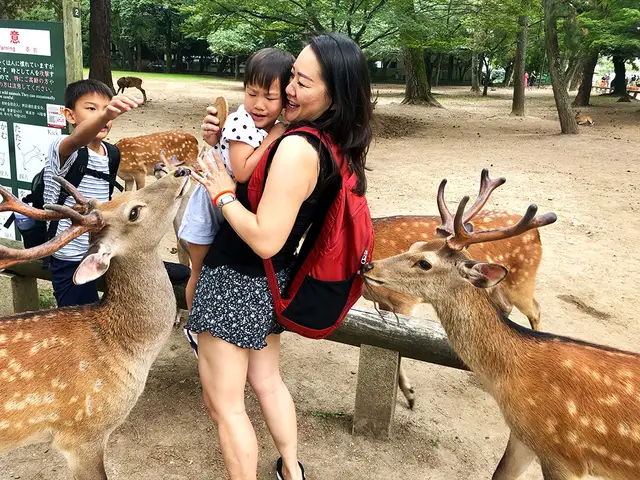
• Nara is a town about 40 miles from Kyoto. It, too, was a capital, anciently (before Kyoto was). One of its distinguishing features is deer: lots of deer, tame, who are fed by visitors, petted by them. The deer descend on visitors for food (bought from vendors). They depend on this. It’s their “lifestyle,” if you will. A lot of the deer bow, as human beings here do, in order to ask for food. They sing for their supper, so to speak. This amuses people.
I find the whole scene unnatural and creepy — but I’m happy for other people’s enjoyment of it. Care for a shot?
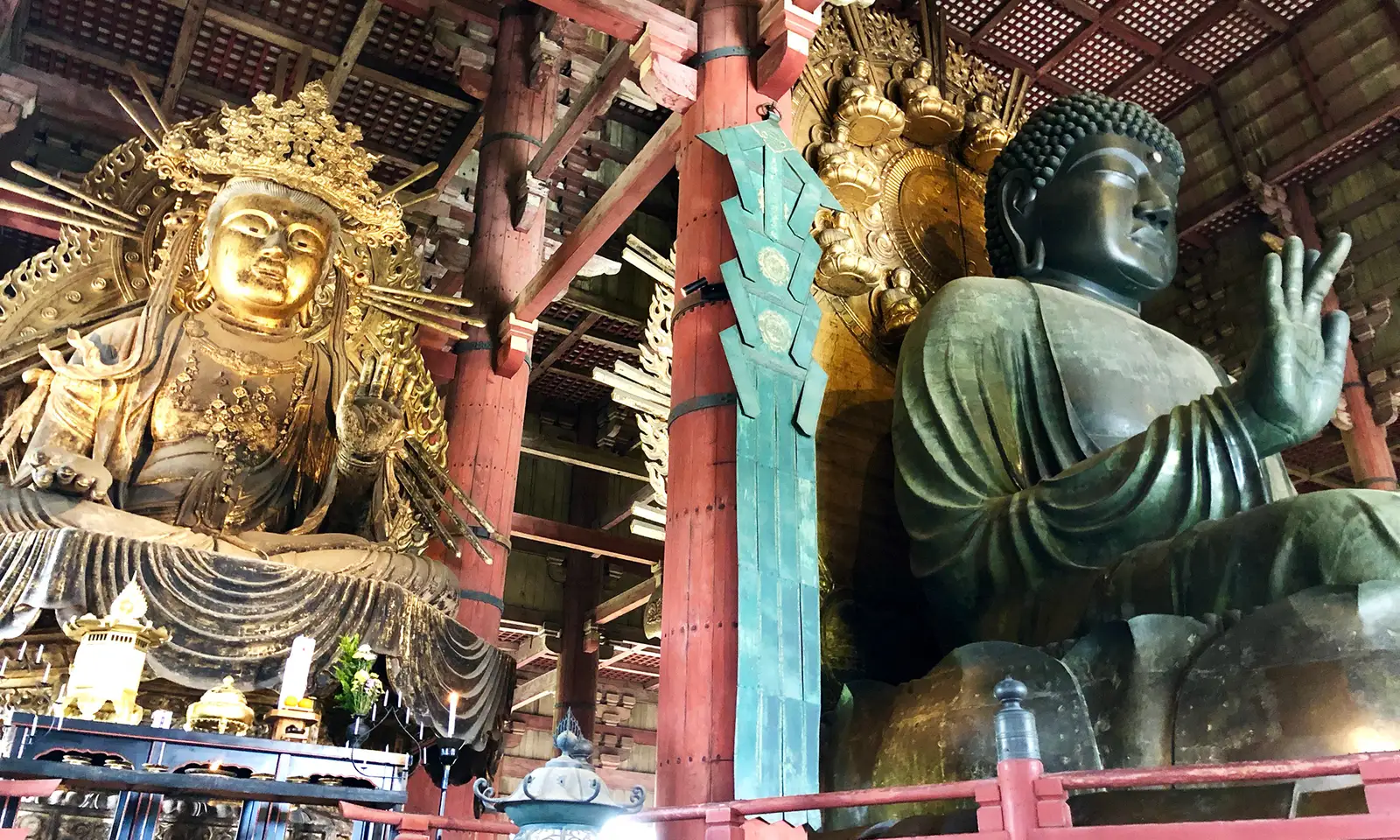
• Todai-ji, here in Nara, is a famous temple. Have a glimpse:
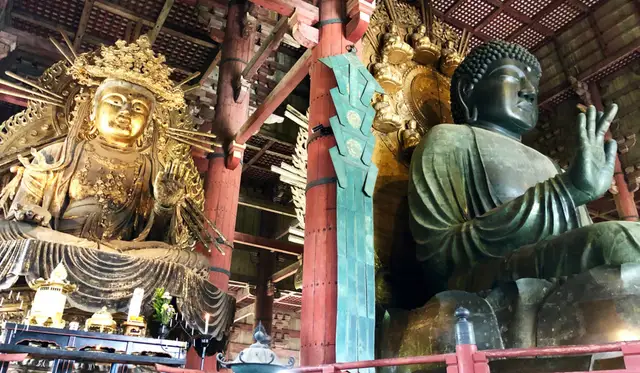
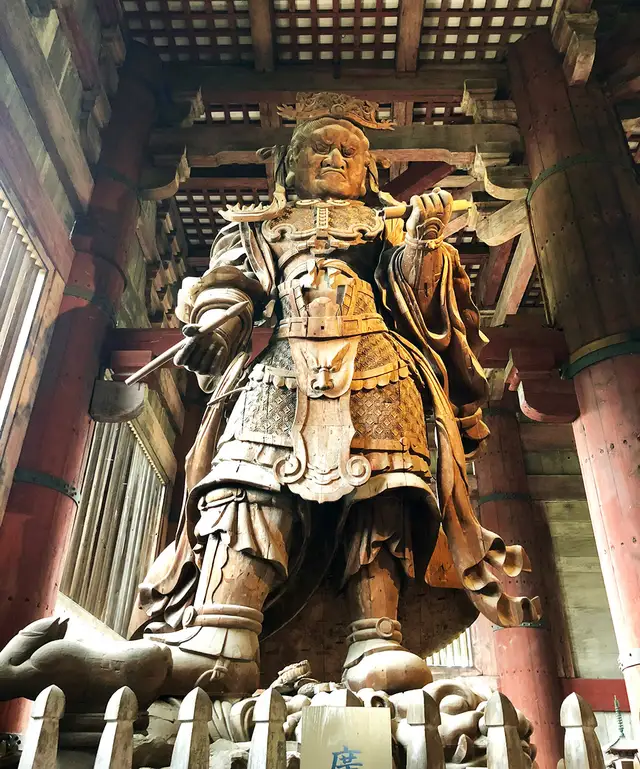
• This fellow is all over the place — all over Japan. I’ve never seen him too happy:
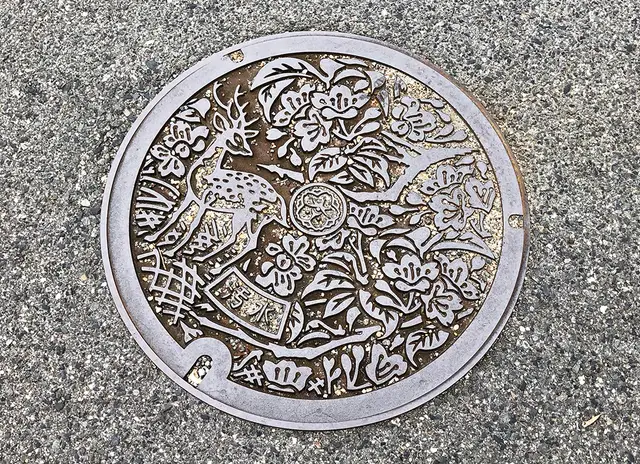
• This is so typical of Japan — almost laughably typical: a manhole cover. Not just any manhole cover, a beautiful one, a delicate one, a Japanese one. A work of art. Note the deer on the left:
• Back in Kyoto, it’s raining, and I put on some Takemitsu — Toru Takemitsu, the composer who lived from 1930 to 1996. This is Rain Tree Sketch.
A question: Do I understand Takemitsu better, or appreciate him more, now that I’ve been to Japan? I think I do — or, more likely, I imagine I do. I really don’t know. Let me get back to you on that . . .
• Just as you can get cathedral’d out, while touring Europe, you can get shrined and templed out, while touring Japan. But let me throw a villa at you — Katsura Imperial Villa, on the outskirts of Kyoto. Its grounds and little buildings are . . . what you might imagine Japan to be, when you are imagining Japan romantically.
Have a look:
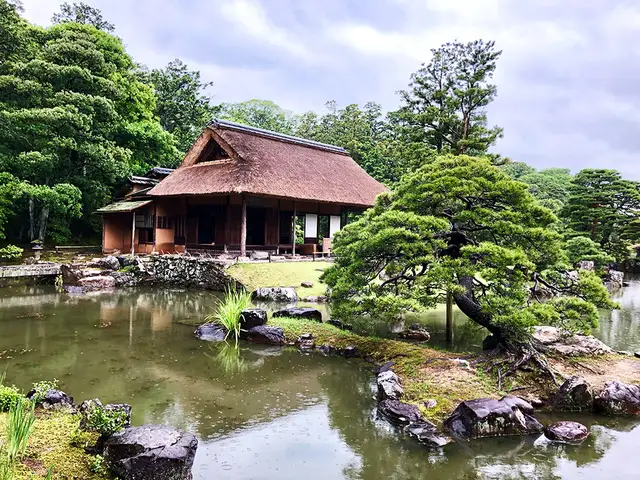
Have another look:
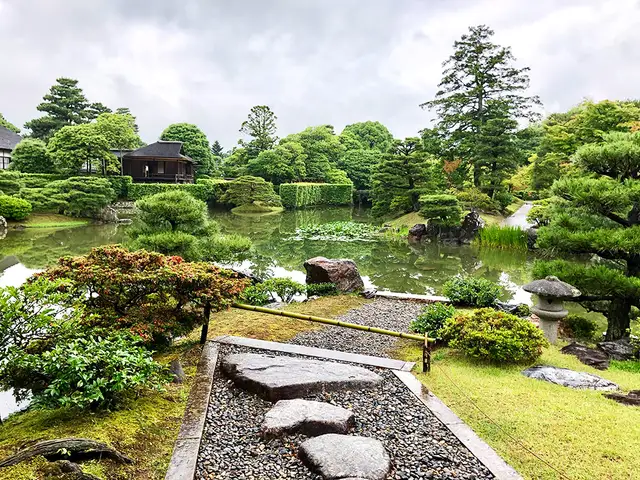
Can you stand it? Katsura Imperial Villa is one of the most beautiful places I have seen, anywhere. It is laid out with extraordinary thoughtfulness, blending the human with the natural.
• I see a sign that includes numerals, and I’m a little relieved — because I can read the numerals, in that they’re Arabic. Otherwise, I’m illiterate, as a friend points out. (Jarring realization.)
• Here is a sentence in English — one that a lot of people in American politics, on left and right, wouldn’t like at all. At all.
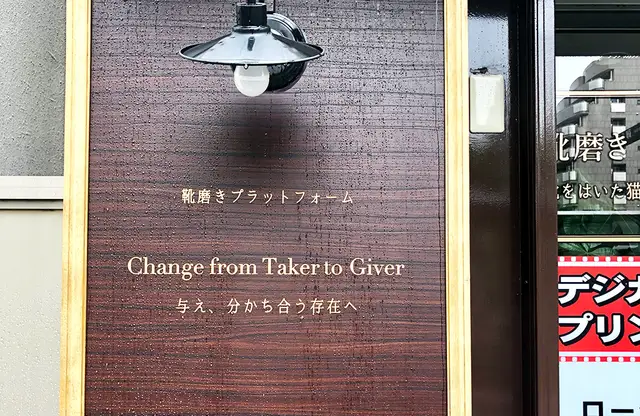
• On the street, I see people give one another little nods — not waves, but nods. Starts of bows. Nice.
• What’s up with this? This restaurant name? “What’s.” So Japanese. Such a characteristic use of English.
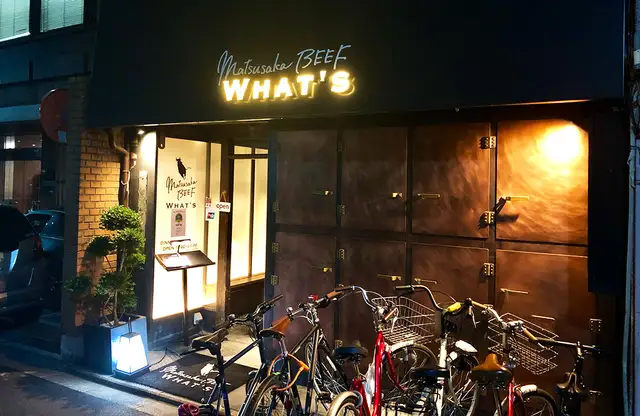
• In a 7-Eleven (!), I hear a familiar tune — but in an unfamiliar arrangement. It’s for a Japanese flute, and accompanying ensemble. The tune comes from Holst’s Planets. Nice.
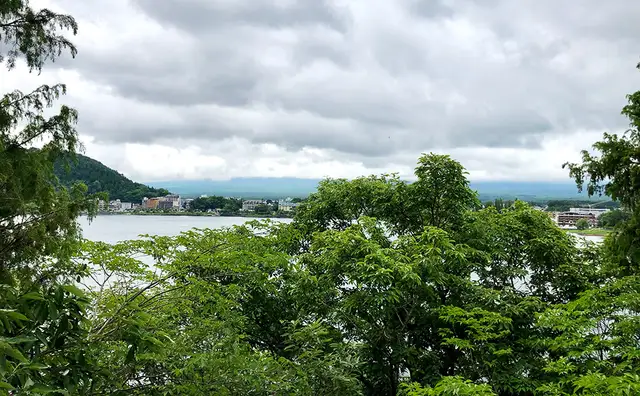
• There is an old saying: “Even Mount Fuji is ugly up close.” Well, let me tell you this: I have been to Mount Fuji. But I have never seen it. How so? Clouded over. Bad.
• I think of the area surrounding Fuji as a Japanese Salzkammergut — the lake-and-mountain district outside Salzburg, Austria. Have a look (at a photo that does the area no justice, especially on a cloudy day):
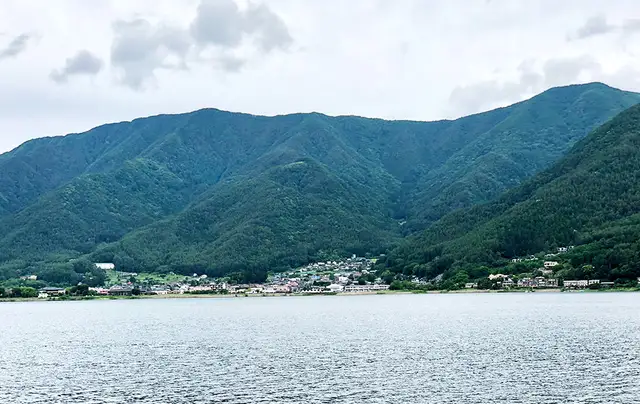
• Oh, want to know where Mount Fuji is supposed to be? Somewhere in here:
• In a village, bells — like a xylophone — are playing a tune: “When the Saints Go Marching In.” I’m glad to see that that stirring little number has made its way around the globe.
• Many Japanese people, especially the young, do something interesting when they have their picture taken: They make the V for Victory sign. A curious cultural phenomenon, widely written about. Apparently, it’s some equivalent of saying cheese.
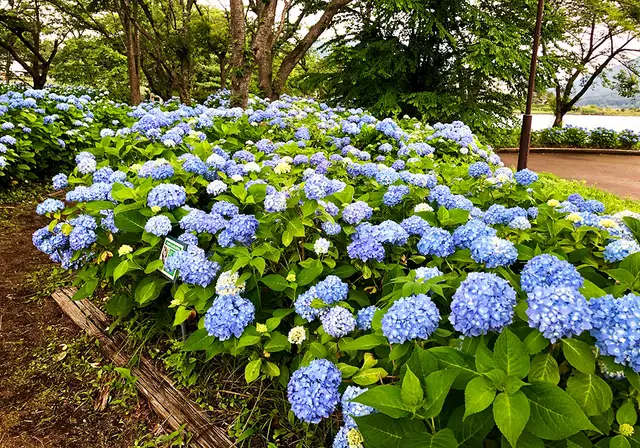
• Japan boasts hydrangeas by the bushful, and big ones, too. Get a load of these babies:
• Back in Tokyo, it’s a bright, sunny day, and Ueno Park is hopping. The park is large and has everything, including a zoo. Hundreds of schoolkids are visiting the park and its various constituents. They are orderly and kid-like at the same time. Both disciplined and gay. (Sometimes I like to use the word “gay” in the old sense, because it can be just the right word.) Boys and girls have uniforms, with the girls’ looking like sailor’s outfits.
• On the tube, the World Cup is being shown, and the Japanese announcers and commentators pepper their language with English words and phrases — such as “big chance.”
• Encountering new parts of Tokyo — new to me — I think of Samuel Johnson: “When a man is tired of London, he is tired of life.” I believe the same can be said of Tokyo.
• At Narita Airport, every seat in the departure lounge has an electrical outlet. Every one. Of course. Ah, Japan!





Comments
On “Buddhas, Baseball, and More: A Japan Journal, Part II”