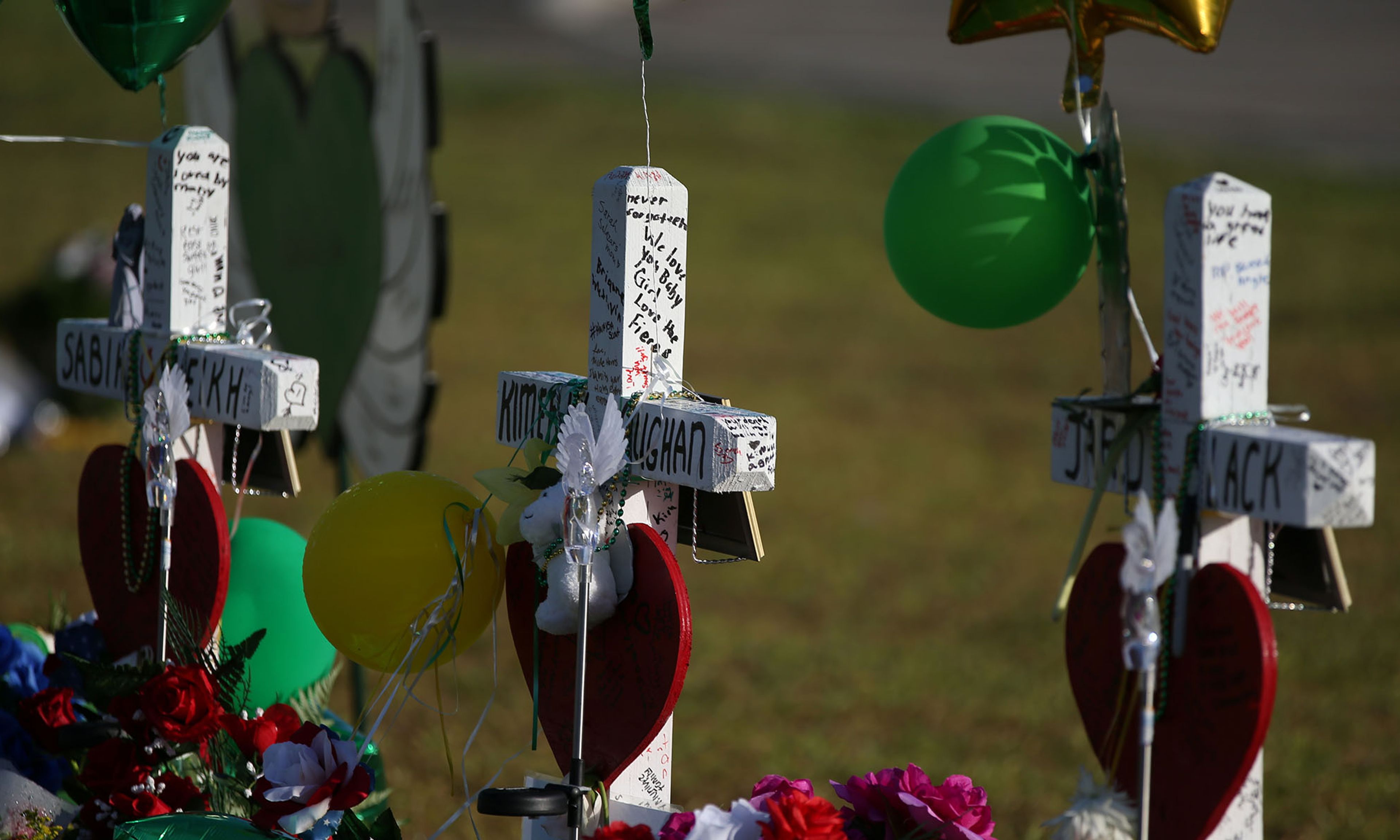
Ever wonder why mass public shooters commit their horrible crimes? Prosecutors in Broward County, Fla., released on Wednesday the Parkland high-school shooter’s cell-phone videos, in which he bragged, “It will be a big event, and when you see me on the news, you will all know who I am.”
What makes these mass public shooters different from most criminals is that they want glory and fame, and we need to stop giving it to them. The media coverage of these videos also fails to draw any lessons about how we can stop these attacks in the future.
If anyone missed the Parkland killer’s motivation, he repeated it three more times in his video rants, which totaled two minutes and 26 seconds. He tells viewers: “From the wrath of my power they will know who I am,” “with the power of my AR you will all know who I am,” and “you will all know what my name is.” To get this attention, the killer understood that he had to kill a lot of people: “My goal is [to kill] at least 20 people.”
The Parkland killer feels that he benefits from coverage of the attack even if it doesn’t mention his name. The more well-known the attack, the more people will ultimately learn who he is.
Sadly, the Parkland killer is all too typical. Killers like him want to commit suicide and want to do it in a way that will bring them notoriety. This isn’t a motivation just for lone-wolf shootings; we also see it in coordinated terrorist attacks.
The Sandy Hook killer spent two and a half years putting together a report on mass public shootings. Law enforcement described “a sickeningly thorough 7-foot-long, 4-foot-wide spreadsheet with names, body counts, and weapons from previous mass murders and even attempted killings.” One anonymous law-enforcement veteran remarked, “It sounded like a doctoral thesis, that was the quality of the research.” The killer also collected information on media coverage for each killing. He observed that attacks with more deaths received greater media coverage.
The Sandy Hook killer may have been mentally ill, but he clearly knew what he wanted to accomplish and how he was going to do it. CBS Evening News reported that he wanted to kill more people than did Anders Breivik, a Norwegian man who killed 77 people in July 2011. The Connecticut shooter targeted the “nearby Sandy Hook Elementary School because it was the ‘easiest target’ with the ‘largest cluster of people.’”
The Batman movie-theater shooter in Aurora, Colo., was also mentally ill. But William Reid, a state-appointed psychiatrist who performed Holmes’s sanity evaluation, testified that the subject carefully planned every detail to maximize the number of possible victims and get more attention.
Over and over again, these killers are highly driven to realize their goal of more publicity. They invest a lot of time and energy into planning their attacks, often starting a year or two in advance. Mass public shootings have rarely involved less than six months of planning.
It is clear: If you want to stop these attacks, stop giving news coverage to the killers and their crimes.
Unfortunately, you can’t stop this coverage without trampling on First Amendment rights. From time to time, various media outlets will briefly refrain from mentioning a killer’s name. But this is never done on a consistent, systematic basis. The killers know that their names will be in the history books, giving them a sort of immortality that they couldn’t achieve in any other way.
[pullquote align=”left”]The Second Amendment allows us to protect ourselves against these attacks and other crimes, whereas abuse of the First causes them.[/pullquote]
The media aren’t very open to discussions about their own responsibility for these attacks. If outlets were to talk about killers’ hunger for fame as breathlessly as they cover the guns used and how they were obtained, people would probably be calling as much for “reasonable” media restrictions as for “reasonable” gun control.
Some would argue that media restrictions should be imposed if they can prevent a single mass public shooting from occurring. But defenders of the First Amendment rightly argue that limits on freedom of the press can be abused by the government to suppress other freedoms, a slippery-slope argument. Similarly, infringing on the Second Amendment opens the floodgates to violations of other freedoms.
The Second Amendment allows us to protect ourselves against these attacks and other crimes, whereas abuse of the First causes them. I am against rewriting either amendment, and neither is treated with the respect that it deserves. But the same media that don’t examine their own unfortunate use of the First Amendment are so quick to push for “reasonable” gun-control measures that violate the Second. Some talk openly of abolishing the Second Amendment, in a way that they would never talk about the First. But really, it’s time to start treating the two amendments with equal respect.




Comments