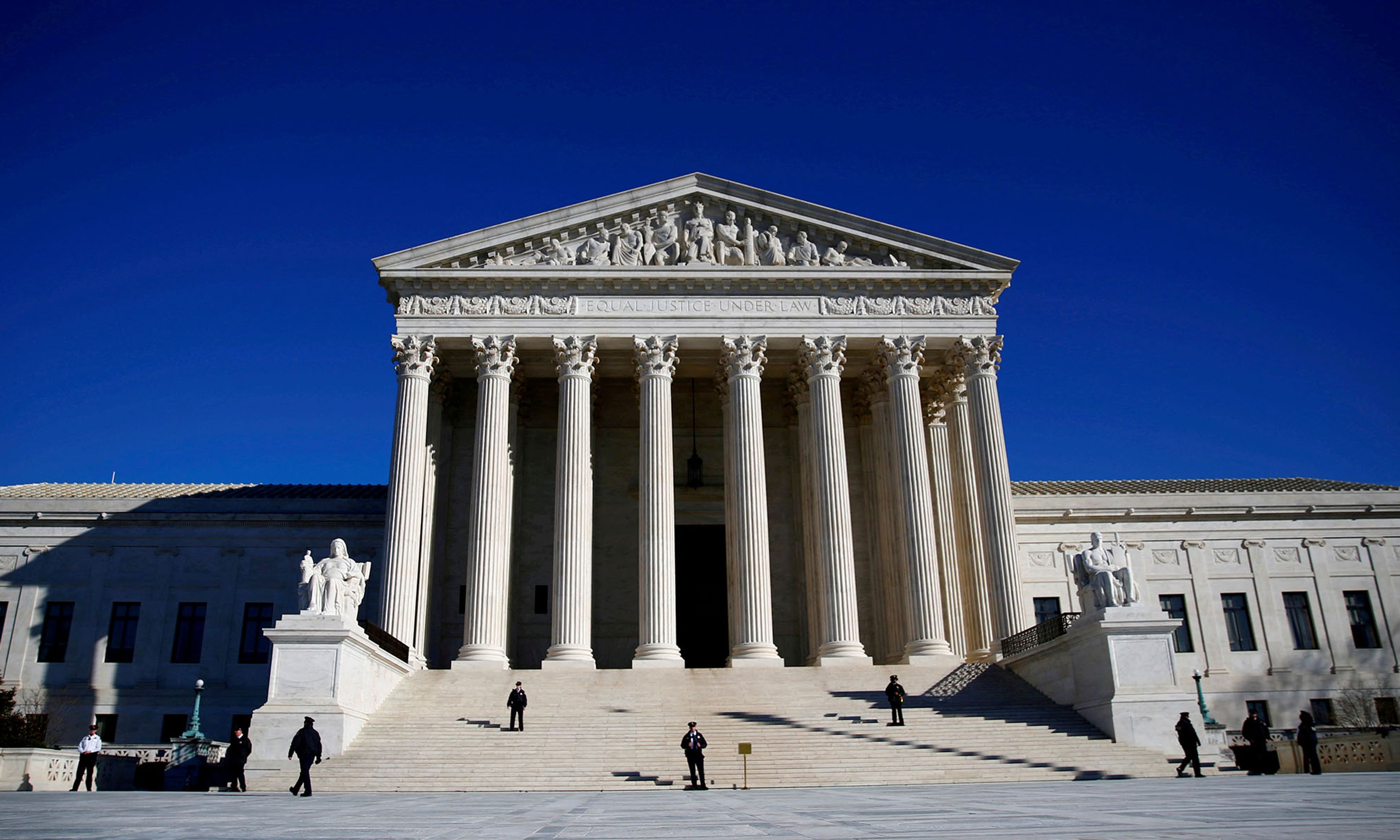
The Supreme Court’s 7–2 decision this morning in Masterpiece Cakeshop, Ltd. v. Colorado Civil Rights Commission is a victory for religious liberty. Specifically, the Court recognized at least some religious liberty for Christian businesses to decline to participate in same-sex weddings they object to on grounds of the 2,000-year-old Christian tradition, derived explicitly from Jesus’ own words in the Gospels of Matthew and Mark, that defines marriage as the union of one man and one woman. But the lopsided 7–2 vote — only Justices Ginsburg and Sotomayor would recognize no religious liberty at all here — should not obscure the narrowness of Justice Kennedy’s opinion, which leaves many questions for another day, places religious liberty on something less than the firmest of grounds, and reveals much about the current drift of how our politics and law safeguard vital liberties that the Founding Fathers would have protected much more broadly. And it may be bad news for President Trump in the travel-ban case.
The Icing on the Cake
The facts in Masterpiece Cakeshop were highly unsympathetic to the Colorado Civil Rights Commission’s pursuit of the Christian cake baker, Jack Phillips, and from the start, that put defenders of the Commission on the defensive and gave them an incentive to prefer a narrow defeat in this case to a broader ruling. The baker did not operate a large corporation, had been in business for two decades, testified convincingly to his sincere religious convictions, and made clear to the gay couple at the outset that he would gladly serve them, he just wouldn’t do same-sex-wedding cakes: “To create a wedding cake for an event that celebrates something that directly goes against the teachings of the Bible, would have been a personal endorsement and participation in the ceremony and relationship that they were entering into.”
On the other hand, the baker limited his own argument, conceding that the law would likely require him to provide non-wedding-specific goods and services to same-sex weddings so long as they did not involve making any sort of endorsement. His argument was simply that wedding-cake design is a form of expression that crosses the line from doing ordinary, arm’s-length commerce to placing his own personal touch on the wedding ceremony (which is, after all, part of what attracts many wedding-service providers to that line of work). The Court’s starting point in recognizing that some space should be left for objections of conscience was the easy case — the rights of religious clergy — but even when asked to draw a line of protection around a modest sphere for religious conscience and free speech in only those activities that involve some personal endorsement, the Court’s majority was clearly concerned about the “stigma” effect of allowing a large number of service providers to opt out:
When it comes to weddings, it can be assumed that a member of the clergy who objects to gay marriage on moral and religious grounds could not be compelled to perform the ceremony without denial of his or her right to the free exercise of religion. This refusal would be well understood in our constitutional order as an exercise of religion, an exercise that gay persons could recognize and accept without serious diminishment to their own dignity and worth. Yet if that exception were not confined, then a long list of persons who provide goods and services for marriages and weddings might refuse to do so for gay persons, thus resulting in a community-wide stigma inconsistent with the history and dynamics of civil rights laws that ensure equal access to goods, services, and public accommodations. . . . And any decision in favor of the baker would have to be sufficiently constrained, lest all purveyors of goods and services who object to gay marriages for moral and religious reasons in effect be allowed to put up signs saying “no goods or services will be sold if they will be used for gay marriages,” something that would impose a serious stigma on gay persons.
Instead of deciding where the line should be drawn, the Court focused on the easy way out: punishing the obvious anti-Christian discriminatory motives of the Civil Rights Commission, which at one point involved literally comparing the baker to Nazis:
Commissioners endorsed the view that religious beliefs cannot legitimately be carried into the public sphere or commercial domain, implying that religious beliefs and persons are less than fully welcome in Colorado’s business community. One commissioner suggested that Phillips can believe “what he wants to believe,” but cannot act on his religious beliefs “if he decides to do business in the state.” . . . “Freedom of religion and religion has been used to justify all kinds of discrimination throughout history, whether it be slavery, whether it be the holocaust, whether it be — I mean, we — we can list hundreds of situations where freedom of religion has been used to justify discrimination. And to me it is one of the most despicable pieces of rhetoric that people can use to — to use their religion to hurt others.”
This is, as I’ve detailed at some length, simplistic and laughably inaccurate history regarding Christianity and slavery, and it’s no better history regarding the Holocaust. It was too much for Justice Kennedy and six of his colleagues:
To describe a man’s faith as “one of the most despicable pieces of rhetoric that people can use” is to disparage his religion in at least two distinct ways: by describing it as despicable, and also by characterizing it as merely rhetorical — something insubstantial and even insincere. The commissioner even went so far as to compare Phillips’ invocation of his sincerely held religious beliefs to defenses of slavery and the Holocaust. This sentiment is inappropriate for a Commission charged with the solemn responsibility of fair and neutral enforcement of Colorado’s antidiscrimination law — a law that protects discrimination on the basis of religion as well as sexual orientation. The record shows no objection to these comments from other commissioners.
The Court further noted the obvious bias of the Commission in protecting the rights of bakers in three other cases who refused to create cakes with messages against same-sex marriage. As the Court noted, the Commission in those cases treated the bakers as having rights that Jack Phillips didn’t have: to refuse to endorse messages he disapproved of, and to offer alternative goods that didn’t entangle him in that statement.
Faith and Speech
So, is this good news for conservative Christian wedding vendors? Up to a point, yes. But the Court listed a whole bunch of other situations it wasn’t ruling on:
If a baker refused to design a special cake with words or images celebrating the marriage — for instance, a cake showing words with religious meaning — that might be different from a refusal to sell any cake at all. In defining whether a baker’s creation can be protected, these details might make a difference. The same difficulties arise in determining whether a baker has a valid free exercise claim. A baker’s refusal to attend the wedding to ensure that the cake is cut the right way, or a refusal to put certain religious words or decorations on the cake, or even a refusal to sell a cake that has been baked for the public generally but includes certain religious words or symbols on it are just three examples of possibilities that seem all but endless.
The Court’s focus on the Civil Rights Commission’s anti-religious animus also creates uncertainty about whether it was recognizing free-speech rights in this context, or only liberties specific to sincere religious objections.
For Justices Kagan and Breyer, the anti-religious statements by the Civil Rights Commission were the entire reason for joining the decision; Justice Kagan in her concurring opinion argued that the Commission could have justified its decision treating the Christian cake baker differently from the other cake bakers on the grounds that the wedding cake would have been the same wedding cake as Phillips would have made for an opposite-sex couple (an argument that glosses over the fact that a wedding cake typically has the couple’s names on it).
[pullquote align=”left”]The Court could have treated Masterpiece Cakeshop as a case about government power and individual rights, and the lines between the two.[/pullquote]
That reasoning, however, might actually be broader when applied to a free-speech claim, since a cake or other product with a political message is likely to be literally less cookie-cutter. Justice Thomas, joined by Justice Gorsuch, wrote to argue that the Court should have recognized the baker’s rights to more control over his own free speech. By contrast, Justice Ginsburg, joined by Justice Sotomayor, blithely rejected the view that “an objective observer” would see a wedding cake as any kind of statement by the baker (regardless of how strongly the baker himself felt) and brushed aside the relevance of the comments by “one or two members” of the Commission given that their decision was upheld by other courts.
Fairness and Notice
Another factor that appears in the opinion without any real explaining of why it matters to the outcome is the timing. Same-sex marriages were not even legally recognized in Colorado in 2012, when the dispute arose, a fact that Justice Kennedy (the author of the 2015 Obergefell decision requiring all states to recognize same-sex marriage) mentioned repeatedly. Yet, the only legal significance the Court offered for drawing a line in time at Justice Kennedy’s own prior opinions was to imply that the baker’s arguments for having a good-faith basis for refusing service should have been given more respectful consideration, and that this was evidence of the Civil Rights Commission’s religious discrimination. Would that be true of a baker after 2015? It shouldn’t, but the Court didn’t really say so. A government body like the Civil Rights Commission might argue in the next case that future bakers are entitled to no such fair process, and there’s no guarantee that the Court will even take another case like this, leaving it to the lower courts to sniff out the most obvious kangaroo courts.
The Trouble with Motive
Ultimately, the Court could have treated Masterpiece Cakeshop as a case about government power and individual rights, and the lines between the two. That was broadly how the Framers of the Constitution saw liberty. In fact, the Constitution originally contained no Bill of Rights, on the grounds that the limitations on federal power would protect individual rights. The First Amendment was ultimately written in terms that simply made it out of bounds to make any laws that abridge the rights of free speech and free exercise of religion. Drawing clear lines around our rights gives notice to ordinary citizens of what freedoms they have, and acts to protect them against not only those who are openly biased against them but also those who want those rights slowly, quietly strangled.
[pullquote align=”left”]Who decides which motives are bad, especially when the question is a collision between Biblical teachings and modern mores about sexual identity, or the role of quasi-religious doctrines in terrorist groups?[/pullquote]
By contrast, decisions about motive end up involving a lot more uncertainty and expensive litigation, and can turn on the happenstance of who says out loud what they are thinking. Masterpiece Cakeshop involved two levels of motives — the baker’s and the Civil Rights Commission’s — and Justice Kagan’s opinion was more or less an instruction manual, for people who shared the Civil Rights Commission’s motives, for how to get away with doing the exact same thing. And as Justice Gorsuch noted in his own opinion, in which he responded specifically to Justice Kagan, allowing the Civil Rights Commission to distinguish political messages they liked from wedding cakes they disliked — by the simple expedient of keeping mum about their anti-religious animus — still leaves a lot of room for double standards, so the Christian cake baker loses while the bakers who don’t want to make statements against same-sex marriage win:
Suggesting that this case is only about “wedding cakes” — and not a wedding cake celebrating a same-sex wedding — actually points up the problem. At its most general level, the cake at issue in Mr. Phillips’s case was just a mixture of flour and eggs; at its most specific level, it was a cake celebrating the same-sex wedding of Mr. Craig and Mr. Mullins. . . . Any other conclusion would invite civil authorities to gerrymander their inquiries based on the parties they prefer. Why calibrate the level of generality in Mr. Phillips’s case at “wedding cakes” exactly — and not at, say, “cakes” more generally or “cakes that convey a message regarding same-sex marriage” more specifically? . . . Only by adjusting the dials just right — fine-tuning the level of generality up or down for each case based solely on the identity of the parties and the substance of their views — can you engineer the Commission’s outcome, handing a win to Mr. Jack’s bakers but delivering a loss to Mr. Phillips. Such results-driven reasoning is improper. . . . It is no more appropriate for the United States Supreme Court to tell Mr. Phillips that a wedding cake is just like any other — without regard to the religious significance his faith may attach to it — than it would be for the Court to suggest that for all persons sacramental bread is just bread or a kippah is just a cap.
As Justice Gorsuch suggests, the other problem with having everything be about motives is that there’s a third decision-maker: the Court itself. And that’s where the travel-ban case looms: Even the lawyer challenging the Trump administration’s order on refugees admitted at oral argument that they could not show that the order itself violated the Constitution — they needed to rely on evidence of what Trump said about it, on the campaign trail and to some extent later, in order to show that it was the product of bad motives. (Presumably, Justice Ginsburg’s “one or two Commissioners” line gives her wiggle room to reach a different decision about motives when it comes to Trump.) If that case, like this one, is all about the government decision-maker’s motives (a recurring theme in past Kennedy opinions), Trump could be in more trouble than some watchers of the case have suspected.
But should that be the issue? After all, who decides what is too much evidence of bad motive, and who decides which motives are bad, especially when the question is a collision between Biblical teachings and modern mores about sexual identity, or the role of quasi-religious doctrines in terrorist groups? In Trump’s case, many of the judges ruling against him have seemed careful to say that his exercises of presidential power would have been just fine if they were done by someone without his bad motives — a standard that too easily devolves into “somebody I agree with.” As Justice Gorsuch wrote today,
it appears the Commission wished to condemn Mr. Phillips for expressing just the kind of “irrational” or “offensive . . . message” that the bakers in the first case refused to endorse. . . . Many may agree with the Commission and consider Mr. Phillips’s religious beliefs irrational or offensive. Some may believe he misinterprets the teachings of his faith. . . . But it is also true that no bureaucratic judgment condemning a sincerely held religious belief as “irrational” or “offensive” will ever survive strict scrutiny under the First Amendment. In this country, the place of secular officials isn’t to sit in judgment of religious beliefs, but only to protect their free exercise. Just as it is the “proudest boast of our free speech jurisprudence” that we protect speech that we hate, it must be the proudest boast of our free exercise jurisprudence that we protect religious beliefs that we find offensive. . . . Popular religious views are easy enough to defend. It is in protecting unpopular religious beliefs that we prove this country’s commitment to serving as a refuge for religious freedom.
And making everything about motive is, in the end, an invitation for our rights to be protected against the loud and the crude, only to be devoured by the smooth, the discreet, and the well trained. Those are not real rights at all, just manners.
NOW WATCH: Supreme Court Favors Baker Who Refused to Service Gay Wedding
[jwplayer 7wKZ5trq-wKJ9CRQU]


Comments