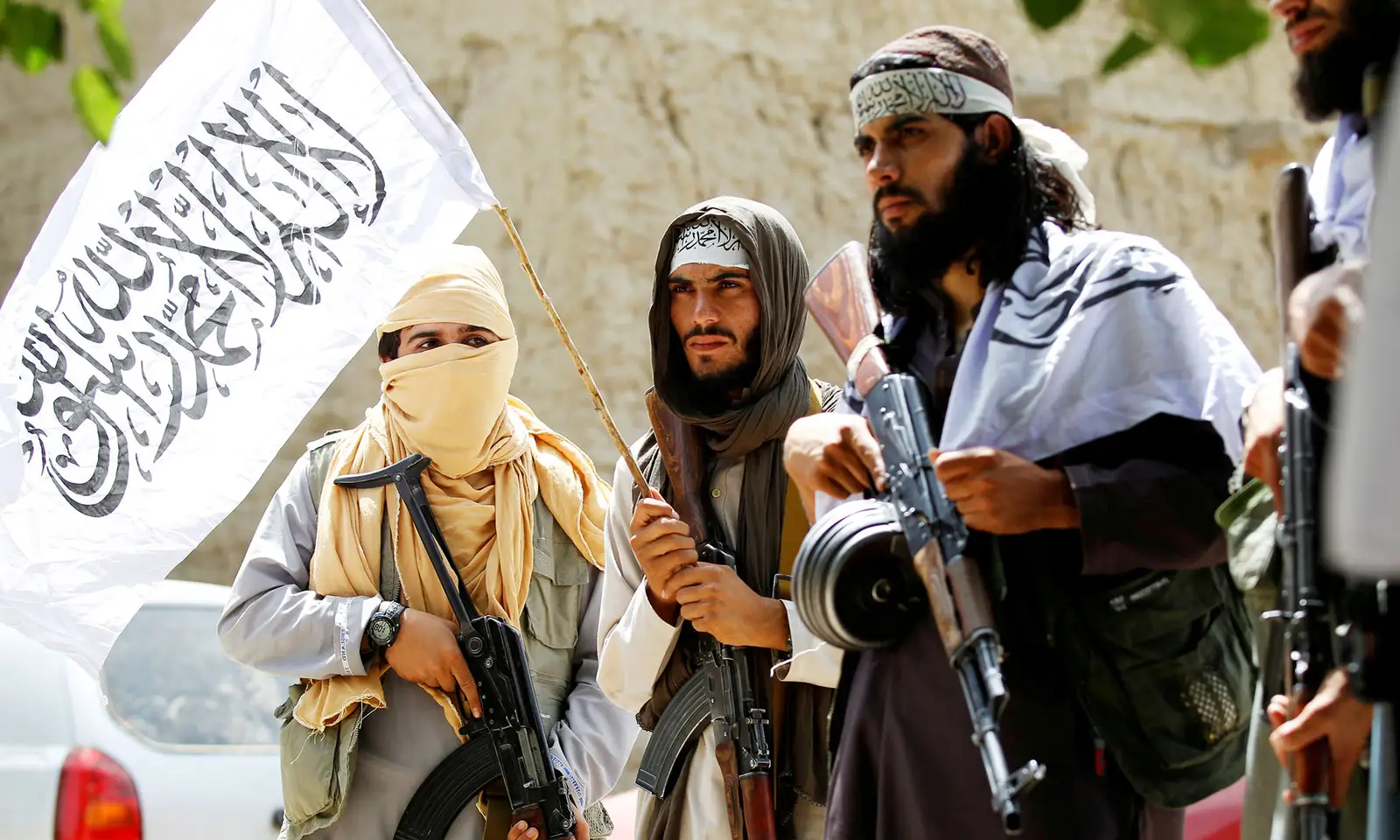
Yesterday afternoon brought some surprise news. American and Taliban negotiators have apparently “agreed in principle” to a “framework of a deal” with the Taliban, a deal that could ultimately lead to an American withdrawal after more than 17 years of war.
Could we be seeing an end to the “forever war”? Is peace (possibly) at hand? Or would a deal represent nothing more than a dangerous retreat by a dispirited nation in the face of emboldened and energized enemies?
To answer the question, let’s look at the details of the potential agreement. They’re admittedly sketchy, and a final deal could look better, but if we’re seeing the outlines of the Trump administration’s plan, we’re seeing the outlines of a desperate, gullible deal — one that will make America far less secure.
According to the New York Times’ summary of the deal, the Taliban “guarantee Afghan territory is never used by terrorists,” and then a complete U.S. pullout could commence “in return for larger concessions,” including an agreement for a cease-fire and for insurgents to commence direct talks with the Afghan government.
Do the Taliban have the same understanding about the deal? Perhaps not. The Times reached a “senior Taliban official with direct knowledge of the talks,” and while he “confirmed the draft agreement on the issue of foreign troop withdrawal and the Taliban pledge that Afghan soil would not be used against others,” there was obvious trouble ahead:
[I]n a sign that the conditions the Americans have demanded may be difficult to reach, the Taliban official said he did not see the agreement as being dependent on a cease-fire or direct talks between the Taliban and the Afghan government. The official declined to specify the Taliban’s position on these issues.
Yet even if the Americans reach the agreement outlined by their own negotiator, we would be entering into a fool’s bargain with a ruthless enemy. How would it be problematic? Let us count the ways.
First, there’s implementation. Would the Taliban turn on international militants that are currently often “intermingled” with their own fighters? Would the Taliban rout ISIS from Afghanistan? Absent American military support, is there a local force that even has the power to rout ISIS? Is there even a Taliban negotiator who speaks with the authority to truly bind all Taliban factions?
Moreover, the threat isn’t merely theoretical. Here’s the Times again:
Jim Mattis, who resigned as defense secretary last month, pointed to the estimate that some 20 terrorist groups, many of them offshoots of Al Qaeda and the Islamic State, would quickly use the freedom afforded by an American troop pullout to try to launch operations against Western targets.
Second, there’s enforcement. It is difficult enough to prevent terrorist safe havens from emerging when there’s an American military presence in the country, including a presence sufficient to provide the kind of on-the-ground intelligence to identify emerging threats. In the event of a total pullout, the American ability to identify and smash safe havens that emerge in violation of the agreement would be limited, and the American appetite to reenter the struggle would be non-existent.
In other words, the Taliban would know that when we’re gone, we’re almost certainly truly gone.
Third, there are profound religious and strategic consequences. If American forces leave in the face only of an empty pledge not to permit safe havens, a temporary cease-fire, and an agreement that the Taliban merely speak to the Afghan government, then the Trump administration will enhance jihadist prestige immeasurably. Insurgents will be able to make a plausible claim to have chased the Americans out of Afghanistan. They’ll have a plausible claim that jihadists have defeated a second superpower — first the Soviets and now the Americans.
If the planned Trump withdrawal from Syria has echoes of America’s disastrous withdrawal from Iraq, its potential withdrawal from Afghanistan has echoes of America’s retreat from Vietnam. We’d leave an allied government with diminished resources to face an emboldened enemy. But unlike our Vietnamese foes, this emboldened jihadist enemy has already demonstrated that it can and will host terrorists who can and did inflict grievous harm on the United States of America.
As our successful incursion into Syria demonstrates — and as our contemporary engagement in Afghanistan shows — so long as there are sufficient allied forces on the ground, America does not have to deploy troops at scale to destroy terrorist safe havens and to keep jihadist armies at bay. American casualties in Afghanistan peaked in 2010 and 2011 and have declined precipitously since. In 2011, 499 Americans died in Afghanistan. In 2018, 17 Americans perished.
As for Syria, thanks in large part to the remarkable courage and sacrifice of our Kurdish allies, American troops have routed ISIS from its physical caliphate while losing fewer than ten men and women in combat.
It’s vital to understand that peace does not necessarily require withdrawal. In fact, American troops have often been indispensable to keeping the peace after our worst wars. And as costly as those forward deployments are, they are far, far less costly than renewed combat. Keeping an American military force in Iraq in 2011 would have been far less costly than the city-destroying urban battles we’ve seen since America was forced to reengage in 2014. Keeping an American military force in South Korea has been far less costly than the likely catastrophe of a second Korean War.
No deal with the Taliban should depend on trusting the Taliban to defeat the terrorists who seek to strike us here at home. No deal with the Taliban should leave our allies at the mercy of the Taliban. If that means no deal with the Taliban, then so be it. If they want to commit to perpetual warfare, then they should understand that our nation has the will for perpetual self-defense.



Comments
On “Retreat in Our Time?”