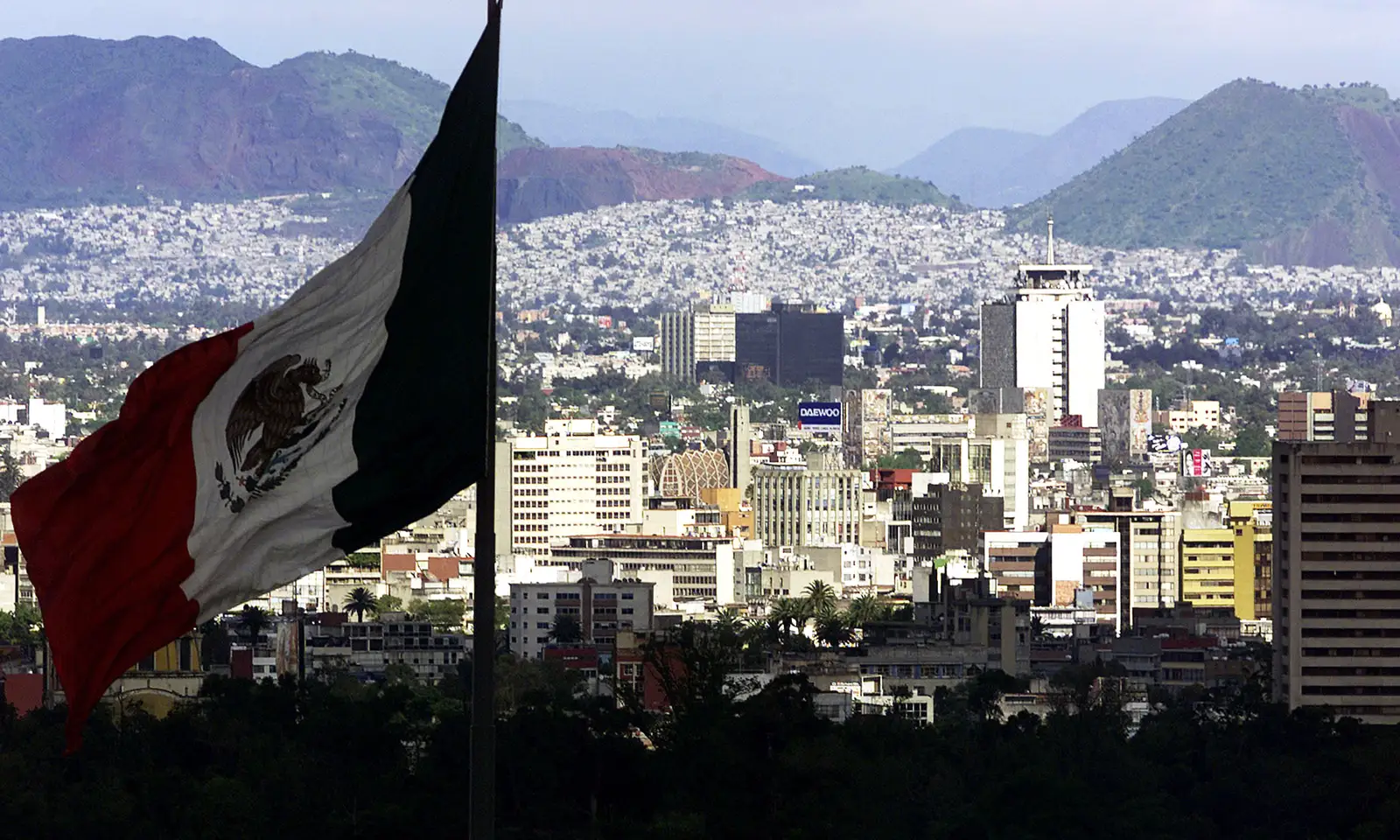
I arrive at the airport in Mexico City a little before 8 p.m. I say to the official who will examine my passport, “Buenas tardes? Buenas noches?” He looks at his watch and says, “We usually start ‘noches’ at about 8. You’re right on the cusp. You can say either.” Later, someone else will tell me, “At 7. Definitely about 7 o’clock.” But mainly, a person goes by feel …
• Last year, I came to do a piece on a very grim subject: the murder of Mexican journalists (which happens a lot). Mexico City, I was told, was La Burbuja — The Bubble. People here are insulated from the violence that afflicts the rest of Mexico. Of course, this is true only to a degree — bubbles can be pierced.
Anyway, I don’t mind life in La Burbuja, not a bit. Mexico City, in its finer neighborhoods, is very pleasant to be in.
(For the piece I wrote last year, go here.)
• Thanks to the Oslo Freedom Forum, which is holding a special session in Mexico City — focused mainly, but not exclusively, on Latin America — I meet Griselda Triana. She is the widow of Javier Valdez, one of the many Mexican journalists who have been murdered. I tell her I admire her for being out and about. She says, “There’s no choice.” I say, “Yes, there is: You could always stay in and hide. But you set an example for the rest of us.”
She seems a warm, impressive person, Griselda Triana — lovable, too.
• I am very pleased to see Jan-Albert Hootsen, an old friend of mine: a Dutch journalist who is the Mexico representative for CPJ — the Committee to Protect Journalists. His career is two-fold (at least): He does his own reporting, his own journalism; and he works like hell to keep his colleagues alive.
• Hang on, what’s this? A statue of FDR, yes — a good likeness too, capturing the president’s jauntiness. But is he on his feet? At that age? Yes, he is. I don’t think I’ve ever seen a monument to Roosevelt that shows him on his feet. Want to see it?
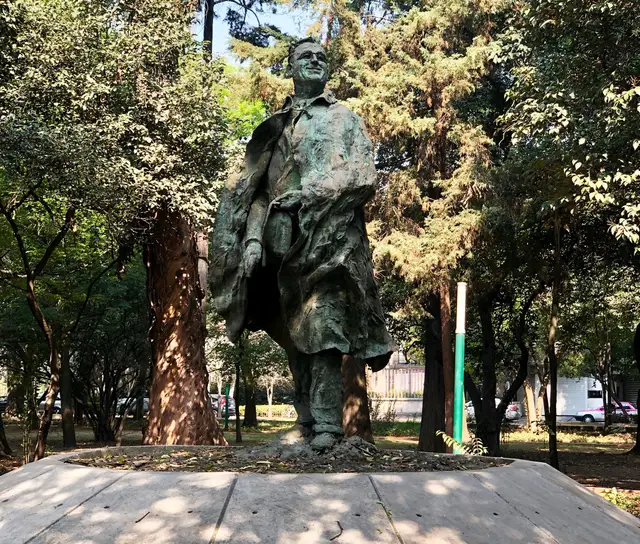
N.B. FDR was the Democrats’ vice-presidential nominee in 1920, with James M. Cox. In that period, he campaigned on his feet. But not when he began running for president, in 1932.
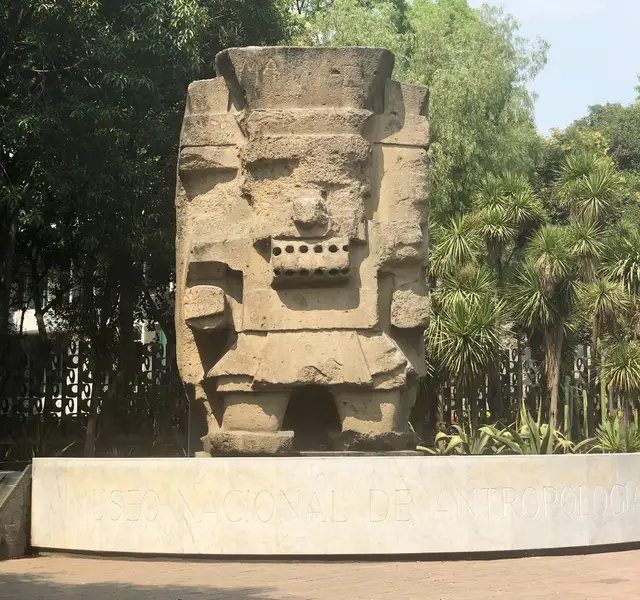
• The session of the Oslo Freedom Forum will be held in Mexico’s grandest, best museum (or so I understand): the National Museum of Anthropology. I will show you a hunk o’ something historic near the entrance:
• On a busy street, I see a young man with a newspaper rolled up in his hand. Does this still happen? Newspapers rolled up, in the hands of young people? You can still witness this, yes. But probably for not much longer …
• Something else you can see on the streets of Mexico City — something modern, not old-fashioned: men in business suits, going to and from work on Segways.
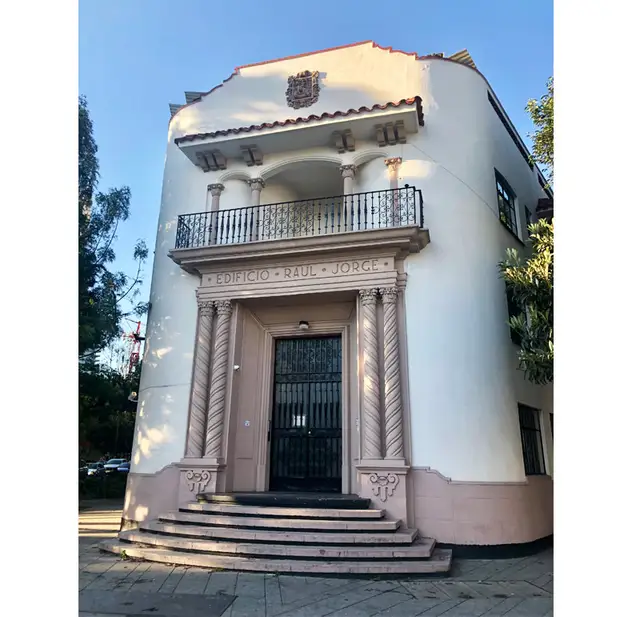
• I thought this building was attractive — the Edificio Raúl Jorge. (No, I don’t know what goes on in there.) See if you agree:
• Asma Khalifa is an extraordinarily inspiring person. She is a young woman from Libya, who served as a nurse during that country’s civil war. One of her messages is: Hard as it may be, try not to demonize or de-humanize your enemies, or putative enemies. I’ve recorded a podcast with her. Again, an extraordinary person.
She made me think: “I have some shaping up to do my own bad self.”
• Asma’s husband, Bjørn Ihler, is also an extraordinary person. He is a Norwegian, one who survived that massacre in 2011. To read about him — and to hear him, too — go to a page from the Oslo Freedom Forum: here.
• “Ah, Rubén Darío!” exclaims Edipcia Dubón. We are passing the avenue named after him. Edipcia is a democracy leader from Nicaragua — a former congresswoman who had to flee the country, in the face of a merciless crackdown by the Nicaraguan dictator, Daniel Ortega. Darío was a Nicaraguan poet, who lived from 1867 to 1916. Like others who participate in the Freedom Forum, Edipcia is a joy and an inspiration. I will have a piece on her — and Nicaragua’s current horror — in the next issue of National Review.
Still, I wish you could meet her live and in the flesh.
• In her opinion, who is the most famous Nicaraguan in the world? Bianca Jagger, right? (I see this lady pretty much every summer when I work at the Salzburg Festival in Austria.) Edipcia thinks about it: either her or Sergio Ramírez, she says. (He is a literary and political figure.) I vote Bianca.
• Throughout the neighborhood called “Polanco” — one of the city’s finest — there are men with guns guarding things: not just glassy corporate buildings but fairly humble shops, too.
• I duck into a barbershop (not guarded). It is very old-fashioned, gloriously old-fashioned! The chairs, the techniques, the smells. How old-school is it? The magazine rack is mainly porn mags …
• The session of the Oslo Freedom Forum opens with a press conference. First to speak is my old friend Javier El-Hage, a Bolivian lawyer, an official of OFF, and a champion of liberty. He speaks about the dictatorships of Latin America: Cuba, Venezuela, Nicaragua (with Honduras ever more worrisome). He also speaks of liberal democracy. And he says something fundamental: Supporters of liberal democracy — left, right, or center — are allies. They should be allied with one another against dictatorship and other (less extreme) forms of illiberalism.
Let me give you a memory: Years ago, I was on an AIPAC junket to Israel (one of the most satisfying, and moving, trips I have ever taken). In our group were some left-of-center journalists. They wanted to debate policy: U.S. policy on Israel, Israeli policy on national security. My attitude basically was: You and I support the right of Israel to exist. Therefore, we are on the same side. We believe in the core thing: the right of Israel to exist. All the rest is detail — important detail, maybe, but detail nonetheless. When so many in the world do not support the right of Israel to exist, our shared support trumps all.
Do you know what I mean? I should flush this out in a proper essay …
• An affable, urbane democrat at the conference is “Tuto” Quiroga, a one-time president of Bolivia (in the early 2000s). (He must have been a boy wonder, because he looks quite young now.) He cites an old bit of wisdom: If you are neutral between persecutor and victim, you are effectively siding with the persecutor.
• Inside the auditorium in the Museum of Anthropology, before the speeches begin, there is music playing: a jazzy Pachelbel canon. Not bad (and not good).
• Thor Halvorssen greets the attendees. He is the president and CEO of the Human Rights Foundation, which is the parent organization of the Oslo Freedom Forum. The human-rights biz, he says, is a politicized one. HRF — and, by extension, OFF — is different. In the view of HRF/OFF, there are not good dictatorships and bad dictatorships. There are simply dictatorships, which stink.
• Giving the keynote address is Enrique Krauze, the Mexican historian, essayist, etc. He is — dread phrase — a public intellectual, and one of the foremost anywhere. In this talk, he emphasizes the importance, and the utility, of understanding all sides. Not agreeing with all sides, of course. But understanding them (as in Venezuela). He also speaks of freedom — which cannot be learned in books, he says, but rather is learned by hard experience.
• Bonil is a delight. He is a cartoonist from Ecuador. (Formal name, Xavier Bonilla.) No offense to him, but he looks sort of like a cartoon: with an animated, lively, extra-expressive face. For years, he tangled with Rafael Correa, the ex-strongman of Ecuador. (Correa has now been succeeded by a man named Lenin: Lenín Moreno.) Correa invited his followers to kill Bonil. None managed to do it, although many threatened it. Sometimes, they would cloak themselves in the mantle of Christ. Which is annoying.
As you would expect, Bonil is a humorous guy — cartoonists are bound to be. “He threatened to break my face. I told him, ‘How can you make it look worse than it already does?’” But his humor does not mask his bravery.
• In the museum’s collection is a big coin — well, not really: It’s a fantastic Aztec sun stone. (See it here.) But it’s on a coin: Mexico’s ten-peso one. Fascinating object, this stone, which, fortunately, a learned young Mexican explains to me.
• Outside the museum, there are the usual protesters — the protesters who always gather outside Freedom Forum events: commies, in short. I snap a picture from the lobby — not a good picture, but you can see the red flags:
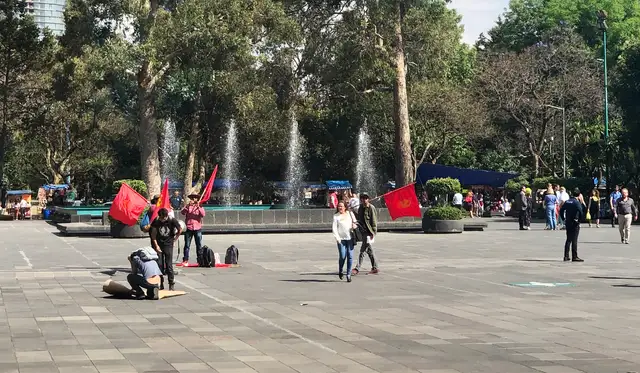
I’m all for their right to protest. But, if they took power, would they allow me to protest? (Don’t bet the farm.)
• It is good to see Rosa María Payá — daughter of the heroic Oswaldo Payá, who was killed in an accident in 2012 (a suspicious accident). Oswaldo Payá was a Cuban democracy leader; his daughter is carrying on his work. Two years ago, I did a podcast with her: If you don’t know her, you will like her a lot (here).
• It is good to see Chito Gascon, too. He is the chairman of the Human Rights Commission of the Philippines. He has a lot of work to do, as you can imagine. Governmental murder is in vogue over there …
• Leyla Hussein is an Anglo-Somalian — who tries to wake the world up about a grisly issue: female genital mutilation. It is not an exotic cultural or religious practice, she says. It is not something done by the Other, which the West should tolerantly accept. It is a brutal practice — an act of violence — with long-term harmful effects. Leyla is a crusader, but a crusader with abundant charm and flair, which aids the crusade, as I see it. I have podcasted with her a couple of times: in 2017, for example.
• At the museum, I podcast with Felix Maradiaga. He is a Nicaraguan political scientist, entrepreneur, and human-rights defender. Like Edipcia Dubón, he has had to flee his country. I talk with him about his life, and his country. A man both good-natured and formidable: Go here.
• It is so easy to take democracy for granted — when you live in a democracy. It’s easy to pick at it too — when you live in a democracy. But those without democracy don’t take it for granted — quite the opposite. And they can’t afford to pick.
• There is a young man behind a hotel desk. He is a keen student of literature, and a keen student of English. He gives me the names of some Mexican writers: Have I ever read them? No, and I haven’t heard of them either, I’m afraid. He wants the names of some American writers to read — writers of fiction. And in fairly straightforward English. I suggest Hemingway. He has never heard of him. Neither has he heard of Fitzgerald. But he is eager to explore Hemingway, and to give The Great Gatsby a shot.
The world is wide, so wide. You can never hear of everyone. What’s a big deal to one person is a blank to another — and something to discover.
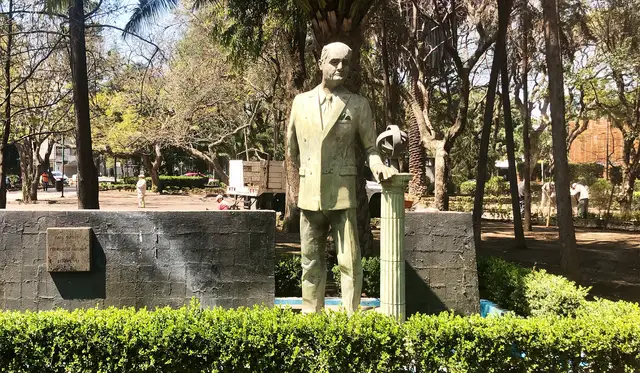
• In a park, I happen upon a monument to Paul Harris — the founder of Rotary International. Harris lived from 1868 to 1947; he founded Rotary in 1905. This is one of my favorite organizations. It has done mountains of good in the world. As I recall, a writer in The New Yorker once sneered at John Dos Passos, long ago. Dos Passos had been a brilliant figure on the left — and now, said the writer, Dos Passos had embraced the worldview of a Rotarian. “Rotarian” was a great putdown. Well, they can put me down, too.
Here is that monument:
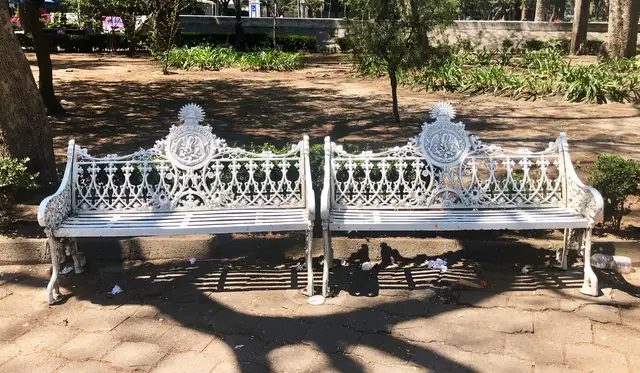
• I like benches of this type — do you? I would never sit on one — uncomfortable as hell. But nice to look at:
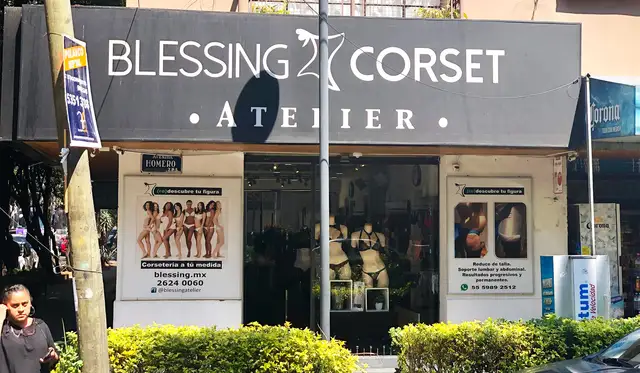
• Behold, Blessing Corset, for all your corset needs:
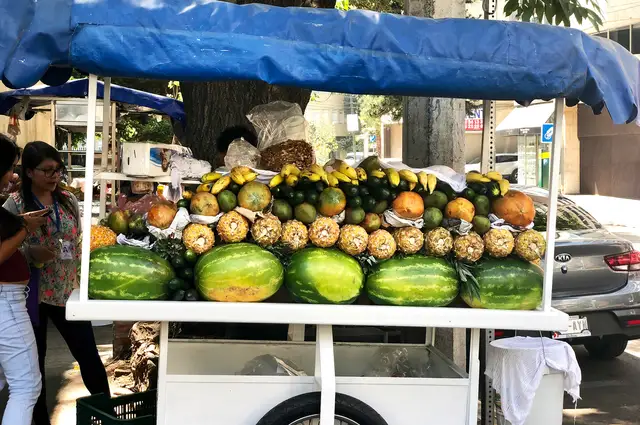
• Mexico City — and Mexico at large — is famous for color. Have a little color:
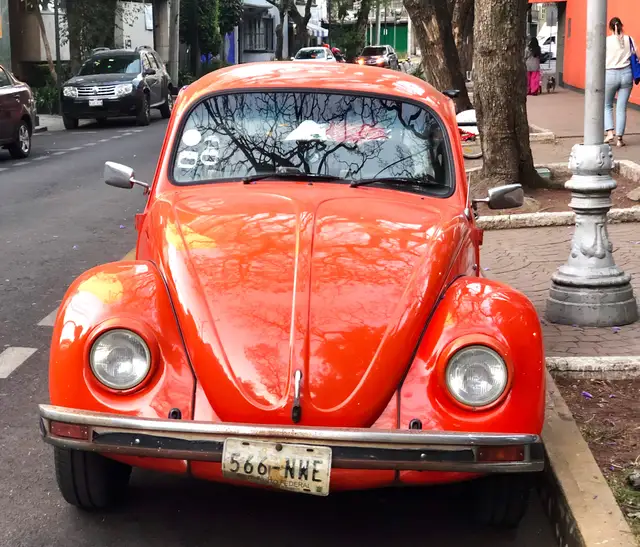
• A little more color? Well, an orange Bug never hurts:
• I meet a man who speaks pretty good English. He has traveled in America a bit. He has been to New York, Miami, Chicago, L.A., Montana …
Whoa, Montana? I myself haven’t been to Montana. How did that happen?
Years ago, he studied English, briefly, at Gonzaga University, in Spokane, Wash. His roommate was from Montana. And this roommate took him home for Thanksgiving. The young Mexican had a proper turkey dinner. He also made a Mexican meal for the family — though the ingredients were hard to obtain.
We all love Thanksgiving, of course. I also love the tradition of taking foreign classmates home for it.
• Having lunch with David Luhnow, the Latin America bureau chief for the Wall Street Journal, and José de Córdoba, a correspondent in the same bureau, is at least two things: an education and a ball.
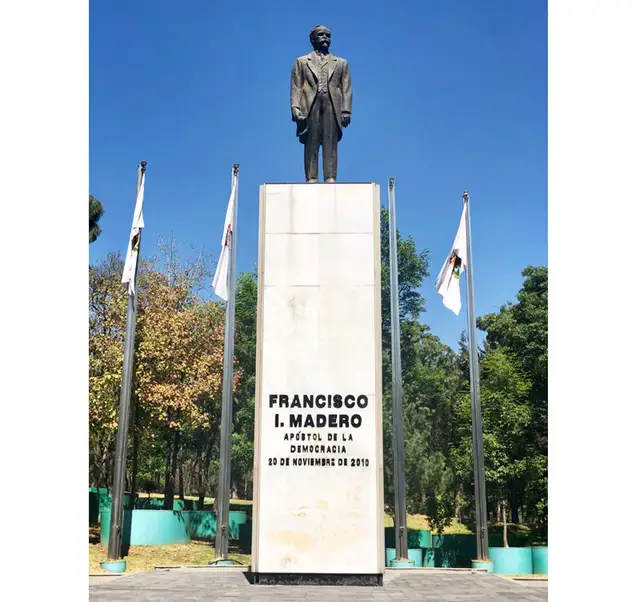
• Here is a tall, tall statue — of Francisco I. Madero, “Apostle of Democracy.” What a difference a letter makes: “Madero” vs. “Maduro.”
• Lots of young mothers in Mexico City — and not of babies either, but of elementary-school kids.
• I hear someone cry out, “Ándale, ándale, ándale!” Makes me smile.
• As throughout the world, parks in Mexico City are chiefly for two classes of beings: dogs and lovers (and dog lovers, I guess) …
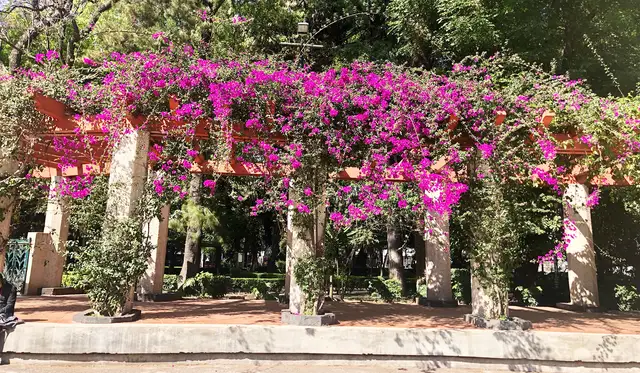
• I have to adapt from Dr. Johnson: He who is tired of bougainvillea is tired of life.
• On the plane home, there is an elderly stewardess (as we used to say) — not in her 70s, but older. She is spry as all get-out. An inspiration.
• New York seems in black and white, after the technicolor of Mexico City. At any rate, thanks for joining me, everyone. If you care to drop me a line, try [email protected]. And I’ll see you soon.




Comments
On “Freedom and Its Foes: A Mexico City Journal”