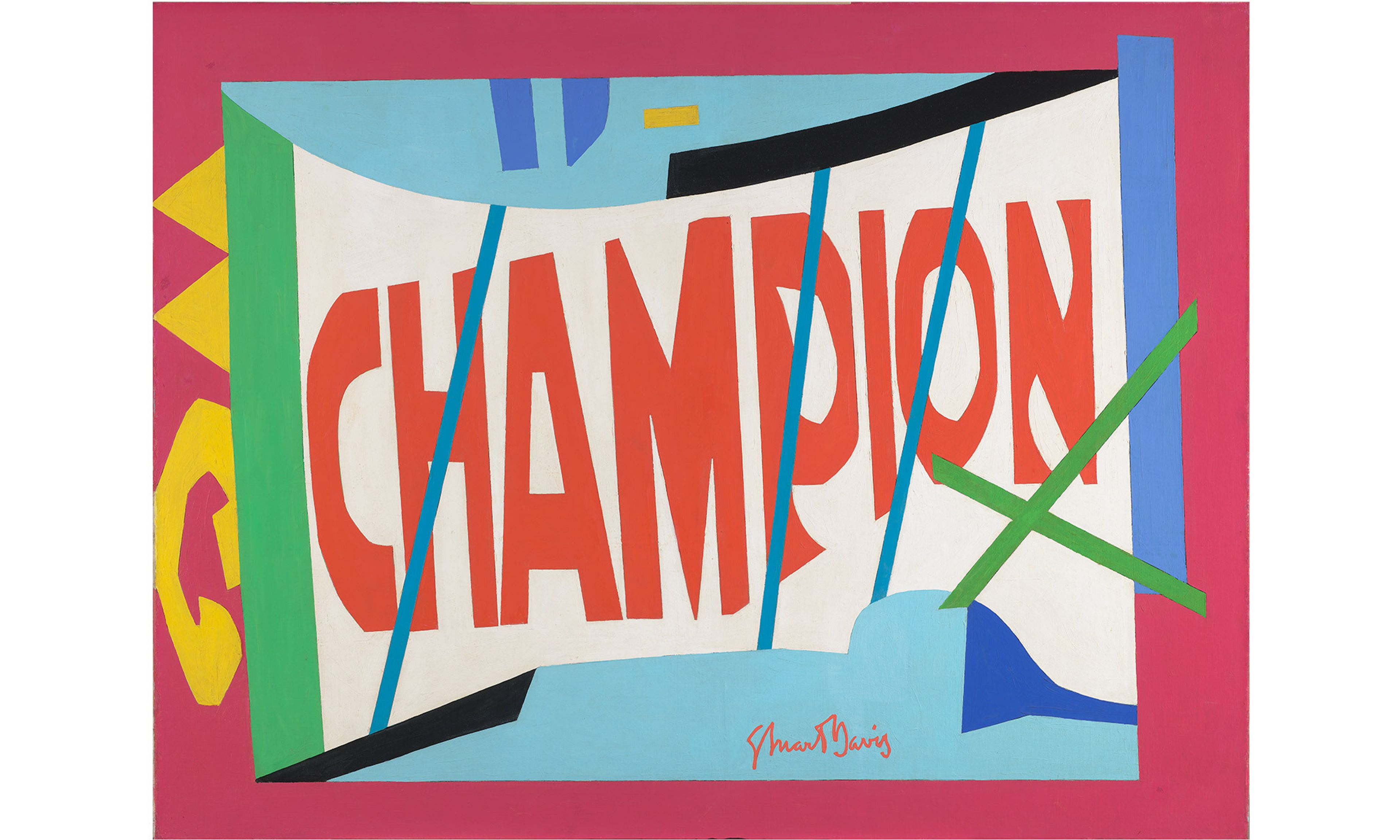
Edith Halpert and the Rise of American Art is now at the Jewish Museum. If there’s a show to see in New York, it’s this one. It’s beautifully done, as are all the Jewish Museum’s shows, with great art and a majestic personality at its center. Halpert (1900–1970) was self-made, tough, kind, focused on the next buck, a charming woman with a canny sense for under-the-radar art. She took trompe l’oeil gun paintings, old weather vanes, American cubism, and Georgia O’Keeffe and made an American whole. As a young woman, at the start of the Depression, she opened the cutting-edge Downtown Gallery, which represented Stuart Davis, Charles Sheeler, and Jacob Lawrence through thick and thin.
Through thick and thin. That’s the life of an art dealer. The best are tastemakers and connoisseurs. In supporting living artists, they’re philanthropists invested in the riskiest propositions. They’ve built careers and collections, and until the 1970s, dealers pumped the blood through the living and breathing American art corpus.




Comments