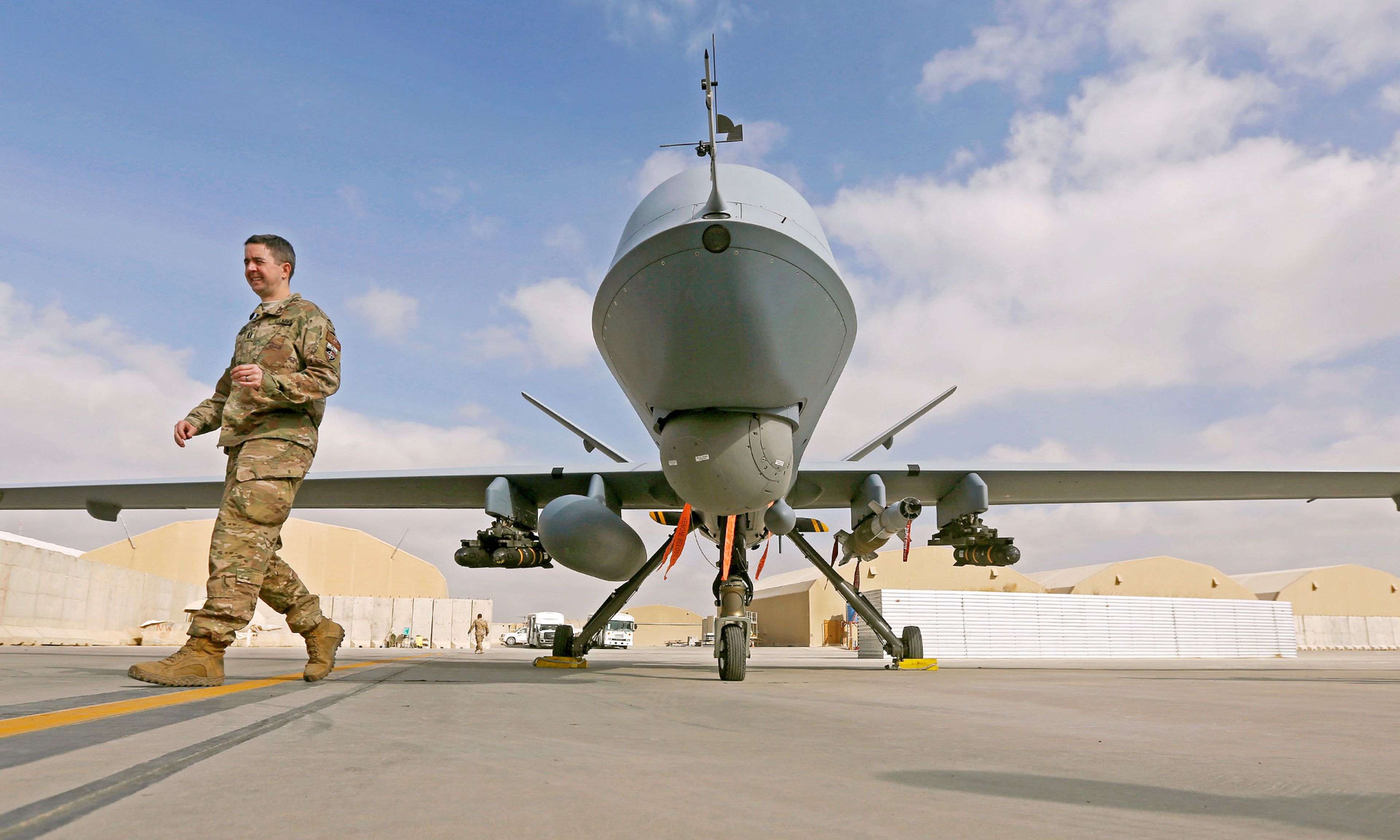
Armed drones have become a fixture of modern battlefields. Until relatively recently, the United States was the world’s sole drone superpower, deploying Predators and Reapers to stalk terrorists across Africa, the Middle East, and Asia. That’s no longer the case. In Libya over the last few months, a conflict that pits the Turkish-backed government in Tripoli against U.A.E.-backed forces has seen drones deployed by both sides. Iran unveiled an army of new drones fitted with anti-tank missiles in April, and China is exporting drones to traditional U.S. allies in the Middle East. Yet Washington is reticent to export its own drone technology and has watched as American drones were downed in Yemen, the Persian Gulf, and Libya. What went wrong?
Military drone technology was pioneered by Israel in the 1980s and later developed by the U.S. to fight the global war on terror. But success brought complacency, and in recent years countries such as China, Turkey, Iran, and Russia have made rapid progress in building their own drones. Of greater concern is that China, Iran, and Turkey are also exporting armed drones. This is a result of two trends: the U.S. preference not to sell its armed drones in order to keep the deadly technology from proliferating, and the desire by other countries to acquire these weapons from whoever will make them available. For instance, the U.A.E. had sought armed U.S. drones since the early 2000s; it was eventually allowed to buy unarmed Predators in 2013, and it has turned to China to fill some of its other drone needs. Since 2015, lawmakers have been pushing the Trump administration to allow the sale of armed versions.





Comments