The FBI coordinated very closely with the Obama White House on the investigation of Michael Flynn, while the Obama Justice Department was asleep at the switch. That is among the most revealing takeaways from Thursday’s decision by Attorney General Bill Barr to pull the plug on the prosecution of Flynn, who fleetingly served as President Trump’s first National Security Advisor. Flynn had been seeking to withdraw his guilty plea to a false-statements charge brought in late 2017 by Special Counsel Robert Mueller.
While working on the Trump transition team in December 2016, Flynn spoke with Russian ambassador Sergey Kislyak, in conversations that were intercepted by our government (because Russian-government operatives, such as Kislyak, are routinely monitored by the FBI and other U.S. intelligence agencies). Among the topics Flynn and Kislyak discussed was the imposition of sanctions against Russia, which President Obama had just announced.
That these conversations took place has been known for over three years — ever since a still-unidentified government official leaked that classified information to the Washington Post. For almost as long, it has been known that the FBI became aware of the Flynn–Kislyak discussions very shortly after they happened. What was not known until this week was that then–acting attorney general Yates was out of the loop. She found out about the discussions nearly a week afterwards — from President Obama, of all people.
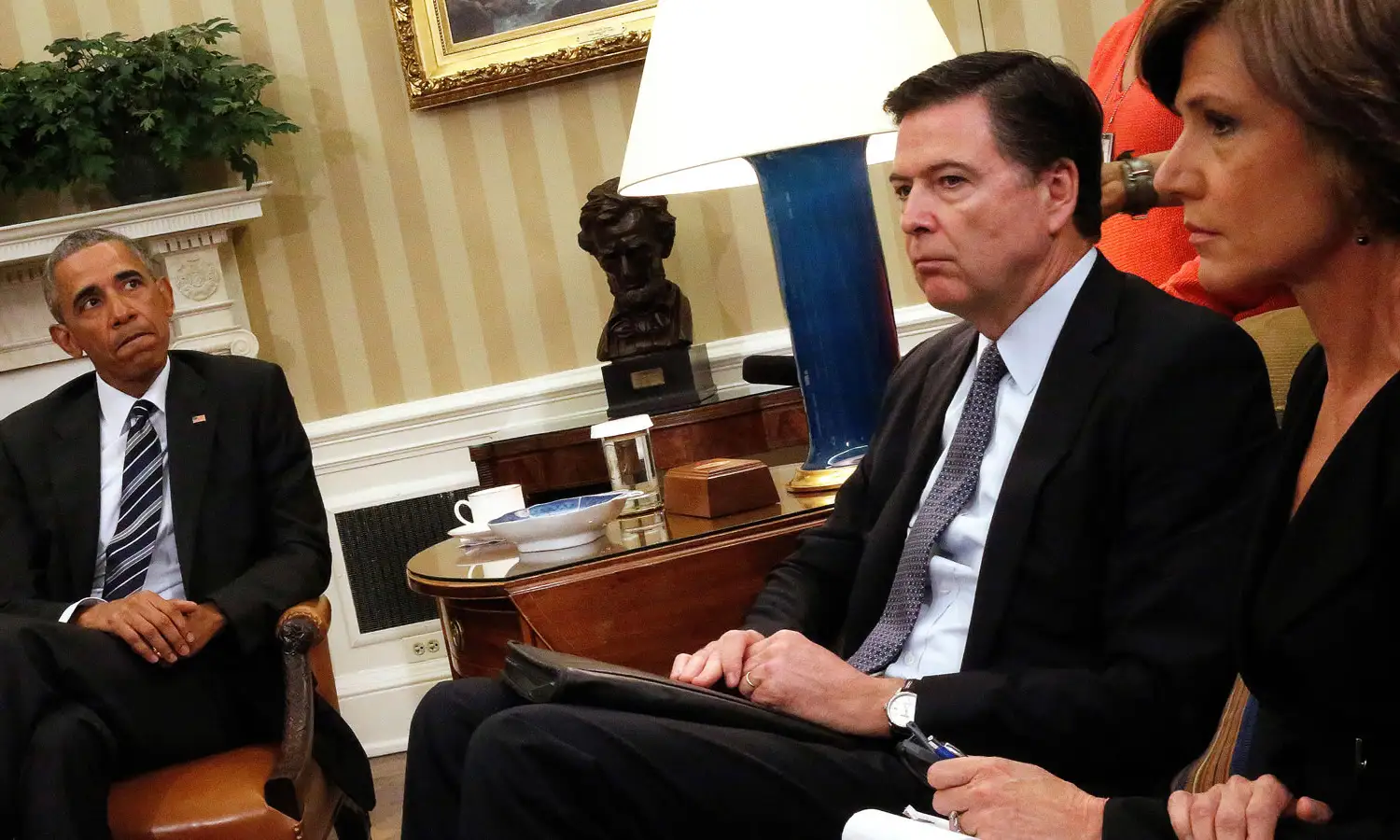
This was at a White House pow-wow on January 5, 2017. That was the day when the chiefs of key intelligence agencies briefed top Obama White House officials on their assessment of Russia’s meddling in the campaign. After the main briefing, the president asked Yates and FBI director James Comey to stick around to meet with him, along with Vice President Biden and National Security Adviser Susan Rice. Yates was taken aback when Obama explained that he had “learned of the information about Flynn” and his conversation with Kislyak. She was startled because, she later told investigators, she “had no idea what the president was talking about.”
Yates had to figure things out by listening to the exchanges between President Obama and FBI director Comey. The latter was not only fully up to speed, he was even prepared to suggest a potential crime — a violation of the moribund Logan Act — that might fit the facts.
According to an FBI report, which was appended (as Exhibit 4) to the Justice Department’s motion to dismiss the Flynn case, Yates later said she was “so surprised by the information she was hearing that she was having a hard time processing it and listening to the conversation at the same time.”
I’ll bet.
That Yates was in the dark was not the FBI’s fault. Two days earlier, the bureau’s then–deputy director, Andrew McCabe, had briefed Assistant Attorney General Mary McCord, the head of DOJ’s National Security Division, about the Flynn–Kislyak discussions. Evidently not appreciating what the FBI regarded as the urgency of the matter, McCord did not pass the information along to the acting AG before her White House meeting.
Ms. Yates’s astonishment at how well-informed the bureau was keeping the president calls for revisiting something to which I’ve called attention before. It now seems even more significant.
When General Flynn was forced to resign as national-security adviser after just three weeks on the job, the New York Times did its customary deep dive, in which seven of its best reporters pressed their well-placed sources for details. It was a remarkable report, which recounted — as if it were totally matter-of-fact — that Flynn’s communications with Kislyak had been investigated by the FBI in real-time consultation with President Obama’s aides. For example (my italics):
Obama advisers heard separately from the F.B.I. about Mr. Flynn’s conversation with Mr. Kislyak, whose calls were routinely monitored by American intelligence agencies that track Russian diplomats. The Obama advisers grew suspicious that perhaps there had been a secret deal between the incoming [Trump] team and Moscow, which could violate the rarely enforced, two-century-old Logan Act barring private citizens from negotiating with foreign powers in disputes with the United States.
Interesting. The FBI tells Obama “advisers” about Flynn’s discussions with Kislyak. Between this and their surprise that Russian dictator Vladimir Putin did not retaliate when Obama imposed sanctions, the Obama “advisers” dream up a non-existent pact between Trump and the Kremlin — collusion! And they’re already thinking about nailing Flynn on the Logan Act . . . an obsolete, unconstitutional vestige of the President John Adams administration that has never, ever been prosecuted in the history of the Justice Department (the last case appears to have been in 1852; DOJ was established 18 years later).
Who came up with that? Well, Ms. McCord (whose interview is Exhibit 3 in the DOJ’s Flynn dismissal motion) later told investigators that the Logan Act flyer originated in the office of Obama’s director of national intelligence, James Clapper — specifically proposed by ODNI’s general counsel, Bob Litt. Obviously, by January 5, Comey was already discussing it with Obama.
Let’s look at some more of that Times report on Flynn’s downfall. For the legal analysis of Flynn’s exchanges with Kislyak, the president’s aides consulted the FBI, not DOJ:
The Obama officials asked the F.B.I. if a quid pro quo had been discussed on the call, and the answer came back no, according to one of the officials, who like others asked not to be named discussing delicate communications. The topic of sanctions came up, they were told, but there was no deal.
So no misconduct. To the contrary, the incoming national-security adviser asked a Russian counterpart to discourage his government from escalating tensions, which is what we would want any American diplomat to do. “There was no deal.” Sanctions were merely mentioned, as one would expect since they’d just been imposed, but Flynn made no agreement to accommodate the Kremlin in any way.
But see, those are the actual facts. Who cares what actually happened? What matters, it turns out, is what “Obama advisers” and their FBI co-creators could imagine it into: There must be Trump collusion with Russia because we’ve concluded Putin would otherwise have retaliated.
This was nothing new for the FBI. Remember, at that point, they are already in the FISA court (and at that time, were about to go back for a renewal warrant) telling the judges they suspect members of Donald Trump’s campaign are in a “conspiracy of cooperation” with the Putin regime. Their proof of that? The Steele dossier — uncorroborated Democratic Party–and Clinton-campaign-sponsored propaganda that they already have immense reason to know is claptrap.
Meanwhile, with Yates at the helm, the Justice Department had major reservations about the FISA warrants’ reliance on the Steele dossier, but swallowed hard and went along with it. The Justice Department had major reservations about the Logan Act as a predicate for investigating Flynn, but Yates was too startled to speak up at the White House meeting. The Justice Department wanted Comey to alert the Trump White House about the Flynn–Kislyak discussions, but the FBI refused . . . and Yates did nothing. By the time, after days of temporizing, she finally decided to put her foot down, Comey told her he had already dispatched agents to do an unauthorized ambush interview of Flynn. Yates was “dumbfounded,” McCord recalled.
The Justice Department appears to have spent much of its time “flabbergasted,” to quote McCord again. But in the end, it would always go with the collusion flow. Meanwhile, empowered and emboldened, the FBI ran rings around its nominal superiors.
So what did President Obama make of all this theorizing from the FBI and his “advisers”? Well, intriguingly, as she was leaving her office for the last time, Obama’s top adviser, Susan Rice, decided that her last official act, moments after Trump was inaugurated, would be to craft — 15 days after the fact — an email memorializing Obama’s directive at the January 5 meeting:
President Obama said he wants to be sure that, as we engage with the incoming [Trump] team, we are mindful to ascertain if there is any reason that we cannot share information fully as it relates to Russia.
Hmm, you mean a reason like “Trump and his minions just might be colluding with the Kremlin”?
You’d almost think the Obama White House and its intelligence apparatus were weaving a political narrative out of . . . nothing.



Comments
On “Flynn and the Anatomy of a Political Narrative”