This morning, the Justice Department carried out the execution by lethal injection of a white supremacist convicted of brutally murdering a husband, wife, and their eight-year-old daughter in 1996. The death sentence of Daniel Lee Lewis was carried out at the federal penitentiary in Terre Haute, Ind. It was the first execution of a federal capital sentence in 17 years.
In the wee hours this morning, as NR’s Brittany Bernstein reports, the U.S. Supreme Court vacated the injunction against the Justice Department’s execution of Lee, who had been on death row for more than two decades. The High Court’s ruling permitted the DOJ to press ahead with a lethal injection that was originally scheduled to occur Monday afternoon. The Court’s 5–4 ruling also authorizes the DOJ to proceed with executions of three other defendants, scheduled to occur in the next few weeks.
In a column yesterday, I recounted the grisly facts of Lee’s prosecution. He was convicted of capital murder in aid of a racketeering enterprise — specifically, a white-supremacist organization, for which he and an accomplice murdered a firearms dealer, along with the dealer’s wife and child, in robbing their home to steal guns and money. After shooting them with stun guns and asphyxiating them, Lee and his partner weighted the corpses down with stones and tossed them into the bayou. The bodies washed up in a lake six months later.
Last year, Attorney General Bill Barr announced plans to proceed with the executions of death-penalty convicts, some of whom have languished on death row for a quarter-century. There are about five dozen prisoners in the federal system who have been sentenced to death for capital murder, but there have been only three federal executions since 1988, and none since 2003.
As noted in the column, and in this follow-up post, Obama-appointed judges have been conjuring up roadblocks for this lawful Trump-administration initiative — just as they have imperiously done in connection with various other Trump policies. In the case of Lee’s scheduled execution, Judge Jane Magnus-Stinson, an Obama appointee to the federal district court in Indiana, theorized that the lethal-injection procedure should be delayed so that relatives of the family Lee murdered could attend. There is no federal legal right of victims’ families to attend executions, which — it should go without saying — are not public proceedings. The relatives in question oppose the death penalty and were hoping to convert an invitation to the execution into an interminable delay, on the ground that they could not travel safely until the coronavirus pandemic eased.
The Seventh Circuit U.S. Court of Appeals rejected that scheme in an unusual Sunday ruling. That seemingly green-lighted the execution scheduled for Monday afternoon. At the eleventh hour, however, Judge Tanya S. Chutkan, an Obama appointee to the federal district court in the District of Columbia, issued an injunction to block the executions of Lee and three other capital convicts.
Although the Seventh Circuit, a higher authority than Judge Chutkan (albeit in another circuit), had already permitted the execution to proceed, Chutkan was able to issue her order because it involved a separate challenge, directed at the Justice Department in Washington. She objected to the protocol for lethal injections that the DOJ adopted last year, homing in on its use of pentobarbital as a sedative. Chutkan relied on new expert testimony for the proposition that pentobarbital could result in “flash pulmonary edema,” a condition that could cause “extreme pain, terror, and panic” in the about-to-be-executed defendant by producing “sensations of drowning and asphyxiation.”
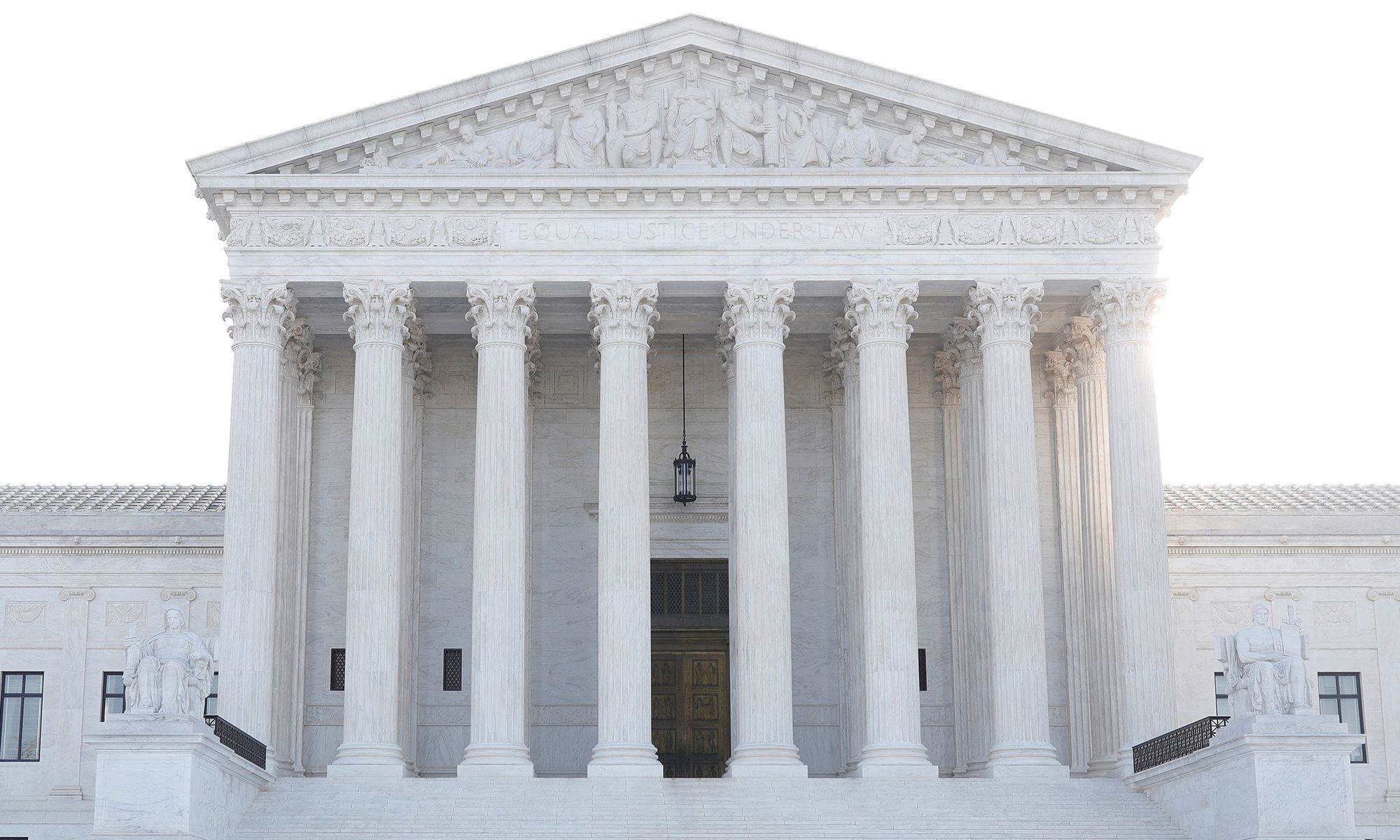
The Supreme Court rejected this contention in its early morning ruling. The case had been presented to Chief Justice John Roberts, who referred it to the full court.
The majority issued a per curiam (unsigned) opinion, in which Roberts was joined by the Court’s more conservative justices (Clarence Thomas, Samuel Alito, Neil Gorsuch, and Brett Kavanaugh). The majority explained that it is farfetched to suggest that pentobarbital’s use violates the Eighth Amendment’s prohibition on cruel and unusual punishments.
As the opinion elaborates, the Supreme Court has never held that any state’s method of execution is cruel and unusual. Far from seeking to add to the pain and terror of execution, lethal injection by pentobarbital is “thought to be less painful and more humane than traditional methods, like hanging, that have been uniformly regarded as constitutional for centuries.” Moreover, the pentobarbital protocol “has been adopted by five of the small number of states that currently implement the death penalty”; “has been used to carry out over 100 executions, without incident”; is repeatedly argued by prisoners “as a less painful” alternative in their challenges to other lethal-injection protocols; and has been upheld by both the Supreme Court and numerous federal appellate courts.
The Court’s four left-wing members dissented. Justices Stephen Breyer and Sonia Sotomayor filed dissents, with Ruth Bader Ginsburg joining both, and Elena Kagan joining Sotomayor’s. The dissents mainly accuse the Justice Department and the majority of a rush-to-justice that unnecessarily created emergency conditions for hurried judicial review . . . as if we should ignore the unremitting objections to capital punishment among progressive jurists and pretend there would be no emergency applications if the Justice Department scheduled the executions for a month from now, a year from now, or a decade from now.
In laying out the pros and cons of capital punishment in yesterday’s column, I posited that the death penalty — whose legitimacy is referred to repeatedly in the Constitution itself — is unquestionably constitutional. If the American people want to be rid of it, they have the means of doing so democratically — it should not be done by judicial ukase, under the fiction that, as times and progressive pieties change, the Constitution’s words morph into whatever left-leaning jurists which them to mean. Quite appropriately, today’s Supreme Court majority concluded its brief opinion by observing:
It is our responsibility to ensure that method-of-execution challenges to lawfully issued sentences are resolved fairly and expeditiously, so that the question of capital punishment can remain with the people and their representatives, not the courts, to resolve. . . . In keeping with that responsibility, we vacate the District Court’s preliminary injunction so that the plaintiffs’ executions may proceed as planned. [Internal quotation marks omitted.]



Comments