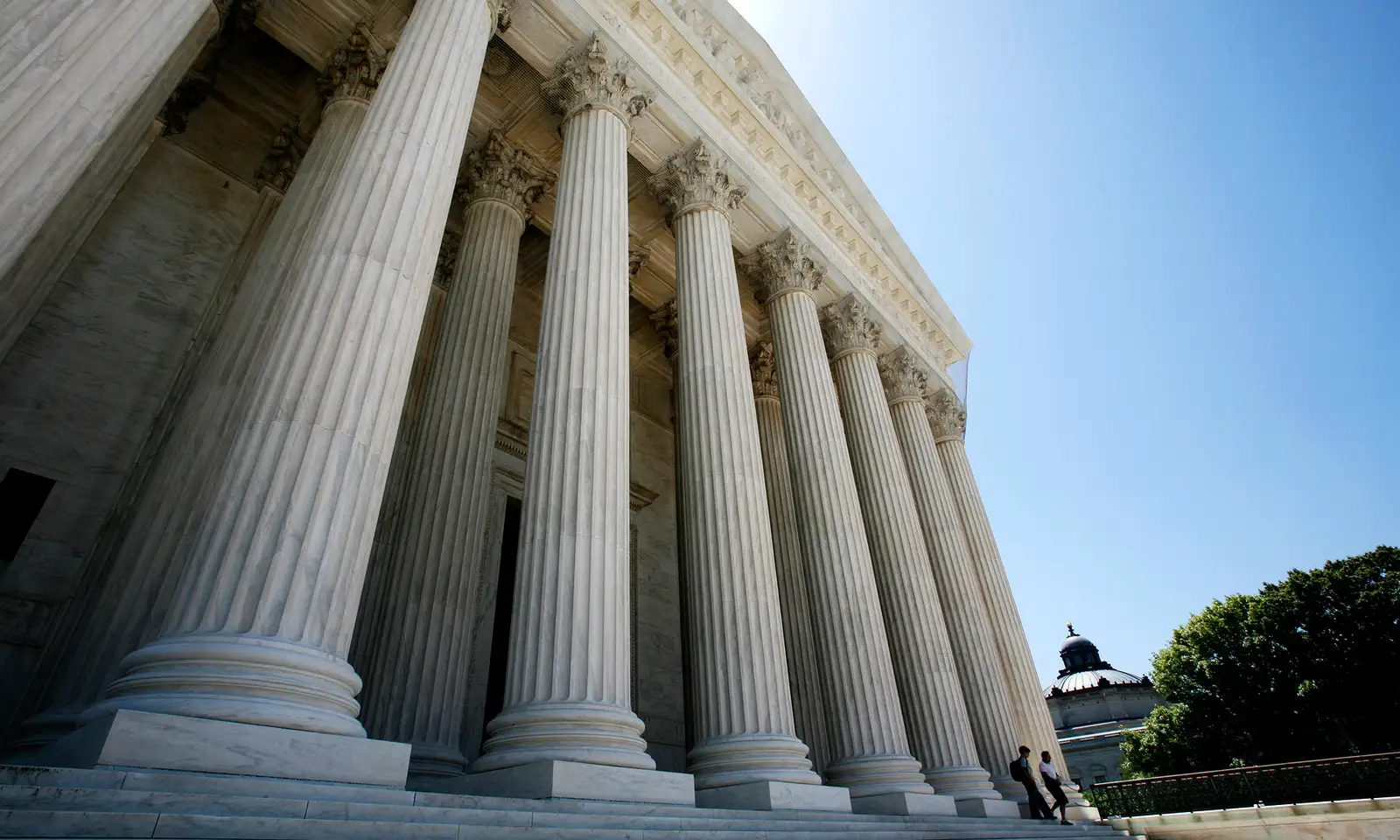
The U.S. Supreme Court this morning, in Brnovich v. Democratic National Committee, upheld two voting laws in Arizona that are widely used in many states: (1) an “out-of-precinct rule” that bans counting provisional ballots if they are cast in person in the wrong precinct, and (2) a ban on “ballot harvesting” that permits only certain persons — i.e., family and household members, caregivers, mail carriers, and elections officials — to handle another person’s completed mail-in ballot. The Court’s decision, in an opinion by Justice Samuel Alito, divided 6–3 along ideological lines. This is a big one.
The two Arizona laws were challenged under Section 2 of the Voting Rights Act, 52 U.S.C. § 10301, and under the 15th Amendment’s ban on intentional race discrimination in voting. Section 2 is the primary tool used to challenge voting laws across the country. Brnovich is a landmark decision because it is the first time a majority of the Court has set some basic “guideposts” for what Section 2 prohibits, and what it allows, in how ballots are collected and counted. The result should make it harder for Democrats to bring knee-jerk lawsuits over every change in voting laws without showing that they present a genuinely discriminatory obstacle to the overall opportunity to vote. For that reason, we should expect to hear lots of alarmist shrieking about the Court “gutting” the Voting Rights Act.





Comments
On “Arizona Voting Laws Win as the Supreme Court Clarifies the Voting Rights Act”