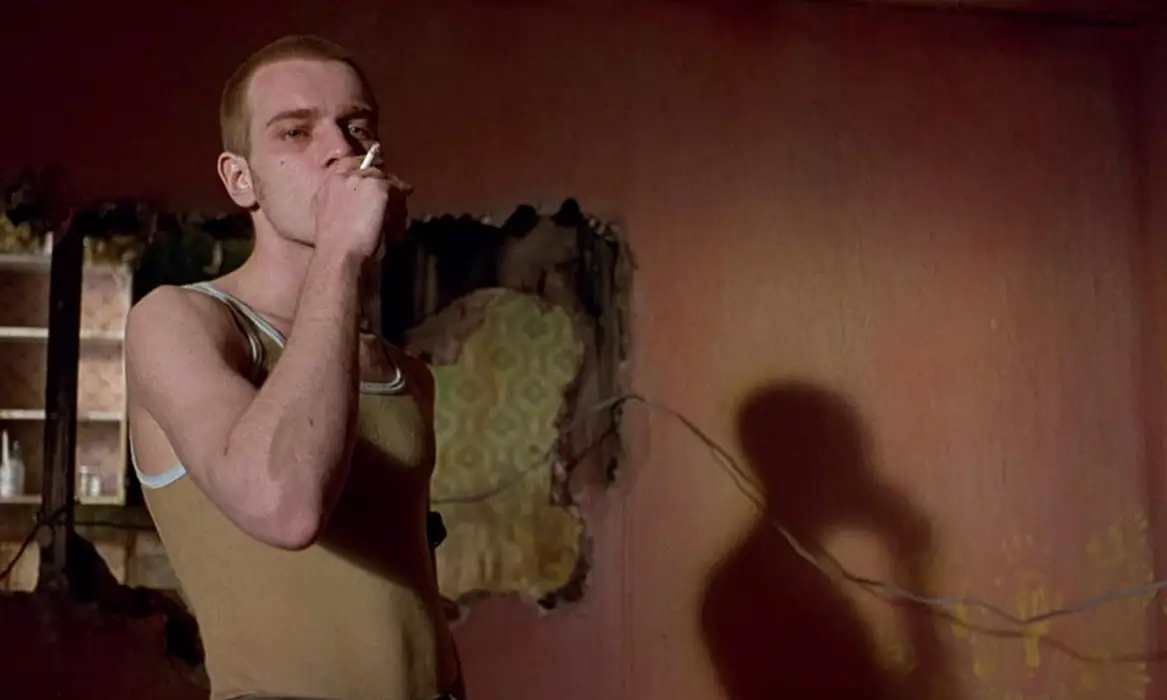
Along with Pulp Fiction and Goodfellas, Trainspotting remains one of my three favorite films of the 90s. Twenty-five years after it first blew me away when I saw it at the Ritzy Cinemas in Brixton, London, in the summer of 1996, I watched it yet again, for what must be at least the twelfth time. I’ve seen it in all formats — at the movies, on a VCR, on a DVD, streaming— and it still fills me with a giddy appreciation for its director Danny Boyle’s frisky energy, wit, and agility.
The movie starts out weighed down by a major problem that it casts off within three minutes: How do you make an audience care about a gang of heroin-addicted wastrels? With a nod toward Martin Scorsese’s voiceover-meets-jukebox method, Boyle simply lets us hear Mark Renton’s thoughts as he crashes through the streets of Edinburgh. Boyle defines the scene by the rock song he blasts over it: Iggy Pop’s jittery dance-punk blowout “Lust for Life.” The sneering swagger of Pop’s vocals and the rolling-thunder explosiveness of the drums define Renton even better than his own words do: Behold this barely fed, shaved-down civet, a rodent on the run. He is forced to stop by a car that nearly hits him, and he laughs at . . . what exactly? Avoiding death, for the moment? The fun of being a bad boy? The absurdity of his existence?





Comments
On “Trainspotting’s Lust for Life”