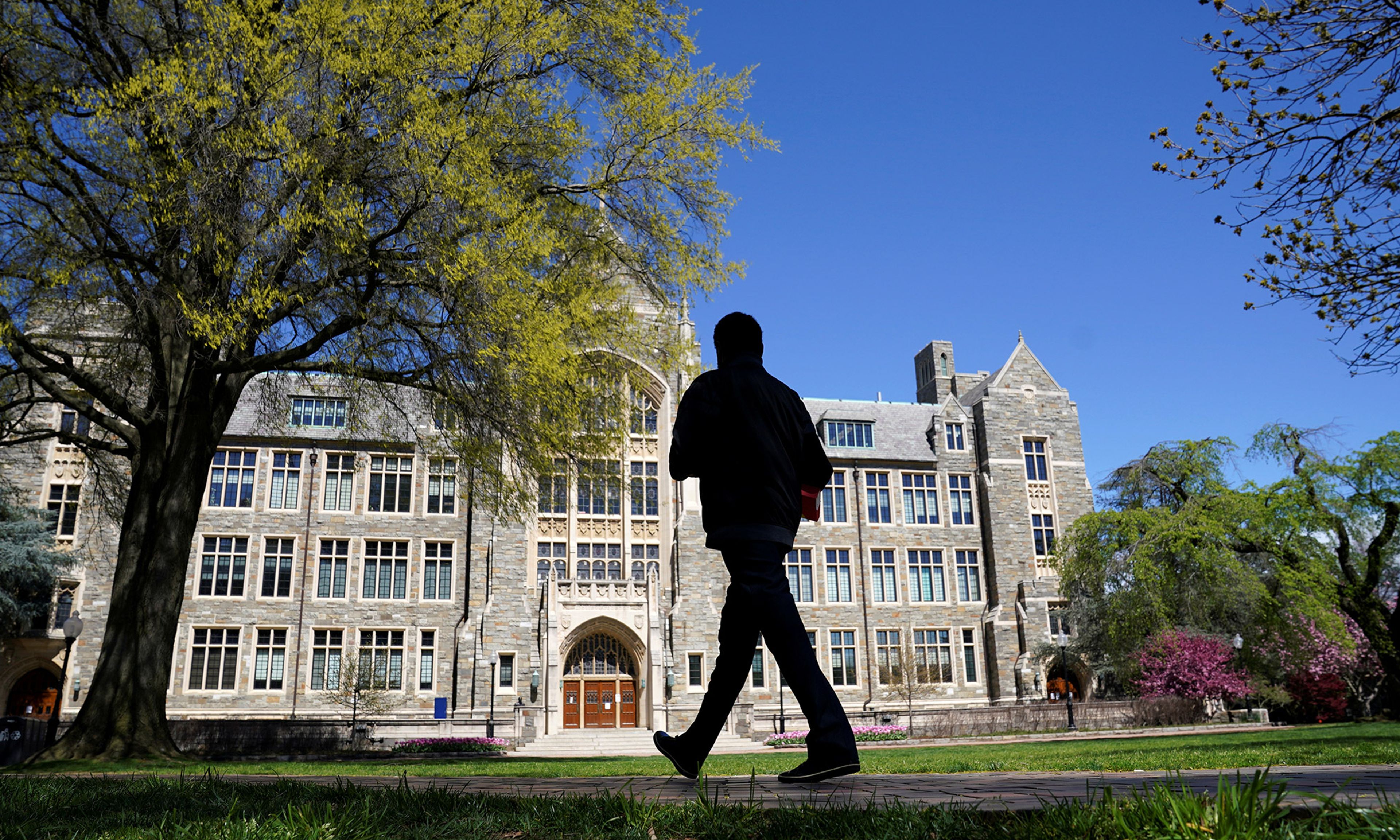
As a junior at Georgetown, I have seen the full range of the university’s response to Covid-19. This includes over a year of virtual learning, aborted study-abroad plans, and the cancellation of several high-profile speaker visits to campus. Georgetown faculty and students were willing to put up with many sidelined plans and vacated opportunities in order to facilitate the quickest possible return to normal campus life. By any reasonable account, the Georgetown community has taken the necessary precautions to allow a transition back to as normal of a college experience as D.C. restrictions will allow. Georgetown students and faculty have a 98 percent vaccination rate, and Georgetown students are required to have a vaccine booster by January 21.
On December 29, the university announced in an email that the semester would begin with virtual classes until at least January 30. While the email claimed that the measures were for health and safety reasons, the university told students that they would be on the hook for housing expenses in the spring semester regardless of whether they returned to live on campus. Apparently, the university thought that it was an acceptable risk to have students live together in person but not to learn together in person. Washington’s mayor — one of the country’s most cautious — had no such qualms; she had public schools return to in-person learning by January 5.




Comments