The Electoral Count Act Debate Understates the Vice President’s Role

Disputes over counting the electoral vote should be decided first in the states, then by the vice president, and then perhaps by the judiciary — but not Congress.

Share this story

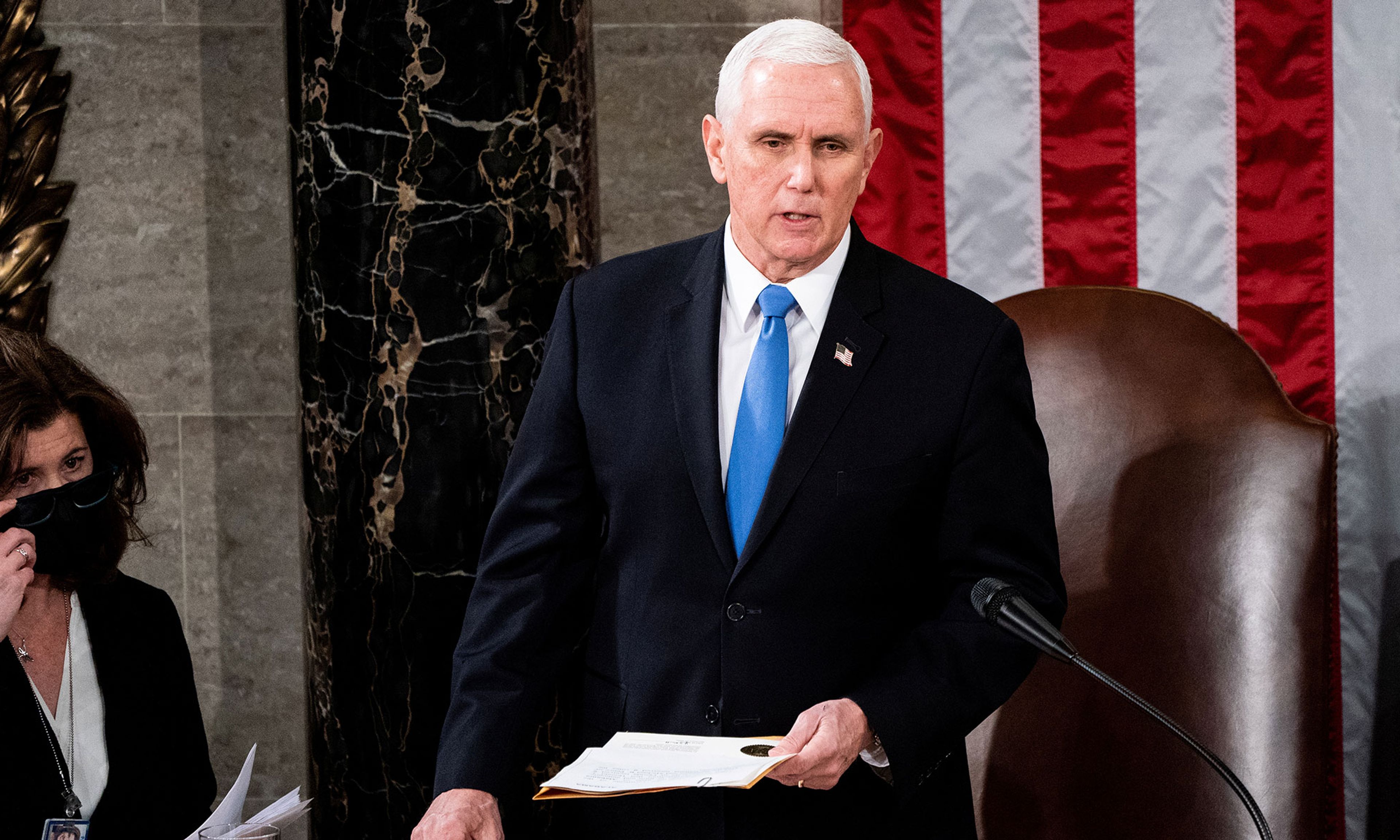
Vice President Mike Pence fulfills his duty in Congress on January 6, 2021.

Erin Schaff / Pool via Reuters

On January 6, 2025, Vice President Kamala Harris will open the electoral votes for president. Imagine if Arizona, Georgia, and Pennsylvania switch their 2020 votes for Joseph Biden to the 2024 Republican candidate — say, former president Donald Trump, or Florida governor Ron DeSantis. This switch of 46 electoral votes (taking reapportionment into account), assuming all other states vote the same way in 2024 as in 2020, would award the White House to the Republicans.

But according to the theory promoted by former president Donald Trump, Harris would have the authority to reject these electoral votes. It is not hard to guess her grounds. She could claim that changes in state electoral laws to require voter ID, prohibit vote harvesting, and end universal mail-in ballots suppressed minority voting in violation of the 14th and 15th Amendments.


John Yoo

About the Author

John Yoo

John Yoo is the Thomas W. Smith Senior Fellow at the Civitas Institute, University of Texas at Austin; Emanuel S. Heller Professor of Law at the University of California at Berkeley; and a nonresident senior fellow at the American Enterprise Institute. He is a co-author of the just-released two-volume American Constitutional Law (Routledge, 2026).

RD

About the Author

Robert J. Delahunty

Robert J. Delahunty is a fellow at the Claremont Institute’s Center for the American Way of Life.

Comments

Advertisement

Advertisement


