

Hollywood grooms girls to be witches.
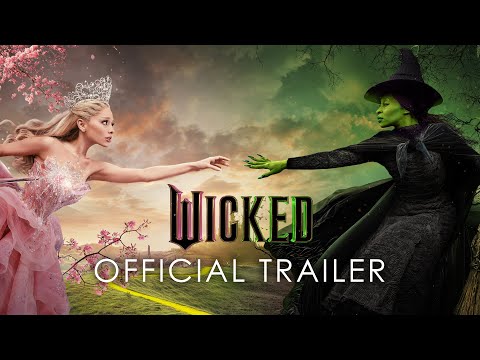
There’s a myth that the Broadway musical Wicked is a fun remake of The Wizard of Oz, modernizing it through a backstory about Glinda the Good Witch of the South and the Wicked Witch of the North, Elphaba (a mongrelization of original author L. Frank Baum’s name). But this curious makeover falsifies everything that made The Wizard of Oz wonderful: its clarity about good vs. evil and the value of friendship, family, good deeds, and self-respect. The new, movie version of that misconceived show, starring Ariana Grande as Glinda and Cynthia Erivo as Elphaba, travesties Baum’s fairy-tale and folktale morals. It’s also a clumsy piece of filmmaking.
Director Jon Chu’s frenetic, exaggerated, digital-era hackwork (Crazy Rich Asians, In the Heights) collides with the updated message. Wicked is simultaneously a campy parody and a corruption of Baum’s popular story.
Absent the mortal, human protagonist Dorothy, childhood awe is replaced with gynophobic bitterness expressed in the opening song “No One Loves the Wicked.” Presented as students at the Harry Potter–style Shiz University, girly Glinda (“My intention is to major in sorcery”) is a grade-grubbing Goody Two-shoes who dresses in pink, while outsider Elphaba is an angry, green-skinned mope who dresses in black. Anyone who saw the 1939 MGM musical version of The Wizard of Oz has the image of Margaret Hamilton’s tinted skin implanted in his psyche, but Chu’s posing the Barbie-pink fad against arsenic-green’s implications of danger proves reckless. Michelle Yeoh, miscast as the villainous Madame Morrible, gives the embarrassing racist explanation of Elphaba’s skin color as an “outward manifestation of a twisted nature.”
It’s disastrous that Hollywood takes advantage of the nontraditional-casting trend and turns the girls’ personality differences into a crude, race-based dichotomy. Black British actress Erivo lends complicated, anachronistic ideas about racial prejudice to Elphaba’s outcast status — and Chu goes all in, at one point shifting Elphaba’s mirror reflection from green to dark brown. The sordid origin story of infidelity that explains Elphaba’s birth and dysfunctional family taints everything that follows. Erivo’s live, bombastic singing is detached from black gospel tradition — the religious, moral basis of black survival — so that Elphaba represents the demoralization of black/green people. There’s only pathos — no joy — in Erivo’s characterization. She’s a sympathetic brainy nerd wearing wire-frame, yin-yang glasses, but when Carrie-style telekinetic powers erupt, her huge, clawlike fingernails are more threatening than stylish. The weirdness of her initial antagonism with Glinda, and later her subservient role with crippled half sister Nessarose (Marissa Bode) — one of the film’s many minority-group tokens — exposes the gimmick of ethnic patronization.
Black sheep Elphaba turns animal activist, fighting prejudice against Dr. Dillamond, a goat whose unfortunate suggestion of Satanism is an offense to the show’s quasi civil-rights metaphor. The exploitation of Broadway’s/Hollywood’s progressive sentimentality contradicts Wicked’s entertainment pretense. The idea of an advocacy sisterhood gets bungled: Elphaba’s and Glinda’s interpretative dance at a school pageant resolves their rivalry for the attention of unexpected heartthrob Fiyero Tigelaar, whom Jonathan Bailey performs as a eunuch undulating his pelvis to failed-Elvis effect. (His song about “the unexamined life” raises sexual suspicion that emerges in Elphaba’s big number, “Defying Gravity.”) Identity politics are further confused by the Italianate features of naturally brunette Grande, whose squeaky-voiced Kewpie-doll antics complicate this foolishness. The sarcastic description of Glinda as, simply, “blonde” evokes Mary J. Blige’s famous defense of hip-hop bling coiffure (“It’s not ‘blonde,’ it’s gold”), but Grande’s blondeness is ruined by inept, cyanotic cosmetics.
Chu is stuck with a charmless cast, but that he flubs the film’s climax — where Elphaba proclaims Wicked’s absolution for those who are “different” — makes for a weak cliff-hanger. (A three-hour sequel, already shot, is to be released next year.) Chu breaks up the “Defying Gravity” verses during a hackneyed, elongated chase sequence so that Erivo’s vocals never really peak — thankfully, since “Defying Gravity” has become a trans movement theme song denying science. Far beyond a paean to misunderstood human will, it’s a victim’s anthem. (The entire project can thus easily be taken as a sinister defense of the occult, ungodly and malevolent.)
Unlike the 1978 Diana Ross–Michael Jackson musical film The Wiz, a sane and tuneful negritude interpretation of Baum in which songs specifically addressed black endeavors, Wicked offers the validation of dangerous, incoherent ideas, a culmination of the social and sexual grooming that Disneyfied culture has indulged since the show’s première in 2003. Only an idiot would take a girl-child to see Wicked and be indoctrinated into its cult of race and gender rebellion that completely perverts what it means to be human.