

The President’s Wife shows how to defend a first lady.
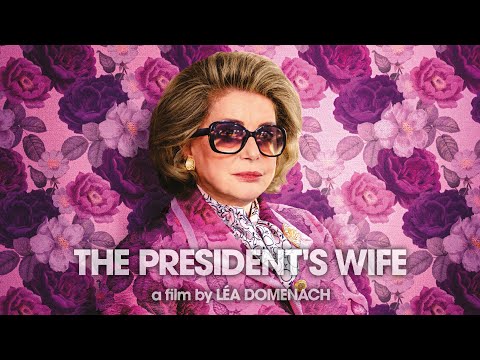
Catherine Deneuve’s portrayal of Bernadette Chirac, wife of Jacques Chirac, France’s president from 1995 to 2007, is good enough to be controversial. In The President’s Wife, by Léa Domenach, Deneuve opposes the censorship that the mainstream currently practices.
Deneuve and Domenach make Bernadette Chirac a heroine simply by not shunning her — going against the example of Vogue’s Anna Wintour and other media tyrants who ostracized Melania Trump. Deneuve and Domenach show humane — even sisterly — fascination with Bernadette Chirac’s personal independence. She not only partnered with her husband as he led France but did so in ways that honored her individuality. (She fired Chirac’s chauffeur after 25 years, saying that “faithfulness matters, not ‘loyalty.’”)
The President’s Wife (its original French title is simply Bernadette) becomes an unusual political character study because Domenach and co-screenwriter Clémence Dargent recognize the media’s feminist hypocrisy as an ideological tool. In the conservative Chirac administration, Bernadette became a singular and not always admired media figure. Her insistent personality went beyond charm, troubling other conservatives, yet she won admiration from Nicolas Sarkozy, her husband’s left-wing opponent and subsequent president. (“I always thought the great politician in the Chirac clan was you,” Sarkozy flatters her.)
Deneuve and Domenach pursue Bernadette’s personal victory, always speaking for her husband despite his infidelities, then balancing affection for their difficult daughters, the flashy Claude (Sara Giraudeau) and neurasthenic Laurence (Maud Wyler). Through it all, Deneuve’s Bernadette presents a model of soft-spoken, womanly perseverance.
As the daughter of the haughty Chodron de Courcel and Brondeau d’Urtières families, Bernadette never lacks confidence. “My intuition has often beaten the polls,” she says. Domenach follows that self-assurance through a Karl Lagerfeld makeover, some failed hometown projects, and popular adulation by youths asking for her autograph.
American viewers unfamiliar with French politics won’t know the details of Bernadette’s public reputation, but the film’s comic tone, plus Deneuve’s cinematic image, establish a fascinating perspective.
Now, at 80, Deneuve plays Bernadette in her 60s and seems perfectly cast as a dowdy-chic socialite enjoying the privilege of her heritage. As a president’s wife, she projects the class that Hillary Clinton fans can only fantasize about. (A French wag compares them: “They’re in the same boat. They’re both cheated on.”)
Domenach told podcaster Patrick McDonald, of HollywoodChicago.com, “Deneuve and Bernadette both have aristocratic allure.” And Deneuve strikes convincing notes of depth, struggle, and inner amusement. She’s an utterly convincing celebrity.
This characterization of womanly strategizing recalls the song “Don’t Cry for Me Argentina” from the Andrew Lloyd Webber–Tim Rice musical Evita, that amazing aria pretending to confess power and public persuasion. Domenach starts with a musical introduction that shows a church choir extolling Bernadette’s Catholicism, singing, “This story is loosely based on the life of Bernadette Chirac. But beware! We warn you it is above all a work of fiction. What follows is not always true.” The ABBA-style melody gives way to Deneuve/Bernadette going to confession in Jackie Onassis–style sunglasses and headscarf. Domenach’s images balance history, fiction, and pop through references to Claudia Cardinale, Gina Lollobrigida, Lady Diana, and Marie Le Pen. Plus, a montage features news footage and press clippings of the actual Bernadette. It’s evidence of Bernadette standing up for herself; she speaks for “women who are not used to their full potential.”
The President’s Wife is a low-key comedy but outstanding for this period of humorless politics and especially unfunny feminism, and especially when Deneuve in 2018 signed a letter challenging feminist groupthink and made controversial statements against the Me Too movement: “Rape is a crime, but trying to seduce someone, even persistently or clumsily, is not — and nor is men being gentlemanly a chauvinist attack. . . . Nothing in the letter that said anything good about harassment, otherwise I wouldn’t have signed it.”
Deneuve and Domenach achieve a special ethical balance in this film’s portrait of a conservative woman’s poise and her response to political pressure. Domenach presents Deneuve in accordance with Sarkozy’s ultimate opinion of Bernadette: “a politician who has stayed true to her convictions.” First as Jacques Demy’s Madonna figure in The Umbrellas of Cherbourg (1964), then in films by Truffaut, Polanski, and Buñuel, then during her stint in Hollywood and her later career as Andre Téchiné’s muse and inspiration to Millennial newcomers, Deneuve embodies a leftist French cinema ideal. Embracing Bernadette Chirac, Deneuve confronts the political contradictions an artist faces — and heals the culture.