

Panahi’s manipulation of liberal sentiment appeals to the Cannes culture that always rewards progressive banalities.
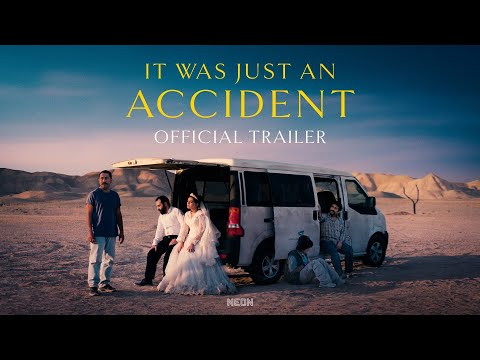
You could watch the Iranian film It Was Just an Accident as a slow-burn revenge thriller or as a cautionary tale for political martyrs. It’s a story of an incidental road collision in which a family man runs over a dog on a dark night road, causing the driver, Eghbal (Ebrahim Azizi), to encounter a mechanic, Vahid (Vahid Mobasseri). The twist? Their previous meeting was as bully and victim during an Iranian-regime dragnet.
Now playing at Film Forum, It Was Just an Accident (Un simple accident) is a French-Iranian-Luxembourgian co-production that won the Palm d’Or at this year’s Cannes Film Festival because its story feels timed to activist chic. Introducing the West to the totalitarianism that some Westerners envy of late, director-writer Jafar Panahi simplifies life under autocracy to “What if?” details — the personal struggles, lingering trauma, and social distrust of a tight-knit group.
There’s paranoia in the way Vahid watches Eghbal with suspicion. It’s similar to Hitchcock’s Rear Window, though that amazing sense of free surveillance — the omniscience of citizenry exercising its rights — is missing. Panahi literalizes the idea of a closed society when Vahid mimics the surveillance state, demonstrating citizen trapped in patterns of vengeance and abuse. Vahid enlists the aid of once-underground resisters to help identify their former tormentor and then decide whether or not to kill him.
These long-suffering Iranians include anxious bride Golrokh (Hadis Pakbaten) and her fiancé (Majid Panahi), and wedding photographer Shiva (Mariam Afshari) and her ex-boyfriend Hamid (Mohamad Ali Elyasmehr). One couple is pledged, the other torn, both symbolizing a generation’s conflict in an obviously schematic drama.
The film’s humanist approach shies from offending Iran’s theocracy, a kind of marketing tool that the West likes to view as courageous opposition. But It Was Just an Accident doesn’t surge with liberationist fervor (as Jimmy Stewart in Rear Window launched his selfish idiosyncrasies according to an implicit sense of justice). Instead, Panahi goes existential: “What will be will be,” the driver’s pregnant wife explains to their sad, uncomprehending daughter Niloufor (Liana Azizifay) — a figure who will recur in the film’s grim roundelay as a symbol of native normalcy.
Panahi’s style derives from Iran’s two great filmmakers Mohsen Makhmalbaf and Abbas Kiarostami, both natural avant-gardists distinguished by their different pursuits — Makhmalbaf’s populism (A Matter of Innocence, Salaam Cinema, The Silence, The President) and Kiarostami’s elitism (Where Is the Friend’s House, Through the Olive Trees, The Wind Will Carry Us, Certified Copy). As their acolyte, Panahi split the difference and won wide acclaim with his mediocre The White Balloon, The Circle, Crimson Gold, and now It Was Just an Accident.
Makhmalbaf and Kiarostami employed rigorous narrative structures that rethought the presentation of events and ideas, while Panahi’s style is conventionally realistic, framing actors in extreme close-up or against a mountainous backdrop. At times Accident resembles the road-trip aspect of Anora as the fractious characters assemble and debate forgiveness and motives. Every bureaucratic exchange involves a bribe via credit card payback. And when Vahid intends his old enemy to be buried alive, Shiva cautions, “It’s your ideals you’d be burying.” Her hothead ex, Hamid, interrupts the discourse with wild tantrums like an unregenerate ethnic figure in a Mel Brooks movie, though without the humor. He curses “the holy war in Syria” as the source of his post-carceral misery.
Middlebrow Panahi invokes Waiting for Godot to raise the tone of his folksy dilemma. The shift from thriller mode to heroic-martyr mode leads to a histrionic climax — wailing about zombie identification, ISIS, and the Supreme Guide — very much like the remonstrations in World War II anti-fascist melodramas (though without the stirring music).
This manipulation of liberal sentiment appeals to the Cannes culture that always rewards progressive banalities (especially when they strike the European sensibility as anti-capitalist, anti-Western, or anti-American). Panahi’s second-rate craft explicates the conflicts between activists (“Do you act before you think?”), surpassing standard anti-fascist junk like Judas and the Black Messiah or One Battle After Another. Panahi clearly tests the market for political clichés. The fundamental problem is that the unseen torture and uncertain identification of Eghbal creates an over-projection of Iranian fascism and paranoia that seems to lie within — similar to what we’ve seen from January 6 prosecutors and No Kings zealots. But a thriller as obviously over-projected as this one doesn’t thrill.