
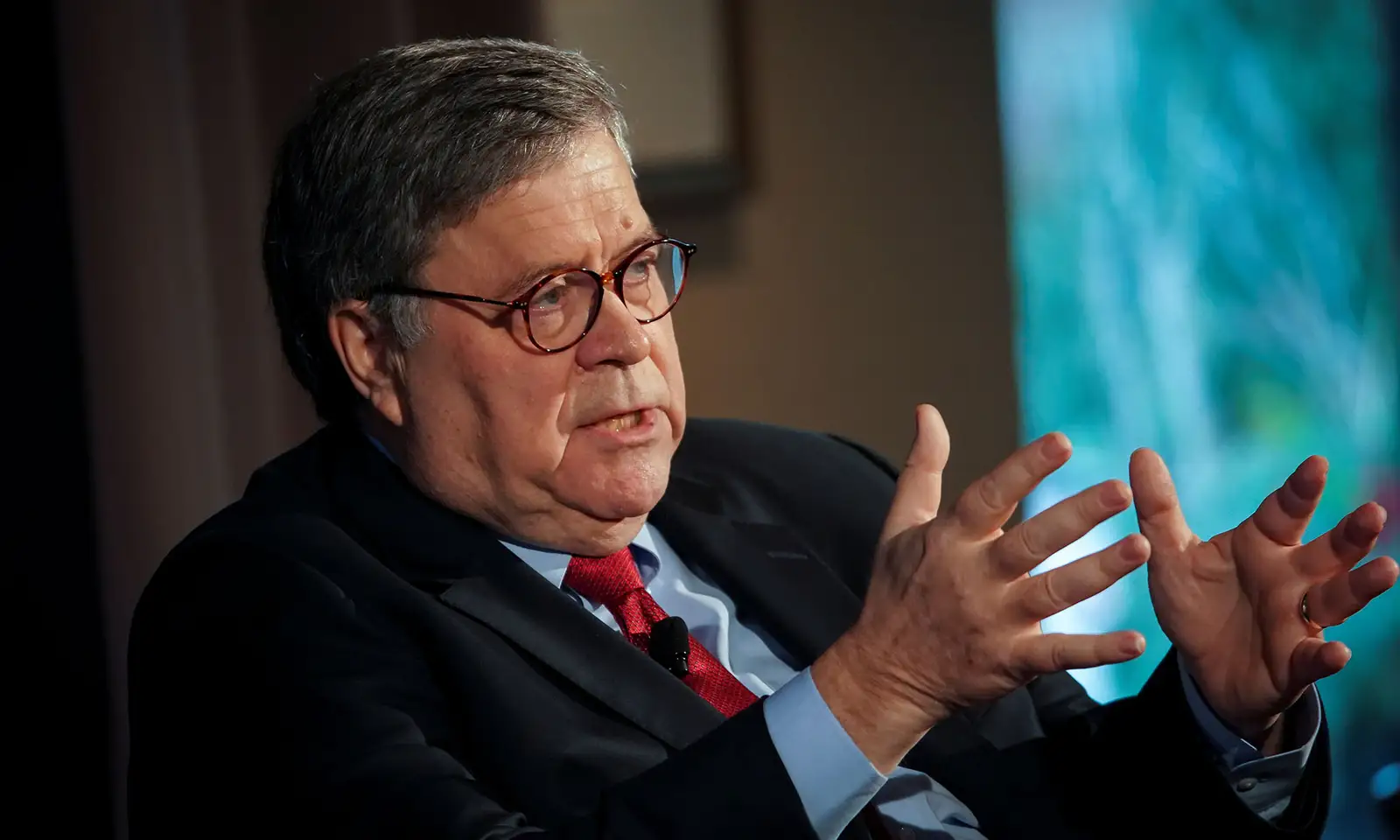
On Tuesday, U.S. attorney general William Barr released a statement in opposition to coronavirus restrictions that openly disfavor religious organizations, focusing in particular on a regulation in Mississippi that imposed fines on congregants who attended a parking-lot worship service, even though they remained in their cars with their windows closed.
The City of Greenville fined congregants at Temple Baptist Church $500 per person for attending these services and listening to the service on the radio but allowed citizens to attend local drive-in restaurants, including with their car windows open. “The City appears to have thereby singled churches out as the only essential service (as designated by the state of Mississippi) that may not operate despite following all CDC and state recommendations regarding social distancing,” Barr wrote.
According to Barr’s statement and subsequent reporting from the Wall Street Journal, the City of Greenville later said that congregants would not be required to pay the fines, but the policy remains in place.
“The First Amendment and federal statutory law prohibit discrimination against religious institutions and religious believers,” Barr wrote. “Thus, government may not impose special restrictions on religious activity that do not also apply to similar nonreligious activity.”
He went on to state that if the government permits movie theaters, restaurants, or concert halls to remain open without restrictions, it may not close or impose restrictions on houses of worship. “Religious institutions must not be singled out for special burdens,” he added.
In conjunction with Barr’s statement, the Department of Justice filed a statement of interest in support of the Mississippi church where the parking-lot service in question was held, taking the church’s side in its lawsuit filed against the City of Greenville in U.S. district court.
The DOJ statement of interest noted that the U.S. has an interest in “the preservation of its citizens’ fundamental right to the free exercise of religion, expressly protected by the First Amendment,” as well as that the case involves the “interplay between the government’s compelling interest in protecting public health and safety from COVID-19 and citizens’ fundamental right to free exercise of religion.”
Citing the Supreme Court ruling in the case Church of the Lukumi Babalu Aye v. City of Hialeah, the statement adds, “If the Court determines that the city’s prohibition on drive-in church services is in fact not the result of the application of a generally applicable and neutral law or rule, then the Court may sustain it only if the city establishes that its action is the least restrictive means of achieving a compelling governmental interest.”
In other words, the City of Greenville policy is subject to strict scrutiny, so the city must establish that the policy is driven by a compelling government interest, that it is narrowly tailored to accomplishing that interest, and that the policy accomplishes that interest while using the means that are least restrictive of the right to free exercise of religion. Given that the city appears to be establishing harsh penalties for congregants and churches that aren’t violating CDC recommendations while ignoring more dubious behavior from local restaurants and their patrons, it will be difficult to establish that the policy has met the last part of that equation.





Comments
On “Department of Justice Backs Churches during COVID-19 Restrictions”