
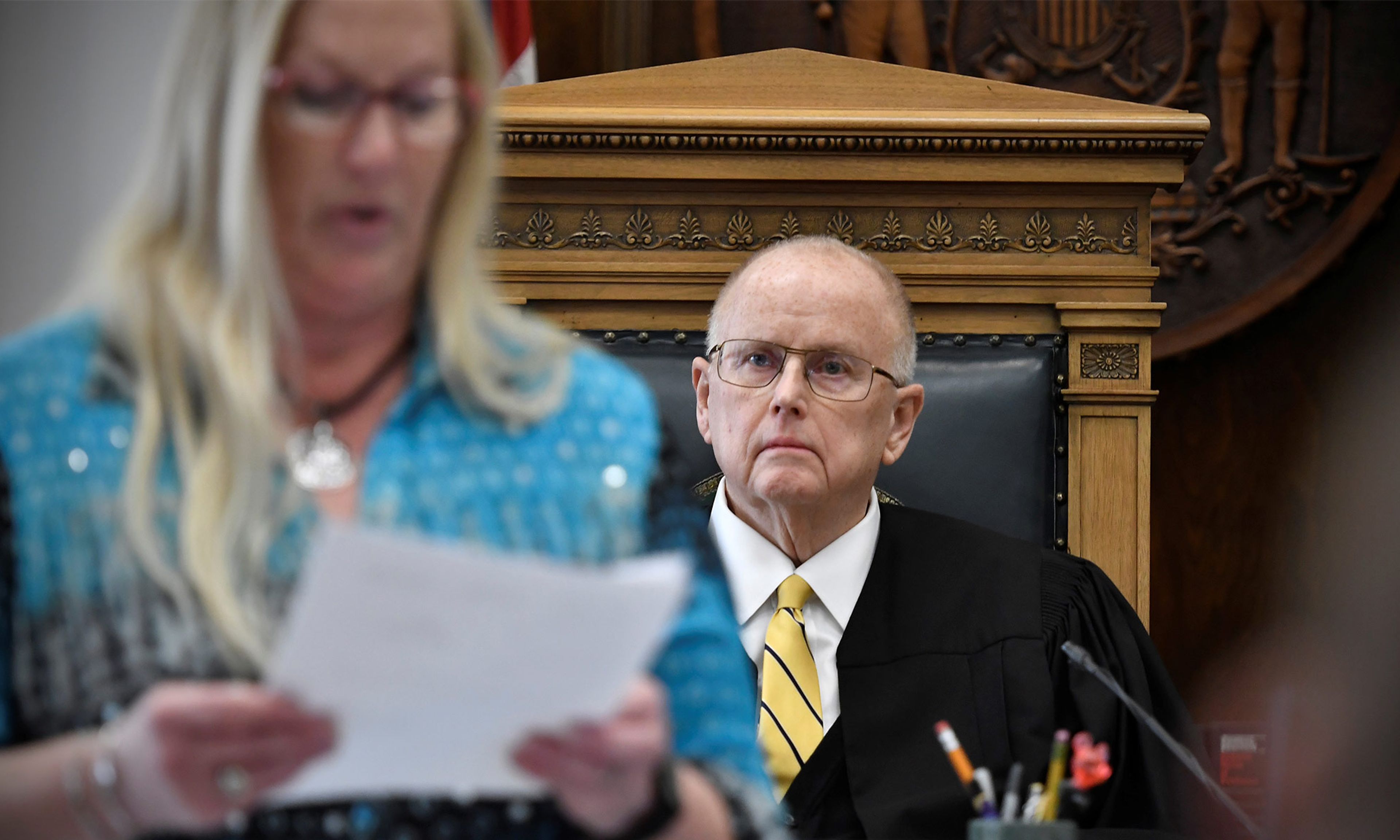
Mere minutes elapsed between the end of the Rittenhouse trial and the arrival of the unsolicited hot takes. Responding to the decision, the attorney general of New York, Letitia James, explained that “as a lawyer, I respect jury verdicts,” but confirmed nevertheless that the existence of a jury verdict that she dislikes had convinced her that “our system needs to be uprooted.” On Twitter, Colin Kaepernick echoed this sentiment, proposing that the decision “further validates the need to abolish our current system.” From New York City, Mayor Bill DeBlasio called the trial “a miscarriage of justice.” In an email blast, the chairman of the DCCC, Sean Patrick Maloney, lamented “a legal system that fails to hold the violent accountable.” And, of course, there were the ever-present threats of “No justice, no peace.”
Thing is, though, this was justice — in both senses of that word. It was procedural justice, involving formal charges, a bond, the presumption of innocence, and the eventual verdict of a jury. And it was substantive justice, because, as anyone who followed the trial closely saw, the prosecution failed to prove its brief. The case against Rittenhouse finished as it did not because of some forlorn or biased “system,” but because the case against Rittenhouse was irredeemably weak. And, in a system that cherishes the presumption of innocence, cases that are irredeemably weak tend to fail.




Comments