
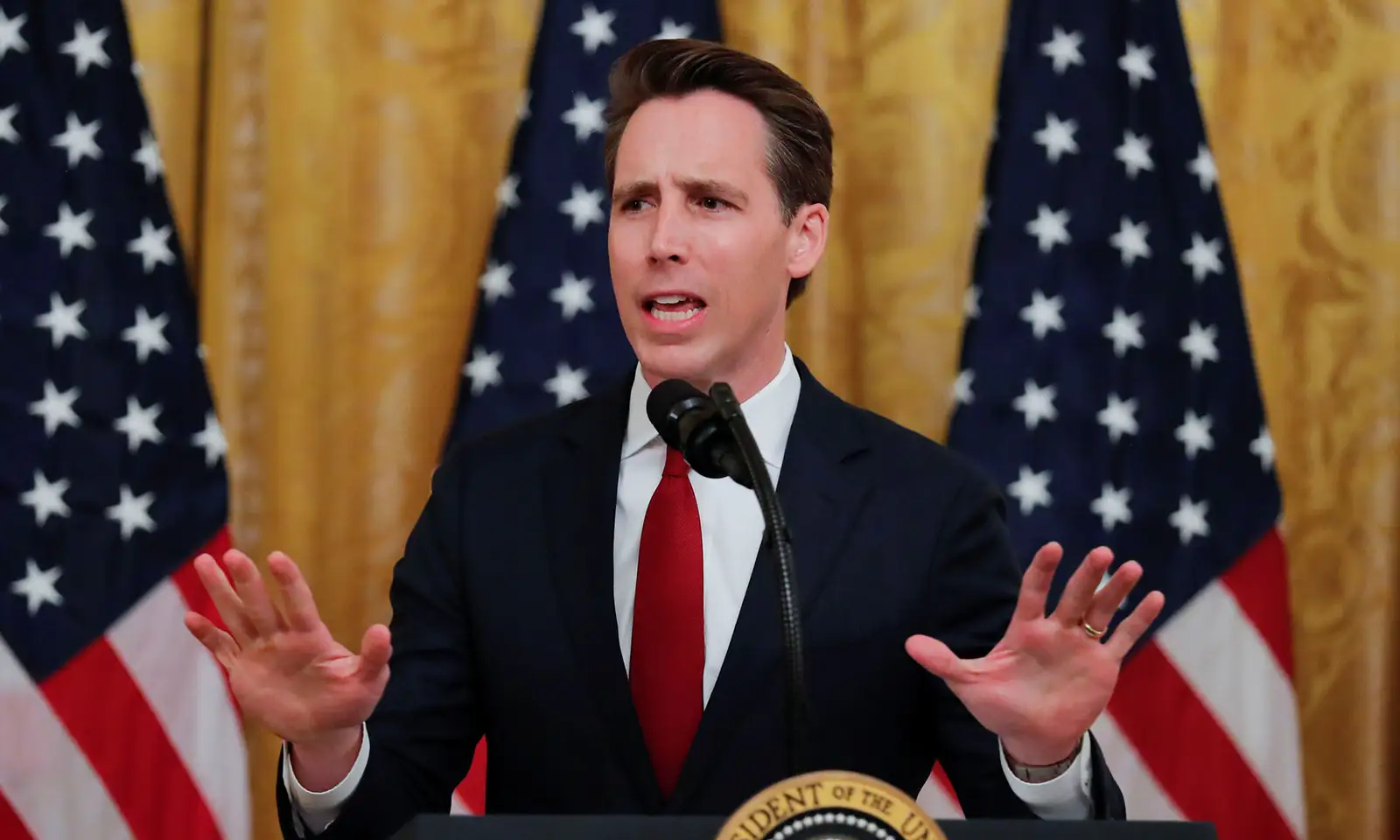
Over on the home page I have some thoughts about the true nature of the student-debt “crisis” and some ideas for how to deal with it. Coincidentally, today Josh Hawley announced some very relevant reforms.
Per his press release:
SEN. HAWLEY: BREAK UP HIGHER EDUCATION MONOPOLY, PROVIDE MORE OPTIONS FOR CAREER TRAINING
U.S. Senator Josh Hawley (R-Mo.) is introducing two pieces of legislation this week that will expand federal aid for people pursuing vocational education and will put higher education institutions on the hook for students unable to repay student loans.
It’s an odd definition of “monopoly” that encompasses a sector with thousands of competing options, but okay: Higher ed is pretty dysfunctional and these reforms target two big problems with it.
Hawley’s first bill will “make more job-training and certification programs, like employer-based apprenticeships and digital boot camps, eligible to receive Pell Grants through an alternative accreditation process.” This is a good idea. There’s no reason we should be subsidizing college to the exclusion of other ways to learn important skills.
His second bill requires “colleges and universities to pay off 50 percent of the balance of student loans accrued while attending their institution for students who default, and forbids them from increasing the cost of attendance to offset their liability.”
The idea of a “money-back guarantee” for college isn’t crazy; it forces schools to take responsibility for their students’ outcomes, rather than accepting students who don’t have the skills to graduate, collecting tuition for a few years, and then sending the kids along poorer, indebted, and lacking a credential.
But I’m not sold on the idea of forbidding colleges “from increasing the cost of attendance to offset their liability.” I’m not sure it’s possible to enforce such a rule — and while higher ed in general is inefficient, I’m not sure it’s possible for every college to shoulder a new liability without raising its prices at all. Further, if tuition hikes resulted from this legislation, they would basically “price in” half the school’s default risk, which isn’t necessarily a bad thing.
It would be better to require these payments — providing schools a big incentive to be careful about whom they admit and to teach students marketable skills — and let the market handle it from there. Rather than forcing schools to make cuts until they can cover the liability without a tuition hike, let them strike a balance between service cuts and price hikes and compete to see who figured out the best one.
Couple other things: Might it encourage students to default if doing so will force their college to “pay off” half their loans, especially once they miss payments for a while and start getting close to that threshold? (The consequences of defaulting are pretty severe, so maybe not, but it’s worth thinking about.) And should colleges be liable for the interest their former students rack up, or just for the money they actually collected in tuition payments etc.?






Comments
On “Josh Hawley Takes Aim at Higher Ed”