
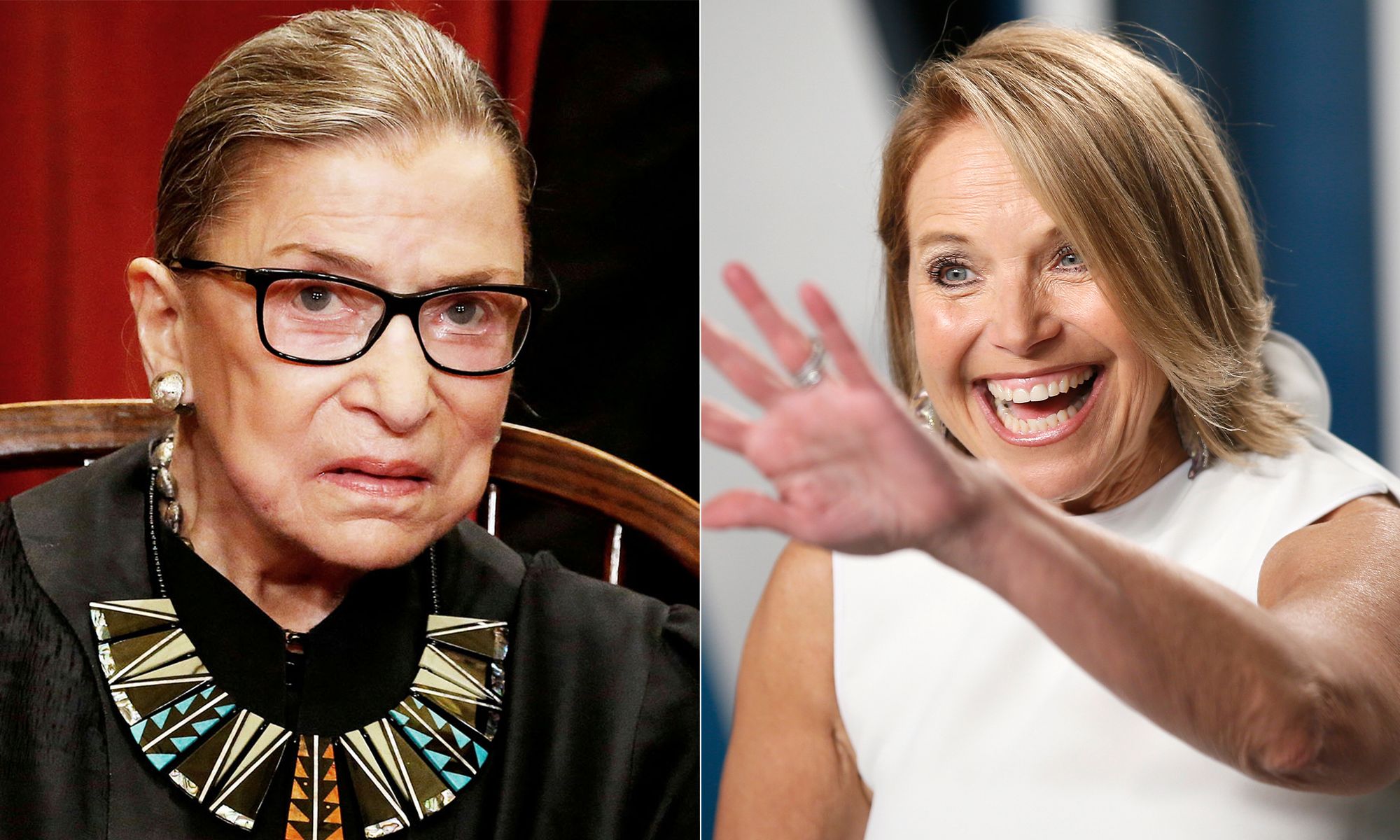
In her newly released memoir, Going There, Katie Couric writes that she edited out comments from Ruth Bader Ginsburg, in which the Supreme Court justice accused those who kneel during the national anthem of showing “contempt for a government that has made it possible for their parents and grandparents to live a decent life.” Couric, the Daily Mail reports, claims that she believed the 83-year-old justice was “elderly and probably didn’t fully understand the question.” Couric, who fashions herself an intrepid journalist, says she was “protecting” the “Notorious RGB” — a woman who until her last days was offering decisions on the most important legal questions in the nation and celebrated widely by the Left — from political backlash.
Interviews are often edited for length and clarity, of course, but in this case, there’s no excuse for leaving out the interaction. If RBG was genuinely unable to answer a simple question regarding flag protests, as her friend New York Times columnist David Brooks suggested to Couric, any genuine journalist would have immediately sensed the interaction as newsworthy. If RBG understood the question — which it seems to me is the case as she offers a completely coherent and normal answer about spoiled athletes disrespecting the American flag — it would also have been newsworthy. This was the year Colin Kaepernick began his protests. Couric included RGB’s describing the protests as “dumb and disrespectful” because, in our warped discourse, it is far less incendiary than pointing out protesters are bequeathed “decent lives” by their nation.
It’s worth remembering that Couric isn’t new to helpful edits. In 2016, she was forced to apologize after creatively making gun-rights advocates look as if they were speechless after asking them a question about background checks and terrorists. One of the interviewees recorded the interactions (something everyone should do) in which they immediately responded to Couric’s misleading premise. Watching her abdicate journalistic responsibilities is unsurprising. It’s just another reminder that those given access by huge corporate-media organizations often work to protect their political tribe rather than do their jobs.


Comments