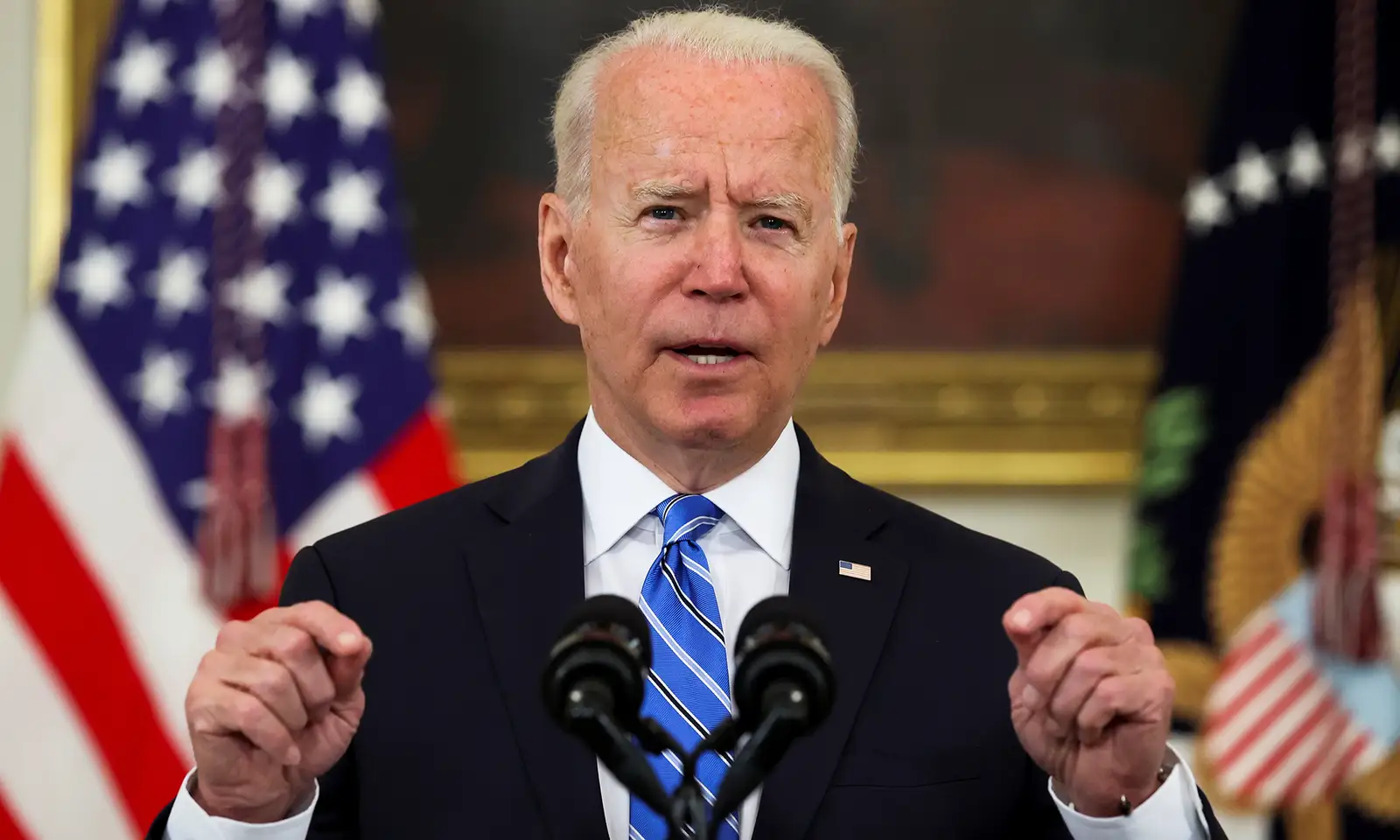
President Biden argued that a massive influx of government spending bill will help fend off inflation, in a speech on the state of the economy at the White House on Monday.
The White House has dubbed the $1.2 trillion bipartisan infrastructure bill that Senate Majority Leader Chuck Schumer plans to bring to the floor this week — and the $3.5 trillion budget resolution that Democrats plan to pass in the coming days without Republican support — the “Build Back Better” package. Biden said Monday that the two bills will help prevent, rather than exacerbate, runaway inflation.
“Whatever different views people have about the current price increases, we should be united in one thing: passage of the bipartisan infrastructure framework, which we shook hands on,” Biden said. “And my Build Back Better Plan will be a force for achieving lower prices for Americans looking ahead.”
Biden contended that investments in infrastructure such as roads, bridges, and broadband would eliminate economic “chokepoints” that currently raise prices on goods.
“If your primary concern is about inflation, you should be even more enthusiastic about this plan,” Biden said. “We can’t afford not to make these investments.”
During a question and answer session with reporters, Biden dismissed predictions of high inflation.
“There’s nobody suggesting unchecked [inflation] is on its way,” Biden said. “No serious economist.”
Former treasury secretary Larry Summers warned that Biden’s $1.9 trillion coronavirus relief bill was “the least responsible fiscal macroeconomic policy we’ve have had for the last 40 years,” in a March interview with Bloomberg TV. That relief bill included funding for state and local governments, medical aid, and a round of checks to all Americans.
However, Summers has backed some investments in infrastructure.
“The investments on which Biden is focused are essential to the future of the country,” Summers told Politico last week. “Inflation fears should shape economic policies but it would be tragic if they stopped us from making urgently needed public investments.”





Comments
On “Biden Argues Massive Government Spending Will Help Fend Off Inflation, Not Exacerbate It”