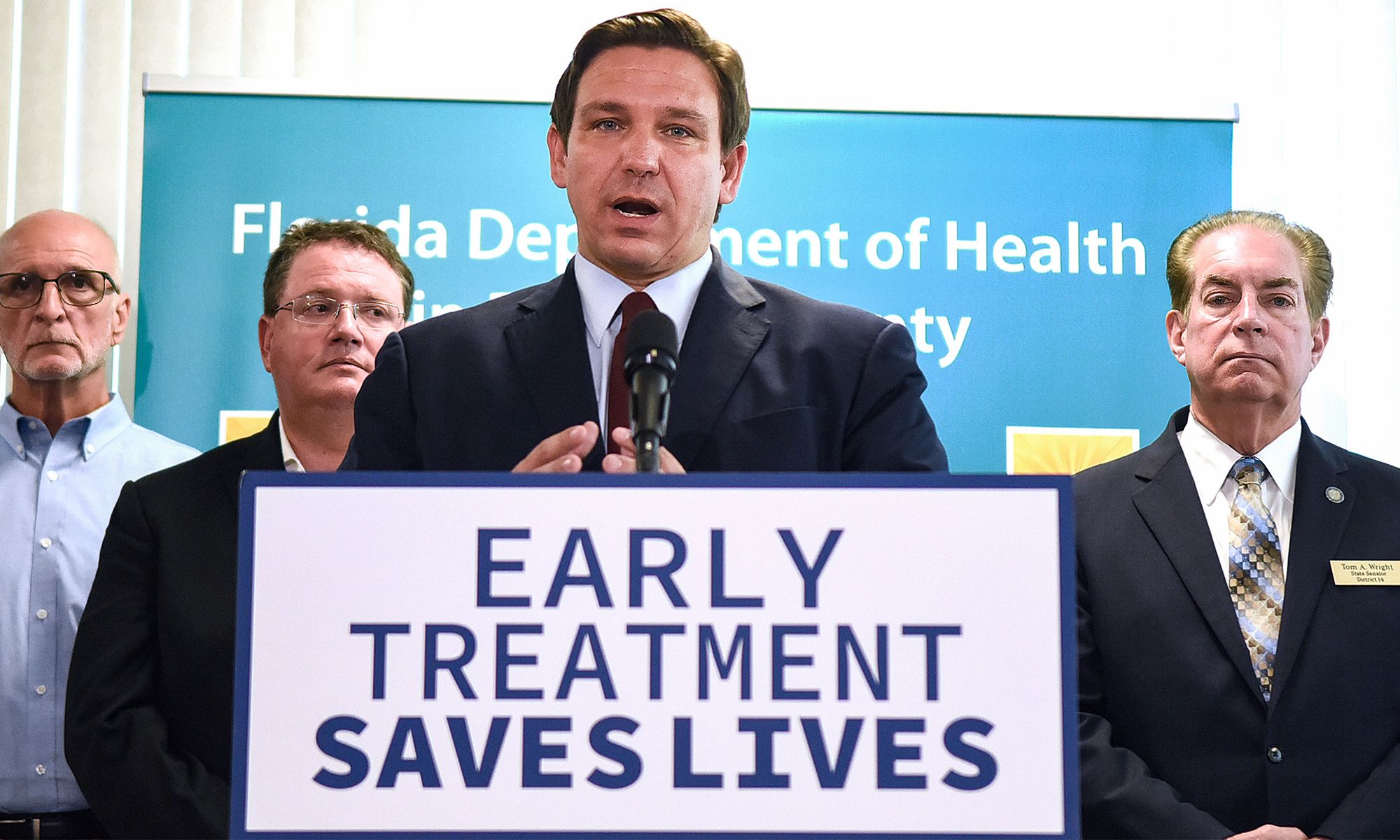
Over the summer, while the White House was shouting “get vaccinated” from the rooftops, Florida governor Ron DeSantis was trailblazing monoclonal antibodies as a supplemental treatment for Covid-19. DeSantis didn’t present the treatments as an alternative to inoculation; he distributed them as part of his strategy to stock his state’s medicine cabinet with weapons to fight the virus. The uptake was huge, as was the performance in reducing severity and duration of illness.
The governor’s pandemic management has been characterized by allowing Floridians to make their own choices about masking, vaccination, and treatments, while the Biden administration has preferred aggressive intervention, producing tension between Florida and the feds. The mistrust deepened when DeSantis officials started accusing the administration of subverting and limiting the circulation of antibody treatments so the population would have nowhere to turn but the vaccine. In December, Florida surgeon general Joseph Ladapo alleged that the federal government was “actively preventing the effective distribution of monoclonal antibody treatments.”



Comments