
On the menu today: New York governor Andrew Cuomo finds an innovative new way to get in trouble — and figures out how to rope his brother Chris into the mess; some ominous signs that the northeastern United States might be seeing a surge in COVID-19 cases, even while vaccinations proceed; and a reminder of just how spectacularly implausible China’s official pandemic statistics are.
Andrew Cuomo Reveals We’re Not Really All in This Together
New York governor Andrew Cuomo, March 31, 2020: “We still see people coming out who don’t need to be out. Even for essential workers, people have to be careful. And again, I’ve been trying to communicate that. Everyone, everyone is subject to this virus. It is the great equalizer. I don’t care how smart, how rich, how powerful you think you are. I don’t care how young, how old. This virus is the great equalizer.”
Cuomo might be the most arrogant and entitled governor in the country, but if that doesn’t seem like a remarkable label, gaze at Sacramento, Springfield, Lansing, or Richmond and contemplate his competition.
Because while Cuomo was telling New Yorkers that the virus was the “great equalizer” and invoking the cliché that “we’re all in this together,” he and his administration were pushing his family members and closest associates to the front of the line for testing:
High-level members of the state Department of Health were directed last year by Gov. Andrew M. Cuomo and Health Commissioner Dr. Howard Zucker to conduct prioritized coronavirus testing on the governor’s relatives as well as influential people with ties to the administration, according to three people with direct knowledge of the matter.
Members of Cuomo’s family including his brother, his mother and at least one of his sisters were also tested by top health department officials — some several times, the sources said.
Still, one of the people familiar with the matter said that the people with close ties to the governor, including his relatives, would have their samples moved to the front of the line at Wadsworth and be given priority. They were referred to as “critical samples.”
. . . “To be doing sort of direct clinical work was a complete time-suck away from their other duties,” the person said. “It was like wartime.”
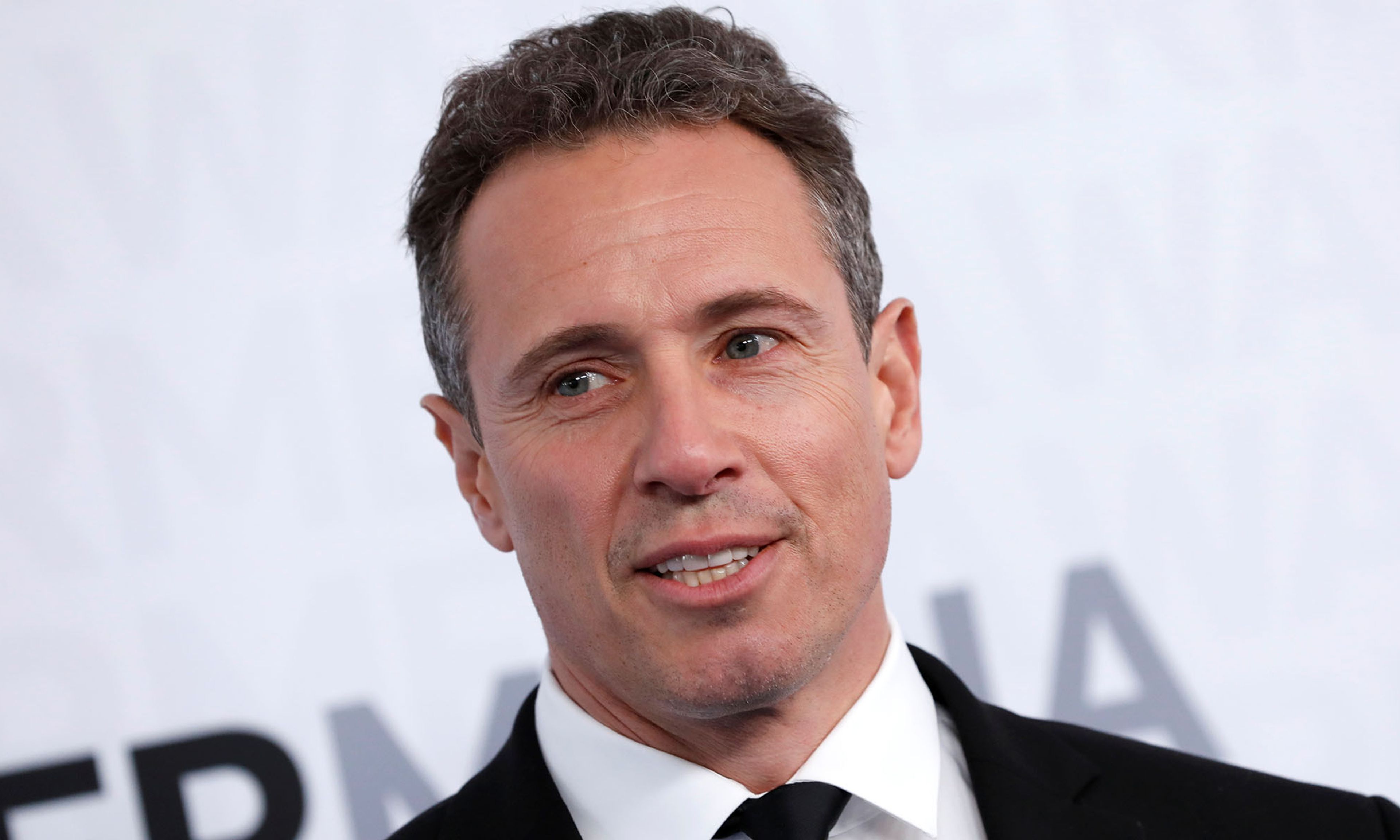
Chris Cuomo, an anchor for CNN, announced March 31 that he had tested positive for coronavirus and would be quarantining in his Long Island residence in Southampton, where he continued doing his nightly show despite being ill.
The testing of Chris Cuomo took place in the early stages of the pandemic, at a time when many members of the public struggled to obtain coronavirus tests.
As Phil Klein observes, this isn’t just a political scandal, it’s also a media scandal: “We already know how Chris Cuomo breached journalistic ethics in covering his brother, including by conducting this highly embarrassing interview which included the prop of a giant nasal swab. Now it turns out that Andrew was using his power to give special VIP testing to Chris.”
Of course, once diagnosed, Chris Cuomo promptly broke quarantine and later staged a CNN segment about leaving his house for the first time in three weeks . . . even though he had been seen elsewhere:
Cuomo told a story of leaving home just a week ago on his SiriusXM radio show. In the segment, which included Cuomo complaining about his job at CNN, he said he was confronted by a “jackass, loser, fat-tire biker” while outside on Easter. The New York Post later reported that Cuomo was visiting undeveloped property he owns in East Hampton when the man, who was riding by on his bike, called out the anchor.
Hunting Four Horsemen, page 191: “All around the world, both allies and enemies stayed home for long stretches. Even ISIS warned its members, in its al-Naba newsletter, that Europe was not safe, and that ‘the healthy should not enter the land of the epidemic and the afflicted should not exit from it.’ Alec observed that members of ISIS respected quarantine instructions, but CNN anchor Chris Cuomo did not.”
The National COVID-19 Picture Is Good . . . with Some Ominous Indicators in the Northeast
The worst outcome of a COVID-19 case is death; as we vaccinate more and more of the most vulnerable Americans, the proportion of people who catch the virus and die should shrink smaller and smaller. According to the CDC, more than 70 percent of Americans who are 65 years or older have received at least one dose, and more than 43 percent are fully vaccinated.
The second-worst outcome of a COVID-19 case is a person getting sick enough to require hospitalization or the ICU. Unsurprisingly, recent research indicates that the busier your hospital’s intensive-care unit is, the less likely a patient is to survive: “Among patients with COVID-19, those treated in the ICU during periods of peak COVID-19 ICU demand had a nearly 2-fold increased risk of mortality compared with those treated during periods of low demand.” Nationally, the overall numbers are broadly moving in the right direction — declining new cases, declining positive tests, declining hospital admissions, declining new deaths. But there are some glaring exceptions in Michigan and some northeastern states.
Yesterday, I explored what we could figure out about Michigan, pointing the finger at clusters of more contagious variants and a mediocre-to-subpar vaccination effort. The latest CDC report lays out an even starker picture. In the week from March 12 to March 19, new COVID-19 cases in Michigan increased by 45 percent, and confirmed new COVID-19 hospital admissions increased by 24 percent. Thankfully, deaths have declined slightly. Half of the state’s hospitals are reporting staff shortages, although fortunately the hospitals report having plenty of supplies.
The state ranks fourth in the country in new cases per 100,000 residents . . . and the three states ahead of it point to a cluster in the northeast: New Jersey, Rhode Island, New York.
New Jersey’s seven-day average for new confirmed cases is now 3,339, “up 6 percent from a week ago and 35 percent from a month ago.” State officials have “confirmed nearly 500 cases of the coronavirus from seven different variants, with the vast majority from the more-contagious strain first identified in the United Kingdom.”
What’s particularly troubling is that New Jersey isn’t a straggler in the vaccination race. It’s used more than 85 percent of its supply, ranking seventh among the states. It ranks ninth in the country in percentage of its population given one dose and 18th in the country in percentage of its population that’s fully vaccinated.
Rhode Island ranks even better in those categories, near the top. The good news is that, like the other states, the increased number of cases in Rhode Island isn’t increasing the number of COVID-19 deaths. The state health department “report released Wednesday was the first since Sept. 4 that included no new deaths . . . Coronavirus deaths are down sharply in March. The Health Department so far has recorded 59 for the first 23 days of this month, compared with 173 for the first 23 days of February, 338 for the first 23 days of January and 379 for the first 23 days of December.” Thankfully, this state isn’t seeing a surge in hospitalizations: “There were 112 COVID-positive patients in Rhode Island hospitals at last count, on Monday, down from 118 reported Tuesday. It was the fewest hospitalized patients since Oct. 5. Sixteen patients were in intensive care; 12 were on ventilators.”
Then there is New York, which just surpassed 50,000 deaths from COVID-19. Its decline in new cases more or less had plateaued in early February, and it appears that New York City in particular is the pandemic epicenter once again:
Right now, New York is in a race between vaccines and variants. It’s neck and neck. And rushing to reopen, getting ahead of ourselves, will only help the virus get ahead of us in that race,” NYC Public Advocate Jumaane Williams said in a statement on Wednesday. “In this moment, when the majority of new cases of COVID-19 in New York City come from highly contagious variants and only 14% of New Yorkers are fully vaccinated, we need to continue to scale up vaccination while scaling back these reopenings.
According to New York Times data, over the last seven days New York City has averaged 62 new cases per 100,000 people. If the city was a state, it’d be the highest rate in the nation – and as it is, it’s still among the highest in the country.
I notice New York is very eager to share its vaccination data by race or ethnicity, but it doesn’t make it easy to find the vaccination data by age. Phil Kerpen collected the data from each state himself and determined that New York state ranks 48th out of the 50 states and D.C. in percentage of seniors who are fully vaccinated, at 34.4 percent. Yes, there are immunocompromised individuals under age 65 who should be a priority as well, but . . . doesn’t that percentage seem low? New York has administered 7.8 million doses and has 3.2 million seniors. Is part of New York’s problem which citizens the vaccination programs chose to prioritize?
Your Regular Reminder That the Chinese Government Is Full of Big Fat Liars
If you believe the Chinese government, its country of a billion people has had only 4,636 deaths since COVID-19 began — including just four since April 19. I marvel at any public-health expert that believes the data from the Chinese government, and its narrative that it completely beat the virus that every other country in the world has struggled to contain.
I feel like this study of Wuhan from last June didn’t receive nearly enough attention: “The estimates of cumulative deaths, based on both funeral urns distribution and continuous full capacity operation of cremation services up to March 23, 2020, give results around 36,000, more than 10 times of the official death toll of 2,524.”
ADDENDUM: Dan McLaughlin brings the good news that John James — the Republican who came oh-so-close in the last two Michigan Senate races — is thinking of running for governor. Third time’s the charm?






Comments