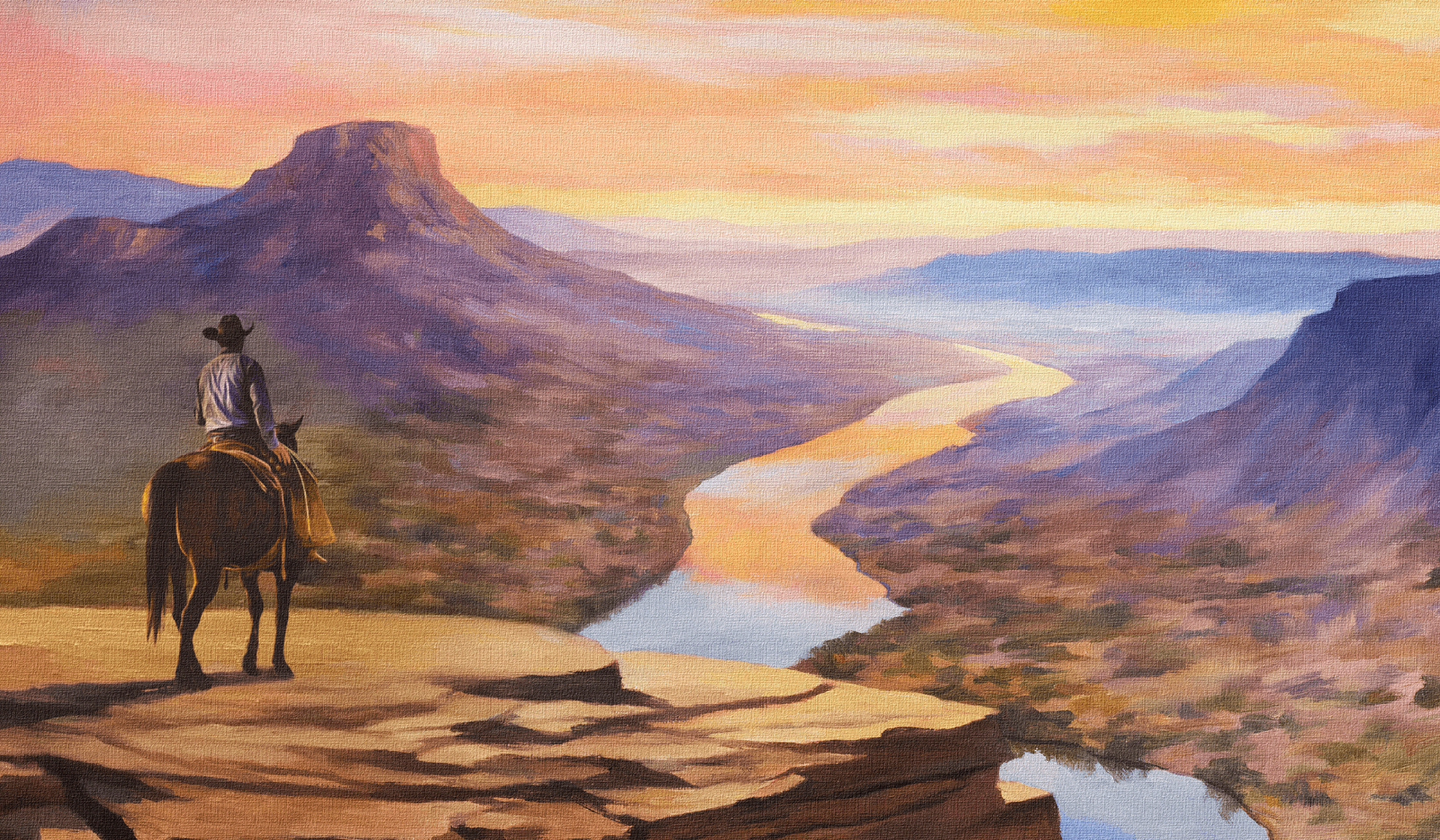
 (Roberto Parrada)
(Roberto Parrada)
I used to think I really liked Austin. What I’ve figured out, some decades later, is that what I really liked was being 20. But Austin’s great, too — it’s kind of like a slightly more refined version of Brooklyn where the tacos are good and there’s no real winter. Some conservatives say that Austin isn’t the Real Texas™, because it’s full of Democrats and tech weenies and vegan brunch spots, but I don’t recognize this Real Texas they’re talking about. I detested her politics, but Ann Richards was as real Texas as it comes. Same for Jim Hightower and Barbara Jordan. Same for Rick Perry, back when he was a Democrat and working for Al Gore’s presidential campaign. Don’t tell me Matthew McConaughey or Wes Anderson isn’t representative of the real Texas. Charlie Goodnight was from the real Texas, but so were those dirty hippies at the Armadillo World Headquarters. George Strait is one facet of Texas, and his Houston-raised cousin Jeff Bezos is another.
The real Texas is large, and it contains multitudes.
The mythological Texas is simpler and duller: It’s full of gun-toting right-wingers, AR-15 in one hand and a Bible in the other, shouting “Liberty or Death!” through a mouthful of kolache from Buc-ee’s. Strangely enough, both sides of the culture war have the same cartoon understanding of Texas — they just feel differently about it. But this doesn’t stand up to even elementary scrutiny. My progressive friends think of Texas as a hotbed of reactionary politics and rural atavism, but they never seem to notice funny little things, like the fact that Houston is practically a utopia of interracial harmony compared with Los Angeles or New York, or that for all of those country songs about dirt roads and small towns, five of the nation’s 15 largest cities are in Texas. The pickup trucks that are manufactured in Texas are made by Toyota — drive a few hours from that factory, and you’ll arrive at the factory where Apple makes the Mac Pro.
The proverb has it exactly wrong: True love is never blind. Real love sees everything.
And there’s a lot of Texas to see. I have seen it from a great many different angles: I was born within get-a-whiff-of-that distance of cattle feedlots, but I’ve also seen Texas from University of Texas classrooms and morning-daily newsrooms, from the Chisos Mountains and the Good Neighbor Bridge, from barstools, church pews, emergency rooms, hunting blinds, and handcuffs, from the first-class cabin, from helicopters, and from the bed of a truck taking me to junior high on a cold Panhandle winter morning. Everybody’s experience is his own, I know, but I don’t recognize much of that mythologized Texas that I hear about from both sides of the culture war. My Texas is late-night motorcycle races on Houston freeways, buttoned-down Dallas businessmen, Nam Giao, political debates at Old Parkland, Lloyd Maines doing Eddie Van Halen dive bombs on the pedal steel, Terry Allen looking like a cross between Jimmy Buffett and Groucho Marx, sitting at the piano and singing sad songs about hideous suburban cocktail lounges and the Wolfman of Del Rio. It’s Joe Ely playing Buddy Holly’s “Not Fade Away” with the Clash, the English punks who wanted to play shows in El Paso and Laredo rather than in Dallas or Houston, because they’d heard about those mythologized places in Marty Robbins ballads.
I understand the mythmaking impulse, I do. But the actual Texas — with its messy history and sometimes madcap present, its narcissism and its openheartedness — that Texas is worth knowing something about, too, and worth loving.
This has all happened before, this will all happen again.
In 1961, the Texas legislature passed a resolution instructing local school boards that “American history courses in the public schools [shall] emphasize in the textbooks our glowing and throbbing” — really: glowing and throbbing, because that’s not weird at all — “history of hearts and souls inspired by wonderful American principles and traditions,” and in Amarillo, the local Powers That Were responded according to the wonderful American principles and traditions of petty viciousness and ignorance, ordering the libraries to remove such novels as The Grapes of Wrath, Brave New World, and Of Time and the River — works of fiction having no direct bearing on history courses as such, glowing and throbbing or otherwise.
As if to drive home the imbecilic point, they also yanked George Orwell’s 1984 — why read about the memory hole when you can live there, up there on the vast high prairie?
Texas is now having one of its periodic eruptions.
The law already requires that public-school students be given a “heroic” accounting of the Alamo, and a dozen or so history-related bills have been wending through the political process, some of them sensible, some of them silly: One would prohibit the classroom use of the New York Times’ 1619 Project, another prohibits lessons derived from “critical race theory,” another would mandate a “patriotic” account of Texas’s 1836 split from Mexico. A bill introduced in early summer would hold up state funding for a planned $450 million renovation of the Alamo and surrounding area unless any related museum exhibits restrict discussion of the causes of the Texas revolt to those listed in the Texas declaration of independence — in effect prohibiting any consideration of slavery’s role in the episode.
The Alamo is the main flash point: Right-wing groups have been staging “armed protests” in front of the monument, no doubt intended to press the forces of Cultural Marxism past the Ripley’s Believe It or Not and the Amazing Mirror Maze all the way back to the Whataburger.
It’s a goat rodeo.
And, like Marjorie Morningstar and Laughing Boy — two more novels that were pulled from Texas library shelves back in 1961 — this isn’t about history at all: It is about culture, myth, and disruption. It is about Mutant Texas Weirdness, and the first thing you have to understand about Mutant Texas Weirdness is that it has a lot less to do with the events and personalities of the past than it does with the neuroses and anxieties of the present, that it is a strange dance between Texas and America, with Texas trying to lead even when it isn’t sure it wants to be dancing at all. It’s not really about San Jacinto or Juan Seguín or Deaf Smith or the dodgy provenance of Phil Collins’s Alamo-knickknack collection.
It’s about us.
Consider the Texas-flag weirdness.
Texas and Hawaii are the only two states (Take that, California!) whose flags had been national flags — and Hawaii can get a little weird with the nationalism, too, if we’re being honest — and Texans are very proud of the fact that ours is the only U.S. state allowed to fly its state flag at the same height as the American flag. Why not Hawaii, too? Because Texas is awesomeness and brisket, and Hawaii is pineapple juice and tiny little guitars. We teach the facts about that Texan privilege to our children, pointing out Texas flags flying high and proud, right up there with Old Glory, on post offices and federal buildings. It’s a completely bogus boast, of course: The U.S. Flag Code permits any state’s flag to be flown at the same height — but no higher — than the national flag, and there is no special carve-out for Texas. Delaware and Ohio and other states you’ve never heard of, states with no grand mythology, have the same flag rules as Texas. But Texans need to think of ourselves as being special, a breed apart, independent — and so must our flag be, too.
Even if it isn’t.
That’s just good ol’ high Texas weirdness applied to vexillology. Strange? Sure. But, then, most states don’t have a pledge of allegiance to their state flag, whereas Texas not only has one but makes reciting that pledge mandatory under state law for public-school students.
And that’s where the dancing comes in.
Texas joined the Union in 1845, and for damned near a century, Texas got by just fine without a pledge of allegiance to the state flag. And then came 1933, which saw Adolf Hitler come to power as chancellor in Germany and Franklin D. Roosevelt come to power as president in the United States. The Great Depression was hammering Americans at home, while there were stirrings abroad of another European war. Texas, which was full of desperately poor Democratic farmers, loved the New Deal — I grew up not far from the little town of New Deal, Texas, and for generations no self-respecting Texan would have pissed on a Republican if he were on fire — and Texans felt pretty good about the Roosevelt administration, too, especially with a Texan, Cactus Jack Gardner, in the No. 2 job. But the New Deal was a program of centralization, one that unquestionably shifted the locus of power away from Austin and the other state capitals and toward Washington, the imperial city. There was a lot going on in 1933 — the Great Depression, the end of the gold standard, the abortive Smedley Butler coup d’état — and that was the year the Texas legislature got around, after 88 years in the Union, to writing up a pledge of allegiance to the Texas flag.
And if 2007 was not quite 1933, it was a pretty consequential year, too: Texan George W. Bush was struggling in the White House, the Iraq War was going poorly, Nancy Pelosi was sworn in as speaker of the House, and Barack Obama announced his intention to run for president — and the Texas legislature reopened the pledge-of-allegiance issue, inserting the words “one state under God.” In the background, one of those evangelical atheist kooks was in federal court trying to have the words “under God” struck from the U.S. Pledge of Allegiance, and Texas has long been happy to act as a national culture-war battering ram while insisting on its own exceptionalism.
Texas’s hot/cold relationship with America — with being Americans — is fundamental to our state’s political conception of itself. Texans are very proud — inordinately proud, stupid proud — of the fact that under the treaty by which Texas was annexed to the Union, ours alone among the states has reserved for itself the legal right to secede from the United States. We are even more proud of that than we are of the flagpole stuff, and it is an even bigger pile of horsepucky. The legislative history is a little convoluted, but the treaty submitted for ratification said no such thing, and, in the end, the Senate rejected it, anyway. Texas ended up joining the Union by the probably unconstitutional means of a joint resolution from Congress that laid out some terms — including terms about slavery — and then declared those terms more or less optional, instructing the president to just negotiate a settlement with Texas “if the president of the United States shall in his judgment and discretion deem it most advisable.”
The myth of Texas’s right to secede has been around for a while, but it really came to prominence as part of the public discourse in the state in the 1990s, and the Texas Nationalist Movement, which seeks to have a “Texit” referendum on leaving the Union, was founded only recently, in 2005. That’s because the current mutation of Mutant Texas Weirdness is the product of fairly recent cultural evolution: The more the strip-malled suburbs of Houston and Dallas come to resemble the strip-malled suburbs of Los Angeles and Atlanta, the more Texans insist that we are really, in some ineffable way, our own thing.
The aesthetic associated with that is of recent vintage. Growing up in Lubbock and Amarillo in the 1970s and 1980s, I don’t think I ever saw anybody wearing a cowboy hat who wasn’t actually in costume, and I don’t think my father or grandfathers ever owned one. (Ropers? Sure.) I never saw a Secede! bumper sticker on a Ford Super Duty, and cattle barons drove Cadillacs, not trucks. (At the height of the oil boom, Midland had been home to a thriving Rolls-Royce dealership.) The Texas of J. R. Ewing’s Dallas was as bizarre and fanciful to most Texans as it was to the subjects of the Soviet Union who drove to the Estonian border to pick up the samizdat soap opera broadcast out of Finland.
Mutant Texas Weirdness is very much a phenomenon of the here and now, of our own time, and where you really find it growing in all its malignant metastatic inflammation isn’t among the actual cowboys and cotton farmers and oilmen but among merchants and talk-radio hosts, suburban lawyers and dentists — and you find it not so much in the wild desert of Brewster County or up on the Llano Estacado but in the suburbs and in the cities, in precisely the parts of Texas that are most like the rest of the country and that are fast becoming even more like the rest of the country. Mutant Texas Weirdness is to the real-world Texas as Red Lobster is to Maine.
Some places have local pride. In Texas, we’re having an identity crisis.
There’s no such place as Texas. We should probably start there.
The Kulturkampf battle over Texas’s history is focused in large part on Texas’s role in the Confederacy and its identity as a Southern state and a slave state. But while all of Texas was in the Confederacy, not all of Texas is in the South. Cities such as Houston and Beaumont, Gulf-facing with deep connections to Louisiana and the rest of the coast, are in the South: Drive from Katy to Orange and you’re halfway to Baton Rouge. In the late 19th century, Texas’s largest city was Galveston, the port at the center of the state’s cotton trade. The Texas that was in the South was a maritime state, having more in common with South Carolina than with the southwestern desert areas. Texas still has a booming maritime commercial sector, but they bring in seafood and say “Howdy, y’all” in Vietnamese, which is Texas’s third-most-spoken language.
San Antonio and the Rio Grande Valley have always had an Anglo-Hispanic hybrid border culture, and, as you go west, the influences of Coahuila and then Chihuahua exert themselves ever more strongly until you reach El Paso, which is in many important ways a Mexican city, but one that is so positively western-facing that it is not even in the same time zone as the rest of Texas, being instead on Phoenix and Denver time. In El Paso, you are closer — literally and figuratively — to Los Angeles than you are to southern-fried Port Arthur, which is, in turn, far closer to Florida than it is to the high ranching country of the Panhandle. The Panhandle is much more culturally midwestern than southern, being economically and socially connected with Colorado, Nebraska, and Kansas, which is where those endless herds of cattle on the Chisholm Trail were being driven to. The business centers that mattered most to the old cattle barons weren’t in New Orleans or Atlanta but Kansas City and Chicago.
So, how large should the Civil War, the Confederacy, and slavery loom in Texas’s history?
You will sometimes hear right-wing Germans complain that while German civilization has been around for a couple of thousand years and played a key role in everything from the Reformation to the internal-combustion engine, Germany is defined in many minds by the brief period during which Adolf Hitler was in power — as though everything that happened between Arminius and Angela Merkel were only prologue and epilogue to the twelve-year Reich. (And they may have a point, but, still — Nazis, you know?) In similar respect, Texas kind of wants to have it both ways: Texans chafe at being defined by the state’s four years in the Confederacy but take our nine short years as an independent republic as the foundation of our cultural and political identity.
There were a handful of slaves in Texas from its time as a Spanish colony, but the “peculiar institution” of economically significant chattel slavery mostly attached to cotton cultivation arrived with the Anglo settlers, and it was a feature of Texas life for nearly half a century, from 1821 to 1865.
Slavery was insinuated into Texas’s political and economic life from almost the beginning. When Stephen F. Austin took over and updated his late father’s “empresario” contract in 1821, the new arrangement allowed for granting 80 acres of land to settlers for every slave they brought to the territory. Austin himself was forthright about this, writing: “The principal product that will elevate us from poverty is cotton, and we cannot do this without the help of slaves.” His father, Moses, had negotiated his contract with the Spanish — but in 1821, the year Moses Austin died, Mexico won her independence from Spain, and Stephen Austin was negotiating with the new Mexican government — and Mexicans were generally hostile to slavery.
The simplified version of the story is that Mexico abolished slavery and Anglo slave owners in Texas revolted in order to keep their human property, but that isn’t quite true. Mexico repeatedly threatened to abolish slavery in Texas, but it never really followed through. The 1827 constitution governing the state of Coahuila and Texas prohibited the importation of new slaves and emancipated the children of slaves born thereafter in Texas, but the state government soon revised its regulations to permit indentured servitude, meaning that slaves could be brought to Texas with phony “contracts.” In 1829, the Mexican president issued a decree forbidding slavery in all of Mexico, but he granted Texas an exemption. The Mexican authorities’ hostility toward slavery did not end the practice in Texas, but it probably did keep the numbers down by slowing down the immigration of slave-owning southern cotton planters.
At the time of the 1836 revolution, there were about 5,000 slaves in Texas. By 1865, there were more than 250,000 — the slave population had grown fiftyfold. If you are looking for an indicator of how significant slavery was in Texas’s economic and political life from 1836 to 1865, there is your horrifying answer.
In one sense, the exaggerated Texan identity is a near-substitute for the old rebel-yell southern identity, with the Lone Star flag standing in for the Southern Cross and the Alamo standing in for the Lost Cause. Texas had slavery and segregation and all the worst of that era, but Texas has never thought of itself as being about slavery and racism, not in the way Alabama or Mississippi has been. Texas-ism is, then, a kind of moral refuge, with a separate mythology in which human bondage and its aftermath play only a minor role. Sure, the bad guy in the story — the tyrannical Santa Anna — is brown, but, then, so are some of the heroes, from signers of the Texas declaration of independence such as José Antonio Navarro and Lorenzo de Zavala to the great soldier Juan Seguín, who ultimately was rejected by his fellow countrymen and joined the army of his former enemy, fighting under Santa Anna in the Mexican–American War, a kind of Lone Star Coriolanus. (Seguín would move back and forth between Texas and Mexico over the course of the rest of his life, and his legacy is about as mixed as it can be: He is a hero of the revolution, and the founder of the Bexar County Democratic Party.) And there is something admirable in the aspirations that myth speaks to: Anglos and Latinos, but fellow countrymen first, united in the pursuit of liberty — that is how we want to think of ourselves. And it is — to a limited extent and with obvious complications — true.
The men who fought and died at the Alamo were heroes, and we do not need the ladies and gentlemen of the Texas legislature to rule on that for us. Sam Houston’s revolution was a lot like George Washington’s revolution — a campaign by men who genuinely despised tyranny but who were blind to, or indulgent of, the tyranny they practiced and permitted. The difference between acknowledging that anguish and wallowing in it depends very heavily upon point of view.
And if it’s about point of view, here’s a little about mine. I grew up in West Texas, though my hometown, Lubbock, is not very close to the border: It’s a six-hour drive or so, and the easiest way to get there is by driving through not Texas but New Mexico. But that is a trip that people like us used to make pretty regularly, going over the bridge into Juárez back when that was a thing people did without thinking much about getting kidnapped or murdered. My mother, who had lived for a time in El Paso, liked to buy vanilla in Mexico — she said the stuff you could buy north of the border wasn’t any good. I’ve crossed the border more times than I can count, and never thought much about it.
I’m from an Anglo family with a fair number of marriages to Mexican Americans. (Even that is a relatively new term: When I was a kid, the Perezes and Mendozas I knew called themselves Mexicans, and people from Mexico were Mexican Mexicans.) I went to a high school that was predominantly Mexican American. But the public schools I attended were also under a federal desegregation order, and so I was bused to a majority-black elementary school across town when I was in the third grade. Before that, I’m not sure I knew that there was a majority-black school in my town or a black neighborhood. Moving into a working-class Mexican-American neighborhood adjacent to downtown when I was a young and broke newspaper writer was no big deal — not for me and not for my neighbors. A lot of white college students lived there, too. But I don’t think it would ever even have occurred to any of us to move to the largely black neighborhood on the other side of downtown. It was a separate world. On a visit home years ago, I decided to drive by the school I’d been bused to, and I couldn’t even find it. We lived within the same city limits, but not in the same town. In 1970, much of that side of town had been leveled by a tornado, and, as in many American cities, a major highway forms a kind of socioeconomic — and racial — Berlin Wall.
Four years after being sent to a new school to satisfy some federal judge I didn’t know and who didn’t know me, I was in the mandatory seventh-grade Texas-history class, taught by a very capable and enthusiastic teacher who loved roadside historical markers. But third grade was long forgotten by then, and the history of African Americans in West Texas did not, as far as I can remember, come up.
It’s easy enough to guess how it came to pass that all the black residents of my town lived in the same neighborhood — they didn’t have any choice — but where did they come from? As it turns out, many came from East Texas in search of work and hopeful of a respite from the much more aggressive practice of racial oppression that prevailed in the more culturally Confederate parts of the state. And they found it, to an extent: Southern hostility was replaced with midwestern insularity. If it hadn’t been for high-school football, the white people on my side of town might have forgotten that the east side was still there.
One of the great things about Mutant Texas Weirdness is that it is a lot more open than you might expect. It’s a big, weird tent. Allen West, who just wrapped up a term as head of the Texas Republican Party and plans to challenge Governor Greg Abbott in the 2022 Republican primary, is a black man born in Atlanta who had a political career in Florida and came to Texas relatively late in life, but he is as good an example of Mutant Texas Weirdness in its specifically political form as you will find, hat and all. It’s not a white-guy thing, or even a white-guy-from-Texas thing. It’s just . . . a thing.
And it is an evangelical thing, hence the endless fights over public-school curricula, the Alamo and other monuments, and all the rest of that culture-war stuff. And hence the very strange and relatively new ethos of aggressive Texanness. And, because this is still America, after all, it is a marketing thing: Ford may boast that its trucks are Made in the U.S.A., but Toyota one-ups them by advertising that its trucks are Made in Texas. Almost every truck-maker has a specifically Texas-themed vehicle: Ford’s King Ranch, Toyota’s 1794 Tundra (the factory sits on the former property of a Texas cattle ranch established that year), the Chevrolet Silverado Texas Edition, the Ram Lone Star. Rick Perry, an archbishop of high-Texas weirdness, used to sport boots with the Texas flag and the Gonzales flag — you know that one: “Come and Take It.” Rios of Mercedes will sell you a $550 pair of cowboy boots made from genuine Texas feral hog, if that’s your thing.
(And if you’ve never gone feral-hog hunting in Texas, you are missing out.)
The problem is that pushing all the complexities of the real Texas into two categories — Culture-War Allies and Culture-War Enemies — produces something unrecognizable, because much of what is great and admirable and distinctive about Texas doesn’t fit nicely into one of those boxes. John Wayne was from Iowa by way of Hollywood. John Wayne was not from the real Texas — but Lyndon Baines Johnson sure as hell was. You’re never going to convince me that Natalie Maines from the Dixie Chicks isn’t from the real Texas — I went to high school with her. And if that fact doesn’t fit into the Texas that you love, then what you love isn’t Texas.
Back in 1836, Stephen F. Austin wrote that his devotion to Texas “has assumed the character of a religion.” And that — not any fight over historical scholarship or educational standards — is how this is best understood. Religion tells us where we come from and where we are destined to go, how to live right, how to choose our friends and our enemies.
In many cases, religion assuages our greatest fears — and in Texas, our greatest fear right now seems to be that we are really not so different from everybody else, that we are, in reality, a great big narcissistic Kansas, with a weakness for playing dress-up. But Texas is a lot more than that, far too big and too rich and too interesting to be reduced to what those who despise it — and, worse, those who profess to love it and to speak for it — would have you believe. You can keep your ersatz, homogenized Texas.
Give me the real thing.