The Marvel character’s latest film just outgrossed a work of Chinese propaganda. There’s more to this than you might think.
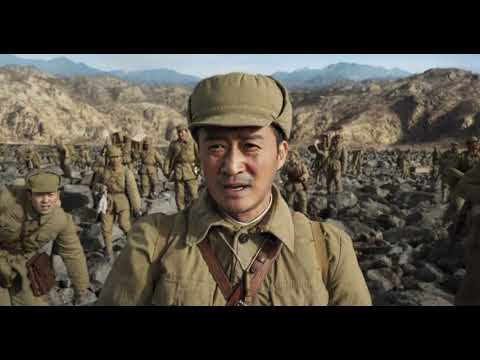
For much of 2021, the highest-grossing film at the worldwide box office was not a Hollywood production. It was The Battle at Lake Changjin, a big-budget, Hollywood-aping Chinese blockbuster flatteringly depicting the actions of Chinese soldiers against Americans during the Korean War. Produced by several Chinese-government departments, the film has become the most successful in China’s history. And because of the Covid-era travails of American studios seduced by streaming and of movie theaters still struggling to bring audiences back, the Chinese propaganda film had dominated the worldwide box office.
Until last week, when Spider-Man: No Way Home, the latest entry in the Marvel Cinematic Universe, took the No. 1 spot. The eighth live-action film this millennium to be centered on the famous comic-book webslinger crossed $1 billion worldwide mere days after its release, buoyed by the biggest pandemic-era domestic box office yet.
This U.S.–China matchup is worth examining more closely.
To be sure, a superficial clash-of-civilizations–style glance at the two leading cultural products of the world’s two major powers would seem not to put America in a favorable light. On the one hand, such an analysis might go, you have China: a belligerent yet culturally confident power merging the apparatus of state and culture to produce a wildly successful film that also inculcates a kind of respect for that regime’s history and prepares its population for the possibility of conflict with the U.S. The growing legions of semi-admirers of the Chinese government’s supposed rejection of Western decadence may have a certain respect for this.
Through this same lens, you have America: a stagnant nation with decaying institutions, coasting on its legacy and reliant on the few things that still work — in this case, endlessly recycling elements of an aging film franchise while trapping followers in the perpetual adolescence that comic-book films embody. Those same grudging admirers of China’s anti-decadence would be unlikely to think well of an American movie that owes its success to a nostalgic mining of the past 20 years of American pop culture.
The broader questions here, however, require a more in-depth look, as they speak to the broader cultural and geopolitical contest between China and the U.S. The interpretations above would be specious; there is in fact more hope for America in this seemingly trivial contest of films than one might think.
A poster for The Battle at Lake Changjin at a movie theater in Shanghai, China, October 19, 2021. (Aly Song/Reuters)
The Battle at Lake Changjin is undeniably a commercially successful movie in China, and, to the extent that its success in its home country is authentic, it may indeed signal a growing cultural acceptance in China of the belligerent vision set forth by Xi Jinping and the Chinese Communist Party. That’s at least what the Global Times, a CCP-owned newspaper, would have you believe: “The national feeling displayed in the film echoes the rising public sentiment in safeguarding national interests in front of provocations, which has great implications for today’s China–US competition.”
And though I have not seen it, I am willing to accept what reviewers say are the Hollywood-level quality of its effects and action scenes. It’s a familiar tale: The Chinese government used the promise of access to its market to lure an industry into cooperation, all the while studying — and stealing — the other’s secrets until it could use them for itself. So yes, this film does reflect the challenges America will face in dealing with a rival power that has commercially entangled itself with this country in the hope of avoiding a war that would threaten both.
But the film also reveals the weaknesses of the Chinese regime. For one, it is remarkably sensitive to criticism. For merely questioning the pro-authority, jingoistic message of the movie, Chinese journalist Luo Changping was forced to apologize and eventually arrested for “infringing upon the reputation and honor of heroes and martyrs.” Such harshness raises the question of what else the Chinese government might be doing to manipulate indicators of its success.
Even so, that success has its limits, as the film’s popularity is highly particularized. This reveals another weakness of the regime: Because China is so populous, and because it has built up its film industry and its economy more broadly, it can now sustain its own blockbusters. But The Battle at Lake Changjin has succeeded virtually entirely within Chinese borders; American films can succeed in China, but this one has found virtually no purchase in America.
This is despite the fact that American actors do appear in it — as villains. Chief among those villains is General Douglas MacArthur, played by James Filbird, who moved to China some years ago and has reinvented himself as the stock American in Chinese films. When not starring in Chinese-government propaganda, he is retweeting it. But even though the presence of American actors makes this technically a global production, its message will speak only to a Chinese audience: Respect the Party, fight for Communism, obey your superiors, advance China’s glory. The temptation here to invoke American “propaganda” during World War II falls flat; even if our government then produced such films, they were on behalf of a mission of liberation, not of subjugation. We fought genocidal powers; we were not ourselves one.
Still, the temptation to cultural and geopolitical pessimism about the content and success of Spider-Man: No Way Home in comparison can be hard to resist. Yes, comic-book films have disproportionately dominated Hollywood filmmaking of late (though in the recent past, Hollywood has seen Westerns and disaster films dominate similarly). Yes, comic books, even at their best, have a fundamentally juvenile character that can be hard to transcend (though comic books are as much a part of American culture now as anything else, and World War II–era audiences were entertained by Captain America and Superman serials). And yes, No Way Home is by far the most successful American film of the year, with the film industry still struggling while other Chinese blockbusters are riding higher globally.
But Spider-Man: No Way Home offers cause for optimism. Not because it is well-made and enjoyable — though moviegoers and many critics alike find it so — but because it reveals a still-thriving forum for criticism and discussion in American cultural matters. Where China jailed a critic of its most successful film, National Review, for example, published one. To our knowledge, Kyle Smith remains free. While it is absurd even to consider the possibility of sending our esteemed critic to a gulag, that in itself is a small sign of how, in this country, it remains possible to probe aspects of our culture for strengths and weaknesses. Self-improvement and self-correction have made America what it is today. Our society may be flawed, but we have the tools to mend it in a way that the top-down, heavy-handed, and brittle Chinese Communist Party simply cannot.
The aforementioned cynics and decadence-obsessives might attribute No Way Home’s success to its decades’ worth of fan service. Even Kyle, not among their number, criticized the movie on these grounds. But it is an insufficient explanation. Another recent film, The Matrix Resurrections, involved a similar degree of self-referentiality, yet critics and audiences alike have been indifferent.
What about Spider-Man might inspire elevated affection? I’d suggest the vision of heroism the character has represented in all Spider-Man films this century. It has been displayed not only by the title character, who has abided to the best of his ability by the famous motto: “With great power comes great responsibility.” But it has also been shown in other characters. Think of the ordinary New Yorkers who help Tobey Maguire’s Spider-Man against the Green Goblin and Doctor Octopus. Or the crane operators who help Andrew Garfield’s Spider-Man save the day against the Lizard. Or even the Marvel Universe incarnation of Aunt May (Marisa Tomei), whose occupation is working at a homeless shelter. These smaller instances of heroism are, in their own ways, just as important as the titular hero’s own; they embody what the Tobey Maguire Aunt May (Rosemary Harris) says in Spider-Man 2:
I believe there’s a hero in all of us, that keeps us honest, gives us strength, makes us noble, and finally allows us to die with pride, even though sometimes we have to be steady, and give up the thing we want the most. Even our dreams.
Unlike the highly nationalized and belligerent message of The Battle at Lake Changjin, the moral import of this Hollywood hero is both universal and uplifting. Against James Filbird’s embrace of Chinese propaganda, consider Andrew Garfield’s description of what it means to play the character of Spider-Man:
It’s bigger than me, it’s bigger than Tom Holland, it’s bigger than Tobey Maguire, it’s bigger than Miles Morales, everyone can project themselves into that suit. It’s all of our story.
What lessons are there for America in these contrasts? First, that Hollywood should stop undermining the theatrical release of its films and stop draining its releases of the kind of moral content present in its best work. Despite the flaws of the American film industry and the challenges that industry faces, America’s cultural soft power remains a force for good: It needs to be revitalized to whatever extent possible after Covid-era disruptions.
China itself may be doing America a huge, unwitting favor. No Marvel film this year has gotten a Chinese release. As of now, No Way Home does not have one, either. Even if it does get one, a long delay will — thanks to leaks and piracy — likely ensure that the movie does not achieve the success of past American films that secured Chinese releases. And that’s good.
Consideration for the Chinese market has significantly worsened the quality of the average blockbuster. Such films have relied more on easily “translated” CGI spectacle over subtlety and quality — that is, when the films haven’t been explicitly changed to cater to Chinese political sensibilities. America should begin decoupling from China in every feasible economic dimension, starting with the film industry. No Way Home, one of only two films to make $1 billion without the Chinese market, may be a commercial outlier. But its success without that market should show Hollywood what is possible. Just make good movies that will appeal to the U.S. and whatever other nations may be interested. Let China stew with its jingoistic claptrap. We can have the rest of the world.
This is an ironic turnaround from what I earlier identified as a sign that Marvel may have peaked. I thought then that troubles with the Chinese market represented only a challenge for Marvel, not an opportunity. Marvel may still face major headwinds. But that I may prove wrong about this one suggests another case for optimism about America. Too many people nowadays are down on the U.S., its institutions, and its culture — including No Way Home. But you go into civilizational struggle with the culture you have, not the culture you want. And there is more in that culture worth preserving and commending than the pessimists would have us think.
It may seem implausible to infer from the success of one film — even one whose climax takes place at the Statue of Liberty — that America can prevail in its civilizational struggle against the Chinese Communist Party. But it is far more implausible to assume that America is doomed. And worse than that, it can easily become a self-fulfilling prophecy — one that no array of heroes, real or imagined, could save us from.