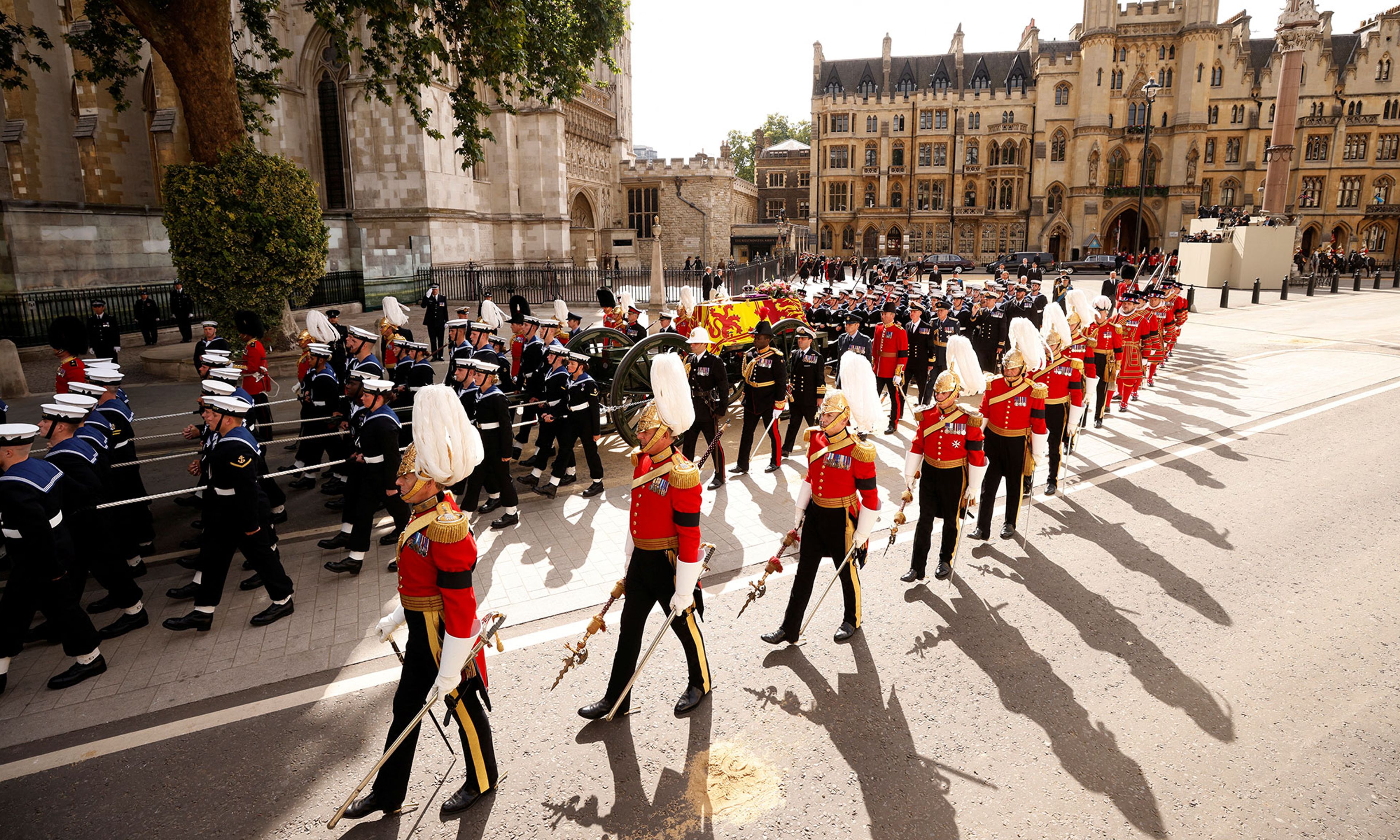
The death of Queen Elizabeth II was followed by ten days of mourning in the United Kingdom. The monarch’s body lay in state, first in Edinburgh and then in London. Around 250,000 people queued, some for as long as 24 hours, to pay their final respects. The Christian service at Westminster Abbey was attended by 2,000 people. A further 29 million watched on TV and streaming services. After the funeral, the coffin was transported to Windsor Castle and lowered into the royal vault at St. George’s Chapel. Some have wondered: Why all the fuss?
The New York Times published a disapproving report, noting that “the queen’s funeral will be paid for by British taxpayers.” MSNBC host Ali Velshi was dismayed when the English historian Andrew Roberts rebutted his dismissal of the British monarchy as “an institution that had a long and ugly history of brutalism, violence, theft, and slavery.” One fashionable idea is that the queen can be disentangled from the institution of monarchy — that there are lots of “queenists” but not so many monarchists. But the truth is that Elizabeth II lived her life in such a way as to make her personal and institutional legacies inseparable. It would be difficult to admire her life of service had it been in service of something worthless.


Comments