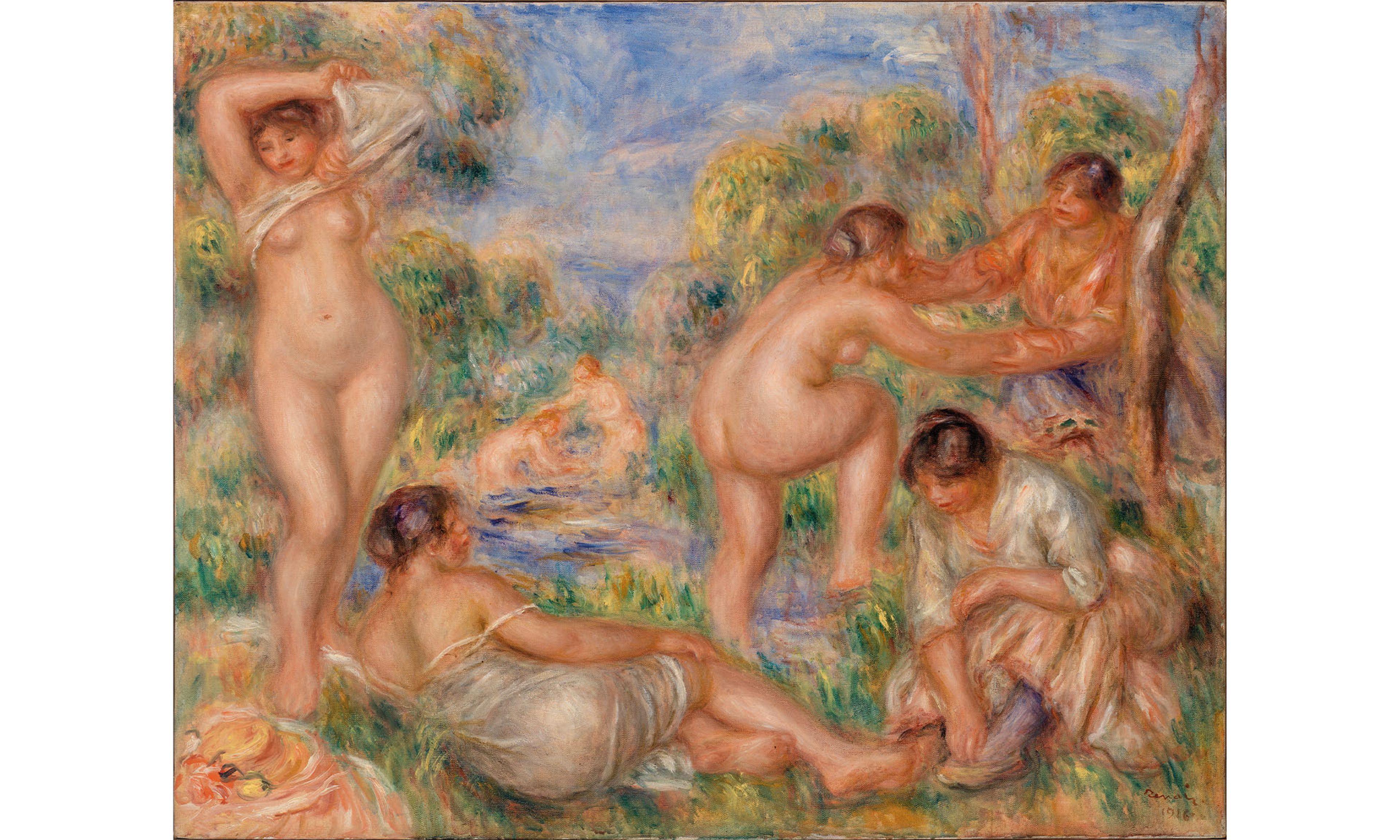
Before Christmas, I wrote about the Barnes Foundation’s enriching Modigliani Up Close exhibition, but, in my nearly daylong visit, I saw the permanent collection as well. The Barnes is unique in its abundance, and that means art of exceptional quality, and in its eccentricity, and that means its founder and his vision. Dr. Albert Barnes collected the Fauves in depth, especially Matisse, and “fauve” means “wild beast” in French. Barnes (1872–1951) was the wild beast of the Philadelphia art world.
First of all, he was a maniacal, focused collector. He bought 69 works by Cézanne, 60 Matisses, 44 Picassos, and 181 — mostly late-career — Renoirs. He acquired African sculpture, folk furniture and ceramics, Navajo blankets, old metalwork, medieval manuscripts, and, when he fancied them, paintings by Seurat, Degas, El Greco, Van Gogh, and Rubens. These and so much more are displayed at the Barnes Foundation in center-city Philadelphia, using Barnes’s own — and odd — gallery design.





Comments