This week’s kerfuffle over the use of AI in the dreadful films The Brutalist and Emilia Pérez immediately recalls the mudslinging Oscar campaigns that Harvey Weinstein waged back when he ruled awards season. Rather than discussing the inadequacies, dishonesty, and plain bad art of The Brutalist and Emilia Pérez, the trade press perpetuates the hubbub as a technological crisis. Variety blames the new tech wrinkle of artificial intelligence simply to avoid aesthetics and continue the “deep fake/cheap fake” inanity associated with the Biden regime.
When Dávid Jancsó, who edited The Brutalist, told Red Shark News about the tweaking done to fix the Hungarian vocal accents affected by actors Adrien Brody and Felicity Jones, it raised questions in the trade press about the film’s veracity. Variety called it a “backlash” without clarifying that technological fine-tuning and adjustments are standard practice in film production. To suggest that gimmickry somehow cancels a film’s worthiness plays into the nonsensical pretenses of awards season. It’s the same disregard for history and truth behind the term “disinformation” that we all should realize is merely a means of discrediting an opponent. In this case, the issue becomes competition between awards season front-runners instead of concern for a film’s meaning or its aesthetic substance.
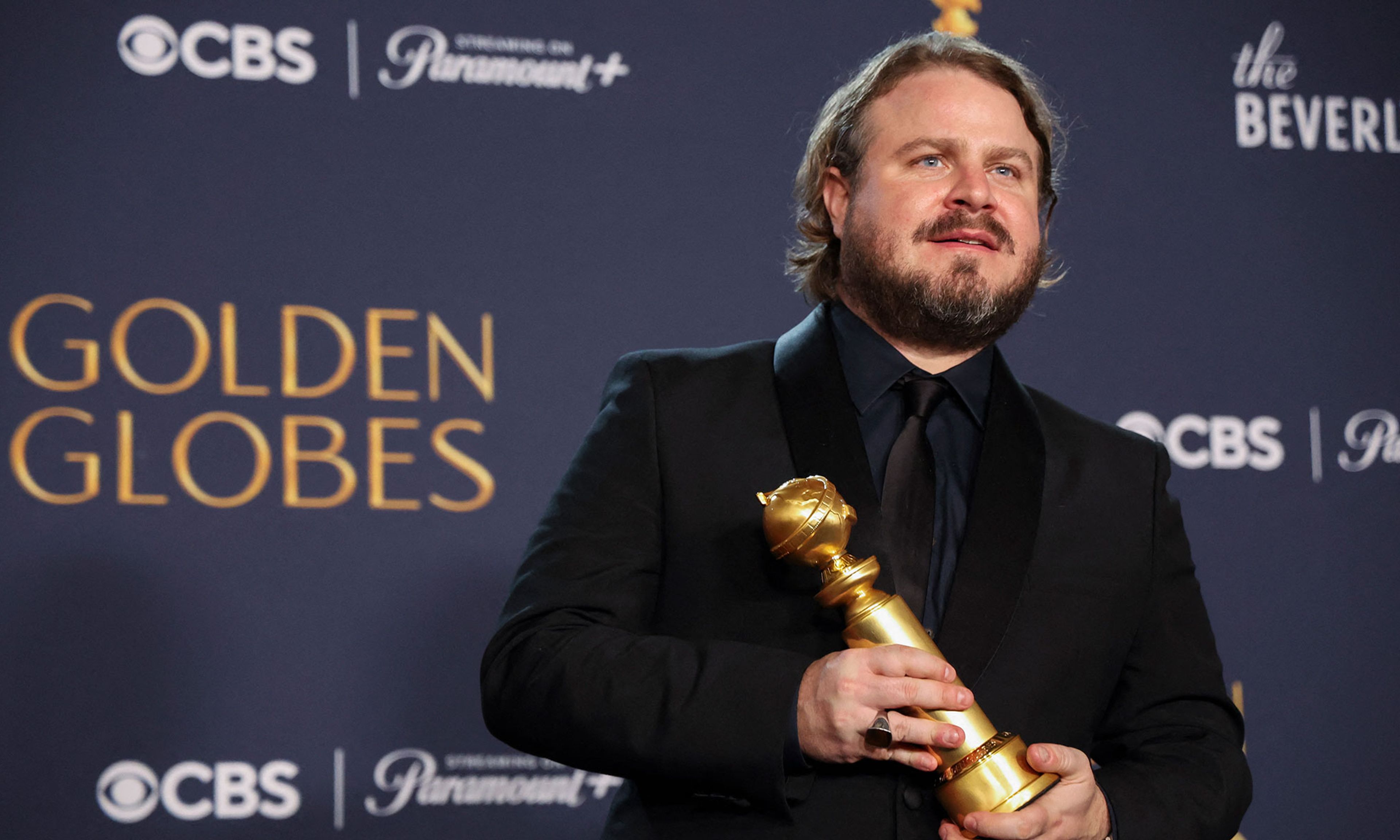
Brady Corbet, director and co-writer of The Brutalist, issued a public statement about working with the Respeecher company. Its technology was used “in Hungarian dialogue only, specifically to refine certain vowels and letters for accuracy,” he said. “No English language was changed. This was a manual process, done by our sound team and Respeecher in post-production.”
Corbet’s defense was strangely utilitarian and nonartistic given that The Brutalist dramatizes the struggle of an architect (Brody’s László Toth) to practice his art and express deeply felt anxieties. Here’s another example of Millennial conformity where the phrase and process “artificial intelligence” is left unexplained. Film commentators seem the least qualified to discuss whether this is genuinely new technology, an art form, or just another CIA psy-op — an excuse for apathy, human performance without accountability.
Despite Corbet’s serious-artiste airs as an acolyte of Lars von Trier and Michael Haneke, he participates in filmmaking routines common to the industry — accepting its hegemony — rather than innovating storytelling methods of his own. Jean Cocteau famously said of filmmaking proficiency that “the only technique that matters is technique you invent for yourself.” But there’s less Cocteau in Corbet (and Brody’s Toth) than an unseemly willingness to perpetuate the fraudulence that overwhelms Millennial cinema.
The Brutalist is horrendous not because it uses the latest supercomputer device but in the narrative trickery that demeans its story of immigrant desperation, global degradation, and America’s potential — all hidden behind Corbet’s insistently unpleasant normalization of depravity. That The Brutalist is ultimately unenlightening about Western history and culture only adds to moral ignorance. And showbiz ignorance, too. Variety doesn’t inform readers that vocal enhancements (disputed in both The Brutalist and Emilia Pérez) have been part of filmmaking since The Jazz Singer in 1927, Rita Hayworth’s dubbed singing voice in Gilda, and Douglas Rain’s heartbreaking death scene as Hal 9000 in 2001: A Space Odyssey.
It’s journalistically reckless for Variety to raise the issue of “controversial tech” and then leave Corbet to prevaricate, saying, “The Brutalist is a film about human complexity and every aspect of its creation was driven by human effort, creativity and collaboration. We are incredibly proud of our team and what they’ve accomplished here.”
But Variety has lost its time-honored ability to concisely critique a film’s effectiveness as both artistic expression and product. Its former expertise in distinguishing between industry habit and material once produced journalism of unique content. But now that “content” has come to define media itself — neglecting the intricacies of style, tone, originality, personality, and legitimate fascination — the trade press has no way to approach a film as devious and dissatisfying and dishonest as The Brutalist except by discussing the triviality of awards competition.
What The Brutalist and Emilia Pérez are about is of less concern to Oscar gawkers than the way each film distracts from technology’s encroachment on our ability to speak and think and analyze for ourselves. This specious AI controversy disregards what the movies say about our decline and becomes a demonstration of it. Hollywood is still Harvey Weinstein in spirit.





Comments