Notwithstanding some confusion over the precise timing of the cease-fire that has put a halt to the twelve-day war in the Middle East over Iran’s nuclear program, the cessation of hostilities seems to be holding. If that continues, this brief campaign will constitute a strategic coup for the United States and Israel.
This war did not begin on Saturday night with America’s Operation Midnight Hammer, in which the U.S. deployed its fearsome firepower against some of Iran’s most hardened nuclear facilities. It did not begin on June 13, when Israel inaugurated its preemptive strikes on Iranian nuclear, science, intelligence, military, and paramilitary targets with awe-inspiring precision and technical acumen. It began on October 7, 2023. It was after the massacre that Israel began systematically taking apart the “six armies outside Iran” that Islamic Revolutionary Guard Corps commander Qasem Soleimani bequeathed to his successors.
Today, Hamas is defanged. Hezbollah is decimated. The Houthis have been degraded. Iran’s vassal regime in Damascus is no more. In the effort to avenge its fallen compatriots, Iran executed two ballistic missile strikes on Israel in 2024 — both of which begat retaliation against Iranian air defenses. Apparently, those defenses went unrepaired. Israel finished the job it started last year early in the operation that finally targeted Iran’s nuclear weapons facilities, presenting Donald Trump with a tantalizing window of opportunity to do what his predecessors could not or would not.
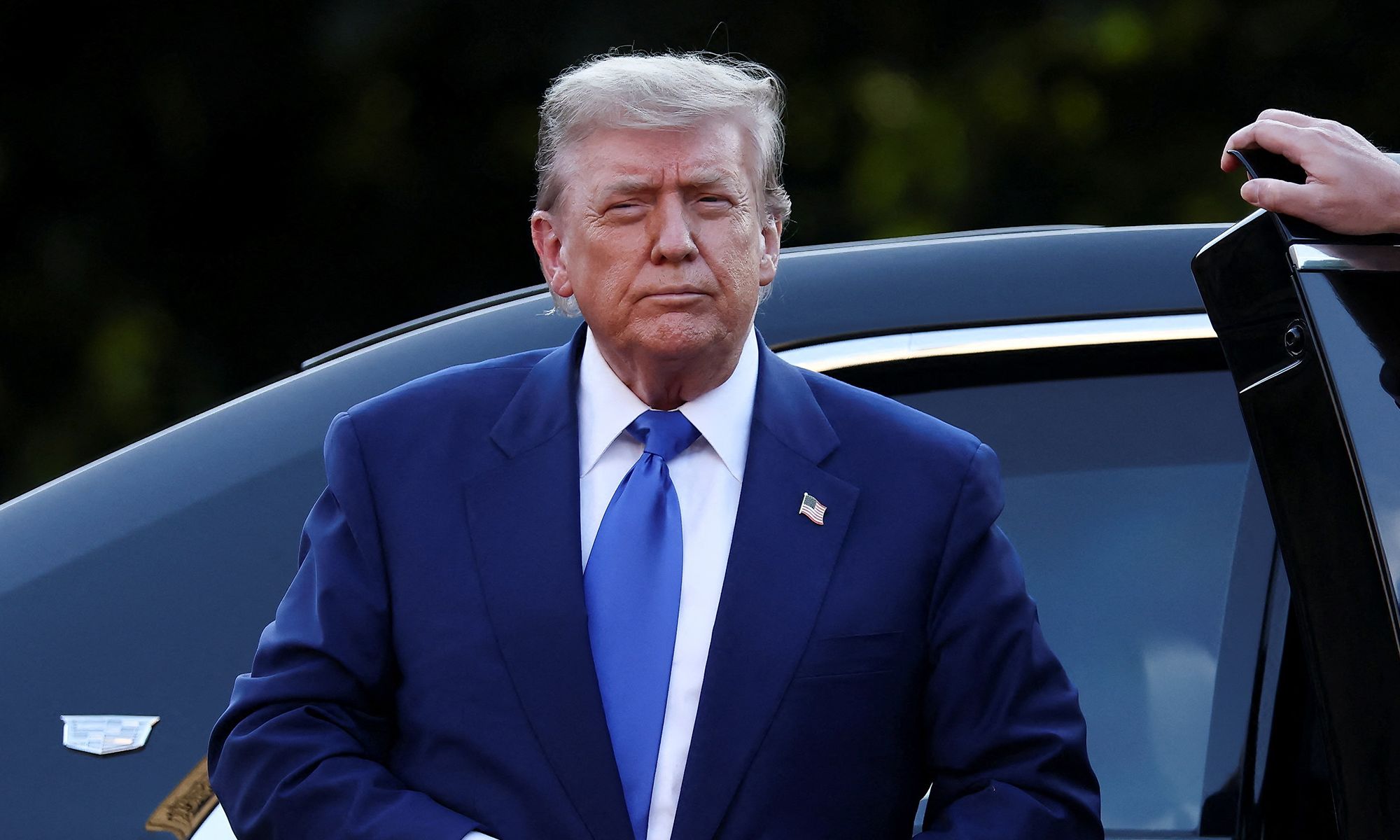
Trump deserves credit for ignoring the voices in Washington who counsel inaction out of an understandable but often paralyzing fear of unintended consequences. Every president in this century has promised to prevent Iran from achieving the capacity to break out with a nuclear weapon. Trump followed through on that talk. The strikes can be seen, therefore, as not a departure from U.S. policy but the fulfillment of it. Indeed, both Israel and the U.S. will have emerged from this war with more credibility regarding preemption against nuclear proliferators — a condition that, one hopes, will put the fear of God into rogue states thinking about pursuing their own bomb.
Iran’s foreign partners should be rattled by the Islamic republic’s weakness. The parade of horribles that had for so long deterred Iran’s Western adversaries from confronting Tehran militarily did not materialize.
Decimated by 18 months of war, Iran’s terrorist proxies did not rise to its defense. Its asymmetric capabilities — Iran’s vaunted capacity to execute mass casualty events in the West, attacking soft targets and terrorizing its civilians — were overhyped, or Iran simply didn’t want to risk such an attack. Its air defenses were neutralized. Its ballistic missile launch capacity was seriously degraded. Iran’s putative revisionist allies in Moscow and Beijing offered no support.
Iran’s nuclear science community is all but gone, as are the facilities they used to advance Tehran’s atomic weapons program. Its military leadership has been decapitated. Its economy is a wreck. The symbols of regime terror — the torture dungeons, the religious police, the apparatuses of repression in the Ministries of Justice and Intelligence — were all coming down when Iran advertised its interest in an end to the conflict in the form of a flaccid, face-saving missile strike on a U.S. air base in Qatar that Iran warned everyone of in advance. It was an even more humiliating climbdown than the symbolic gesture it mustered in response to the 2020 air strike that killed Soleimani.
Today, there is confusion over just how successful the U.S.-Israeli campaign has been in securing the foremost goal of this war: significantly degrading Iran’s capacity to make a bomb. There are questions over whether Iran’s nuclear facilities were damaged to the point of uselessness, how much loose nuclear material may now be floating around Iran, and the speed with which Iran can reconstitute its program. These are valid concerns that will require the West’s attention. Indeed, so long as the Iranian regime is in place, it will always constitute a threat to the West.
And yet, Iran’s military and intelligence establishment is deeply penetrated by Israeli intelligence. Those assets, along with U.S. surveillance and reconnaissance capabilities, will presumably provide Western planners with advance notice if Iran attempts to rebuild its atomic weapons program. After all, such things are not easy to hide. If Iran takes that course, Tehran should know that it will be struck again. As Trump himself stressed, “Iran will never rebuild their nuclear facilities.”
The United States and Israel are now invested in preserving Iran’s nonnuclear status with force. That means that there may be more standoffs with Iran or even limited military engagements designed to contain Iran’s ambitions. But that future is far preferable to one in which Iran can export terrorism abroad with the boldness that attends to membership in the nuclear club.
Whatever story the Iranian regime wants to tell about itself, it can no longer claim to be an existential threat to the “Zionist entity” and the “Great Satan” — a narrative that has preserved domestic political cohesion and justified repression inside Iran. As Columbia Professor Hamid Dabashi wrote, this origin myth is a major source of the supreme leader’s legitimacy — “the Quranic justification of a theology of asceticism and resistance.”
In the long term, the collapse of that pillar of regime stability could weaken the edifice of the Islamic republic itself. For now, though, Americans can be content with the strategic victory Donald Trump and Benjamin Netanyahu engineered in the Middle East. It was as technically impressive as it was tactically adroit, and it has made the world a safer place than it was twelve days ago.






Comments