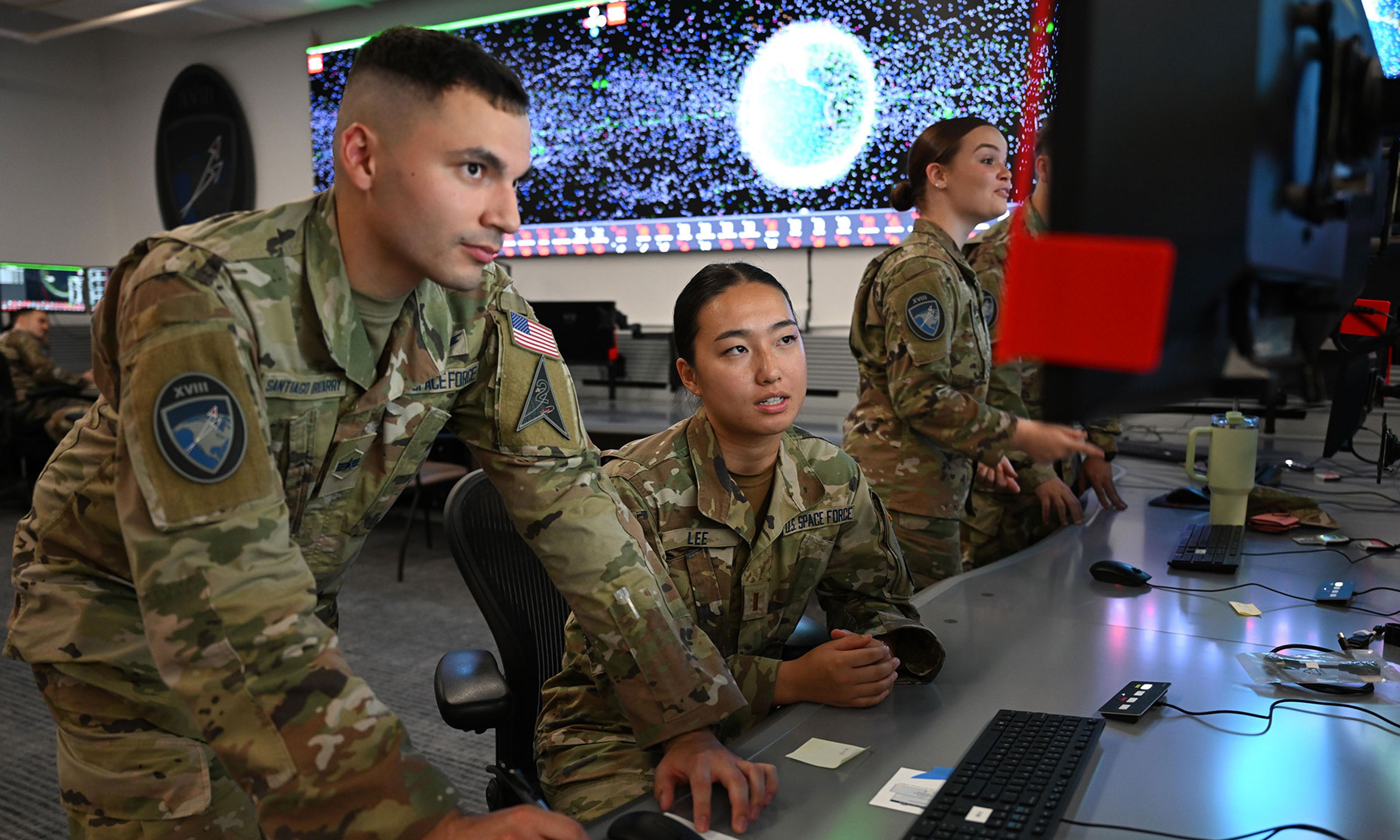
In 20th-century wars, the key was air power. In 21st-century wars, it will be space power. This week’s military actions against Iran in Operation Epic Fury show that if America desires peace on earth, the ongoing conflict proves we must prepare for war in space — and the initial remarkable success the U.S. and coalition forces have demonstrated vindicates President Trump’s decision to elevate the Space Force as the sixth and newest branch of the American military.
The U.S. military’s dominance in space, primarily through the U.S. Space Force, the National Reconnaissance Office, and associated assets under U.S. Space Command played a pivotal role in the success of the early strikes against Iran, encompassing a network of satellites for intelligence, surveillance, reconnaissance (ISR), Global Positioning System (GPS), communications, electronic warfare, and missile-warning systems. At Monday’s Pentagon news conference alongside Secretary of Defense Pete Hegseth, Chairman of the Joint Chiefs of Staff General Dan Caine specifically credited Space Force’s role in offensive and defensive military operations, saying they “continuously layered effects to disrupt, disorient and confuse the enemy” and characterized both as “the first movers” that provided “non-kinetic effects disrupting and degrading and blinding Iran’s ability to see, communicate and respond.”


Comments