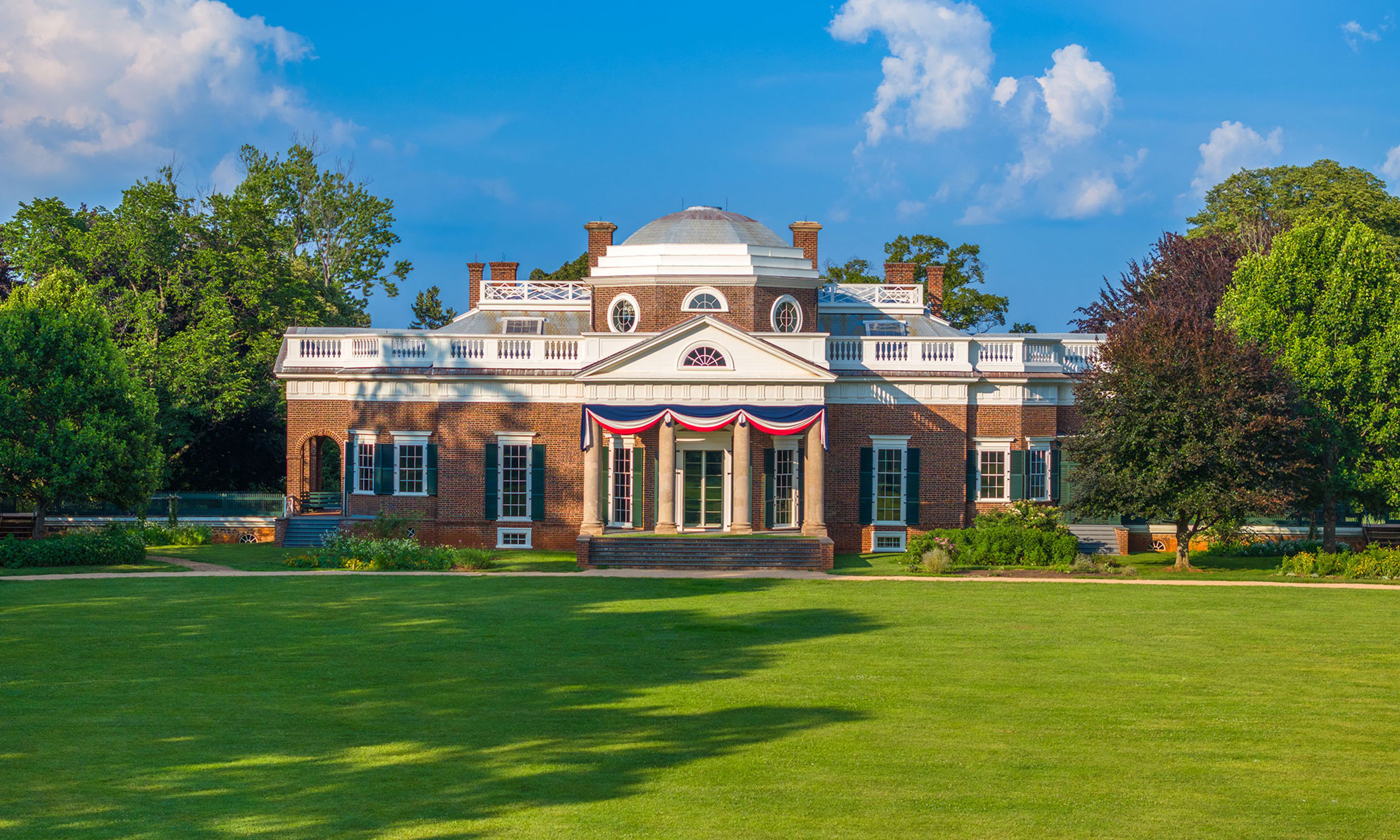
After writing more than a dozen stories on America’s 250th, and with July Fourth nearly here, where else would I go but Monticello? Through an extraordinary life — master of a plantation, chief author of the Declaration of Independence, diplomat, Washington’s secretary of state, Adams’s unhappy VP, a massively pivotal president, and university founder — Thomas Jefferson (1743–1826) worked on Monticello for 50 years and with such passion that in the house he forged the best version of himself. Toward the end he was unfathomably in debt. Still, in 1822 he hired stonecutters to make the house’s portico bases, columns, and steps. In 1825, he ordered marble mantles for his fireplaces — from Italy — and in luxury marble, too. The house was already inching toward dilapidation
My view of Monticello isn’t elegiac, and I’ll save slavery for the end. I look at this remarkable house mostly as a buzzing history museum and curatorial enterprise. It’s anything but static. I’d been there once before, a couple of days after July 4, 1976. Queen Elizabeth had just visited the day before with President Ford. I thought it was a grand house, though it seems smaller now, and I’m more conscious of how horizontal it is. America had lots of land so, to Jefferson, living horizontally was the American thing to do.





Comments