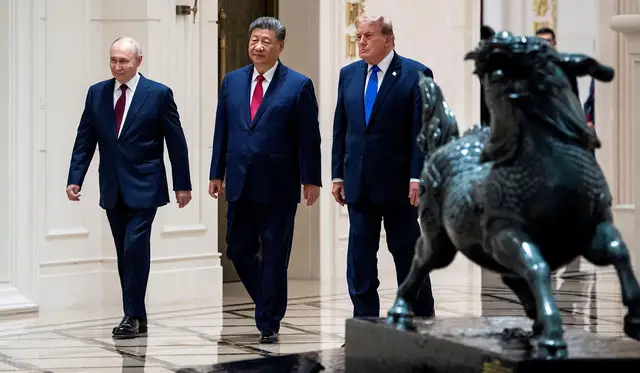
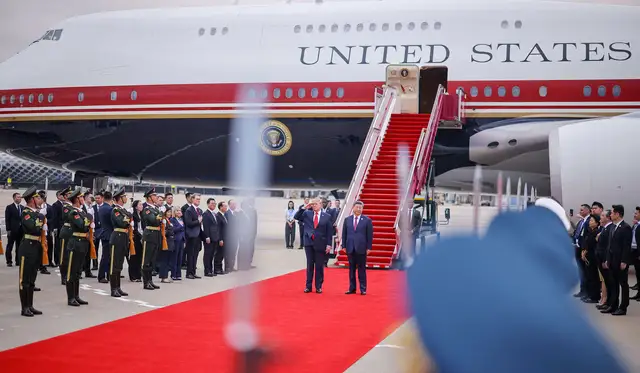
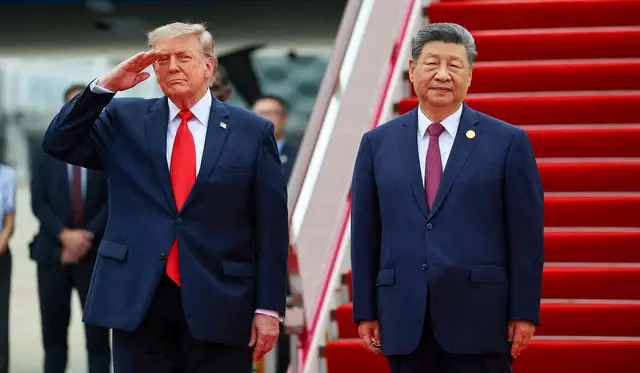
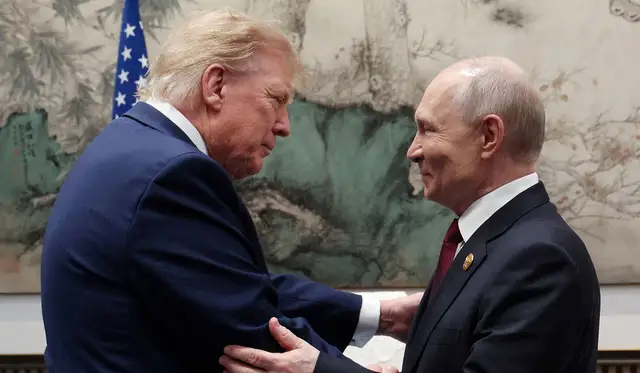
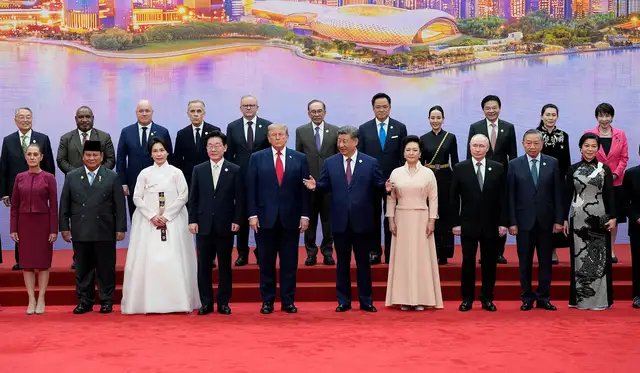
U.S. President Donald Trump shakes hands with Russian President Vladimir Putin as China’s President Xi Jinping stands beside at the Asia-Pacific Economic Cooperation summit in Shenzhen, China, November 18, 2026.
Summit theatrics cannot replace deterrence: America’s security depends on strong alliances, not presidential bonhomie with hostile powers.
Weakening Ukraine or relaxing oil sanctions risks emboldening Russian aggression far beyond Ukraine’s borders.
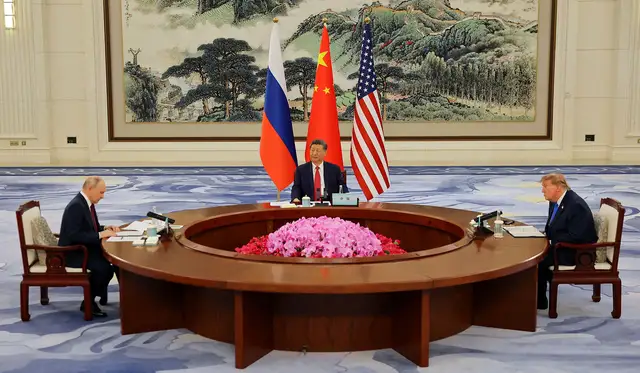
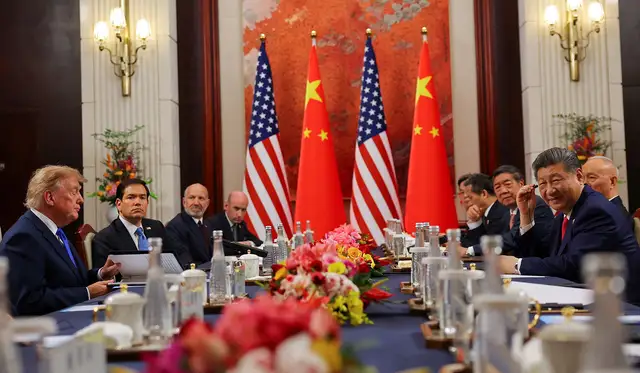
Donald Trump, , and have now concluded their first-ever trilateral meeting. Each leader has pronounced himself satisfied with their discussion. But if their concluding statement is an accurate reflection of what was said in the closed session, little of any real consequence — with one possible exception — was agreed to, which was only to be expected. Much has been made by some of the symbolism of the meeting. Did it signal that a disreputable carve-up, even a new Yalta, was underway? If that was the plan, the result, appropriately and mercifully, looks like a package with more than a touch of Temu about it.
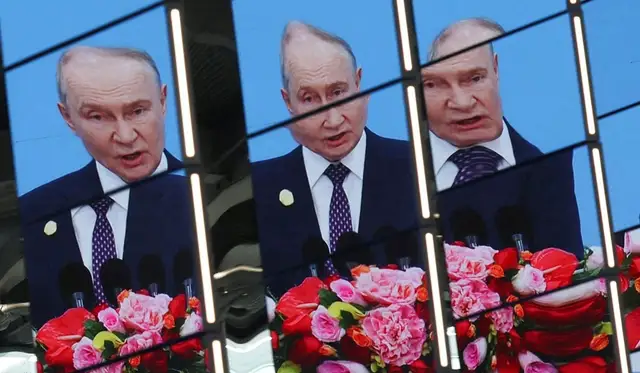
That is not to deny that some of the optics involved were grating. Trump’s earlier, overly enthusiastic greeting of his “friend” Putin — the aggressor, after all, in a genocidal war — was not only nauseating but also careless. It sent a disturbing signal to the rest of NATO, an organization that still plays a critical role in maintaining American security as well as peace, however uneasy, in Europe west of Ukraine. It is to be hoped that Trump’s delight at the sight of his supposed pal was, to use a word often applied to this president’s approach to diplomacy, transactional, a display of a dealmaker’s schmooze and nothing more.
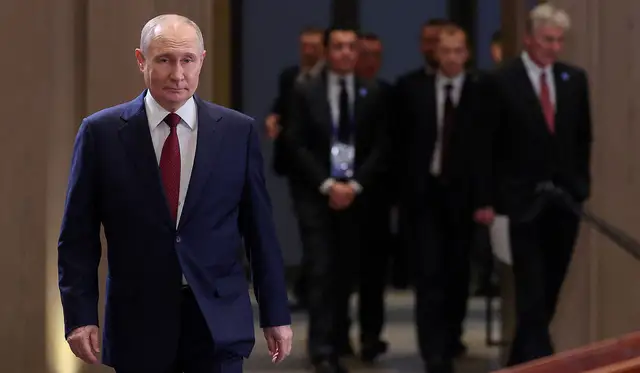
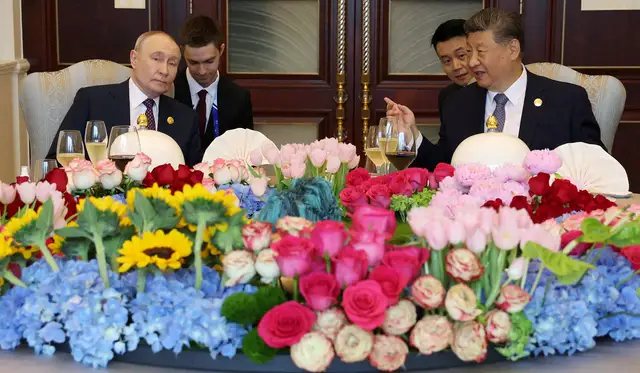
The fact that Putin was in the room has attracted criticism for its symbolic “confirmation” of Russia as one of, to borrow a term from the real Yalta, the “big three.” Not so much: Putin’s presence merely reflected geopolitical reality, something that, however unpleasant, cannot be wished away. Russia is economically enfeebled and embroiled in a brutally and humiliatingly debilitating war, but it remains a vast, resource-rich country that, militarily anyway, counts as a superpower and one that, as Ukrainians can testify, is still capable of wreaking immense destruction. The more interesting symbolism was detectable in the various gestures through which Xi Jinping emphasized during Putin’s visit that Russia is China’s junior partner. That, too, is today’s reality.
As alluded to above, the joint statement issued after the meeting was, as should have been expected, thin gruel. There was talk of reforming the U.N. “so that it may respond more effectively to global challenges and fulfil its fundamental mission of maintaining international peace and security.” If that implies reining in Turtle Bay’s efforts to extend supranational (and thus post-democratic) governance, that’s no bad thing, but in practice little will probably change.
In a similar vein, the trio, whose countries have not submitted to the jurisdiction of the International Criminal Court, implicitly criticized the attempted extension of its reach. They stressed the need for “respect for immunities of State officials,” a subject doubtless close to Putin’s heart. There is no need to grumble too much about this. The ICC is highly politicized, and, while it does not constitute much of a deterrent, it may even provide a perverse incentive to wrongdoers to hang onto power. Putin deserves to face judgment, but a better place for that would be Kyiv, not The Hague.
And all three declared that they planned “to increase the production and supply of refined petroleum products for the benefit of all nations.” If that reflected some post-midterms unease on Trump’s part, that, as an admission of weakness, would have been a message better not sent. It would also be a mistake, despite recent waivers, for the U.S. to abandon its general application of sanctions on Iranian and Russian oil (the Europeans, incidentally, could do a better job of enforcing theirs). No pressure should be put on Ukraine to stop attacking Russian energy infrastructure other than as part of a general “energy cease-fire” such as that floated earlier this year, which Ukraine was willing to accept.
No details have been released so far of what was said in the meeting about Ukraine. However, Putin has been reiterating his hard line, supplemented by an absurd and aggressive proposal to rewrite Europe’s security architecture. Hopefully, Trump was not misled by any bonhomie in Shenzhen, although some accounts of his later call with European leaders were not entirely encouraging in that respect.
APEC Summit Scenes
From left: Russian President Vladimir Putin, Chinese President Xi Jinping, and U.S. President Donald Trump participate in a trilateral meeting during the APEC Economic Leaders’ Meeting in Shenzhen, China, November 19, 2026.
Carlos Barria/Reuters
To return to reality: China has no interest in helping end the war in Ukraine, and Russia’s ambitions in Europe are such that the eventual consequences of undermining Kyiv’s ability to resist won’t stop at Ukraine’s borders. Speaking of which, we hope that Trump warned Xi and Putin that the growing intensity of “gray zone” activity, from drones in Leipzig Airport to cyberattacks on both sides of the Atlantic, risks triggering retaliation that could easily spiral into something extremely dangerous.
Any claims that the Shenzhen meeting has delivered the death blow to the post-1945 order would be overblown, akin to complaining about the murder of a corpse. The postwar settlement has been in flux for decades — Nixon, after all, went to China — a process that has accelerated, along with dramatic shifts in relative global economic and political power, since the Soviet collapse. But although the landscape has changed, Trump should pay more attention to America’s successful management of the (first) Cold War. Alliances matter, deterrence works, strength is rewarded, and aggression by, or sponsored by, hostile powers and their proxies should be contained and, where possible, reversed.






Comments
On “An Overhyped Trilateral Summit”