James Burnham’s warnings about technocratic rule remain urgent as bureaucratic power tests democratic accountability.
His clashes with conservative colleagues reveal enduring tensions between political principle, pragmatism, and party loyalty.
His intellectual independence offers conservatives an alternative to personality cults and ideological conformity.
The British first edition of that I picked up in a Charing Cross Road shop a quarter century ago tells us much about the work itself. I’ve read it four times, conscripted it as an airplane companion, and brought it to the beach. Yet its binding remains strong, its cover quite flexible, and its pages yellowing but intact. We no longer much refer to let alone read such 1941 bestsellers as Clifton Fadiman’s Reading I’ve Liked or Margaret Leech’s Reveille in Washington. But , much like my strong and solid copy of his most famous book, endures.
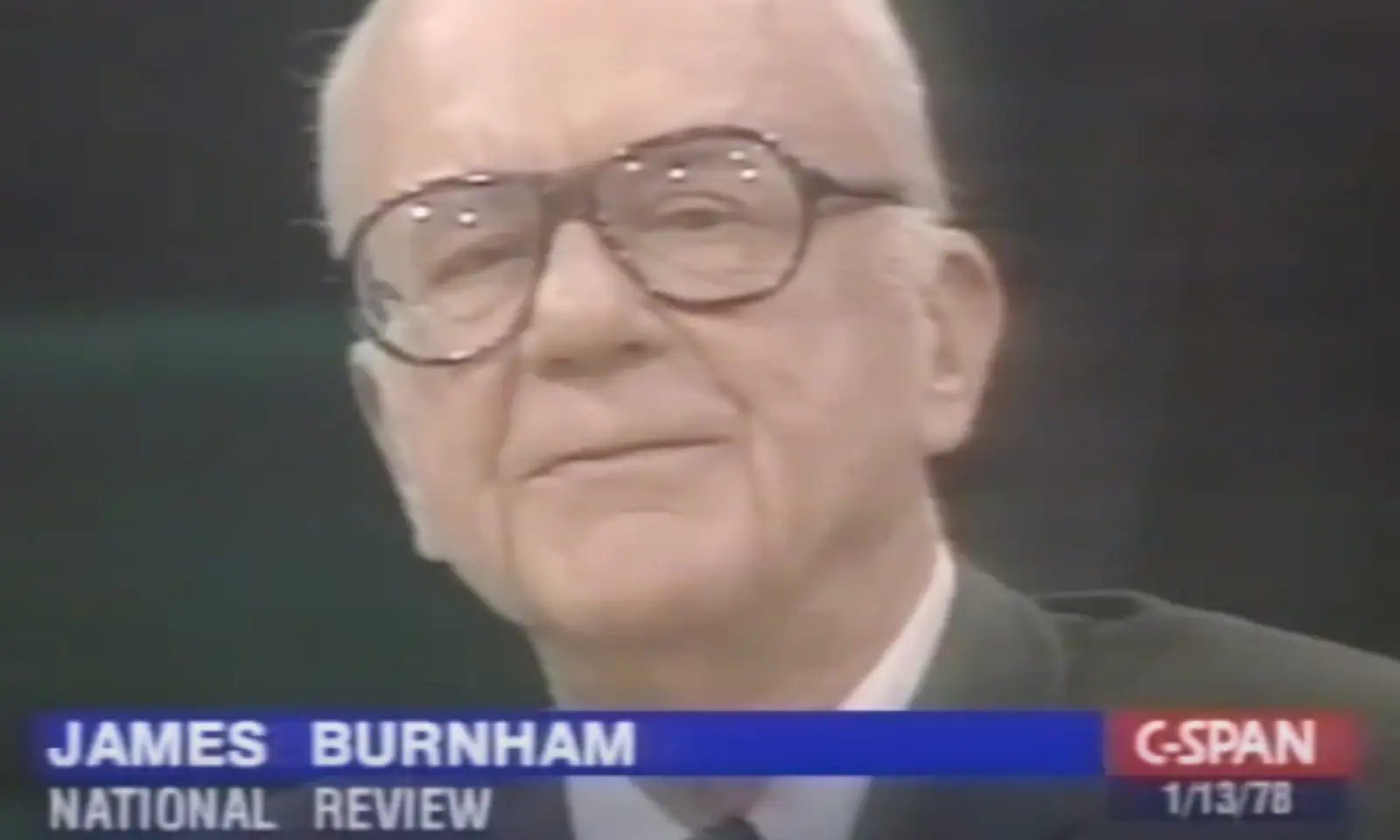
Burnham, who entered the world 121 years ago Sunday and left it nearly 40 years ago, very much remains part of the Great Conversation. The Managerial Revolution, anticipating as it did the ascension of technocrats, specialists, and the bureaucratic elite as a sort of ruling class, surely helped in that regard. Burnham remains read, despite no Burnhamite clique in academia or organized faction among movement conservatives dedicated to advancing his ideas. Kirkians, Straussians, and Randians exist. Why no James Burnham Preservation Society with an accompanying secret handshake?
James Burnham’s warnings about technocratic rule remain urgent as bureaucratic power tests democratic accountability.
The British first edition of that I picked up in a Charing Cross Road shop a quarter century ago tells us much about the work itself. I’ve read it four times, conscripted it as an airplane companion, and brought it to the beach. Yet its binding remains strong, its cover quite flexible, and its pages yellowing but intact. We no longer much refer to let alone read such 1941 bestsellers as Clifton Fadiman’s Reading I’ve Liked or Margaret Leech’s Reveille in Washington. But , much like my strong and solid copy of his most famous book, endures.
Burnham, who entered the world 121 years ago Sunday and left it nearly 40 years ago, very much remains part of the Great Conversation. The Managerial Revolution, anticipating as it did the ascension of technocrats, specialists, and the bureaucratic elite as a sort of ruling class, surely helped in that regard. Burnham remains read, despite no Burnhamite clique in academia or organized faction among movement conservatives dedicated to advancing his ideas. Kirkians, Straussians, and Randians exist. Why no James Burnham Preservation Society with an accompanying secret handshake?



Comments
On “The Complex Reputation of James Burnham”