Over the past year I’ve written close to 20 pieces about the art of the American Revolution and the preservation of its heritage. With the subjects so vast, I can’t cover everything. So, apologies to the Carolinas, Georgia, tiny Delaware and tinier Rhode Island, and New Hampshire. I’ll get to you when the next revolution comes. Today, I’ll do one last story about Connecticut, the Nutmeg State. After all, another of my natal state’s nicknames is the Constitution State. I’ll start, and this might seem circuitous, with the Hudson River School’s dean, Frederic Church (1826–1900).
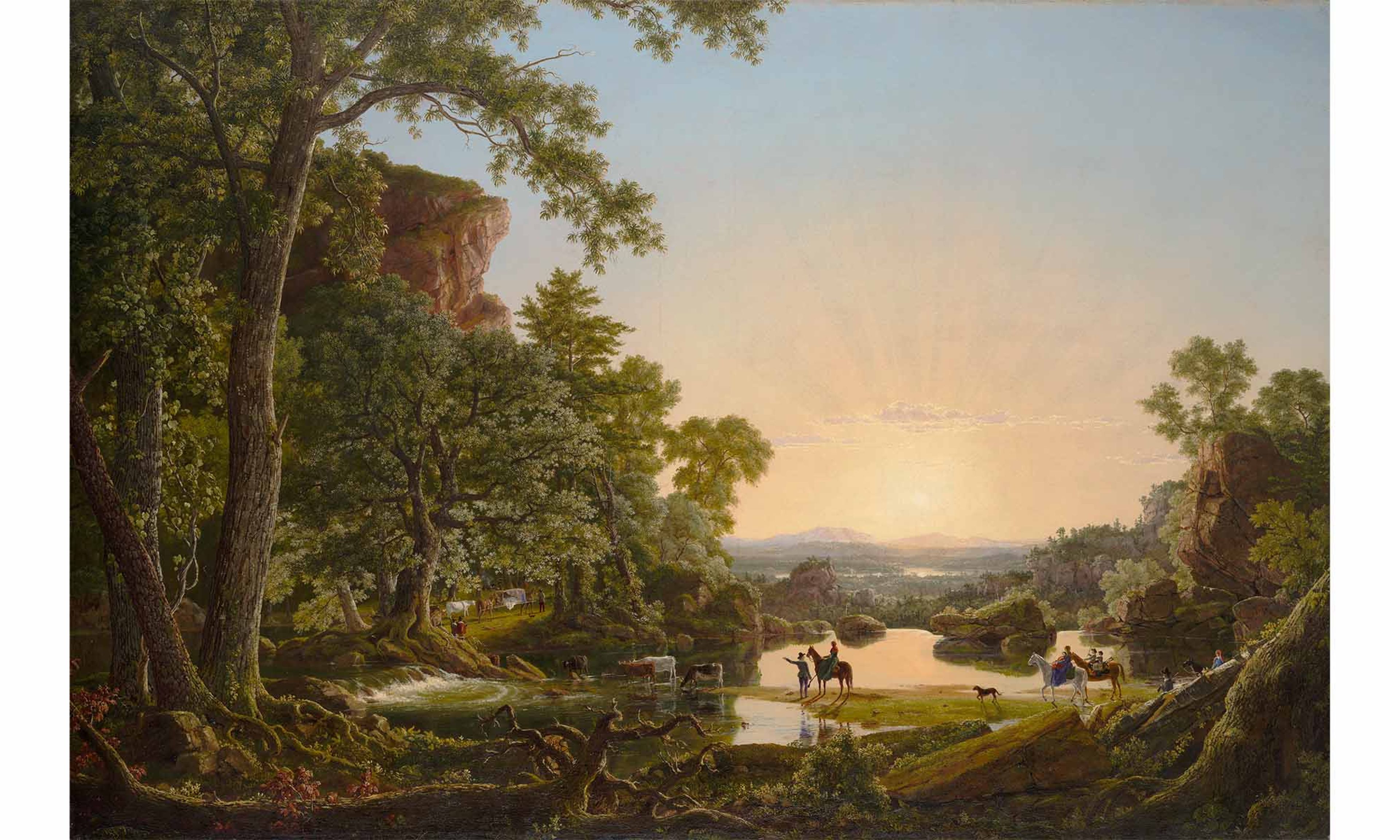
Church never painted a Revolutionary War subject and was born 50 years after July 4, 1776, but this year is the bicentennial of his birth, in Hartford, and three of his history paintings from his salad days are on view now in the illuminating, intelligent, beautifully presented Framing American Democracy: Radical Roots at the Wadsworth Atheneum. Church and the exhibition treat three stage-setters for 1776. Hooker’s Party — it’s got a much longer formal name — and The Charter Oak at Hartford, both from 1846, cover the Hartford part of the story, a journey through forests and swamps, a drama unfolding in sudden darkness, and an old oak tree. West Rock, New Haven, from 1849, hints at a notorious regicide and dragnet. All show us how Connecticut supplied democracy and freedom precedents that were the Declaration’s warp and woof.





Comments