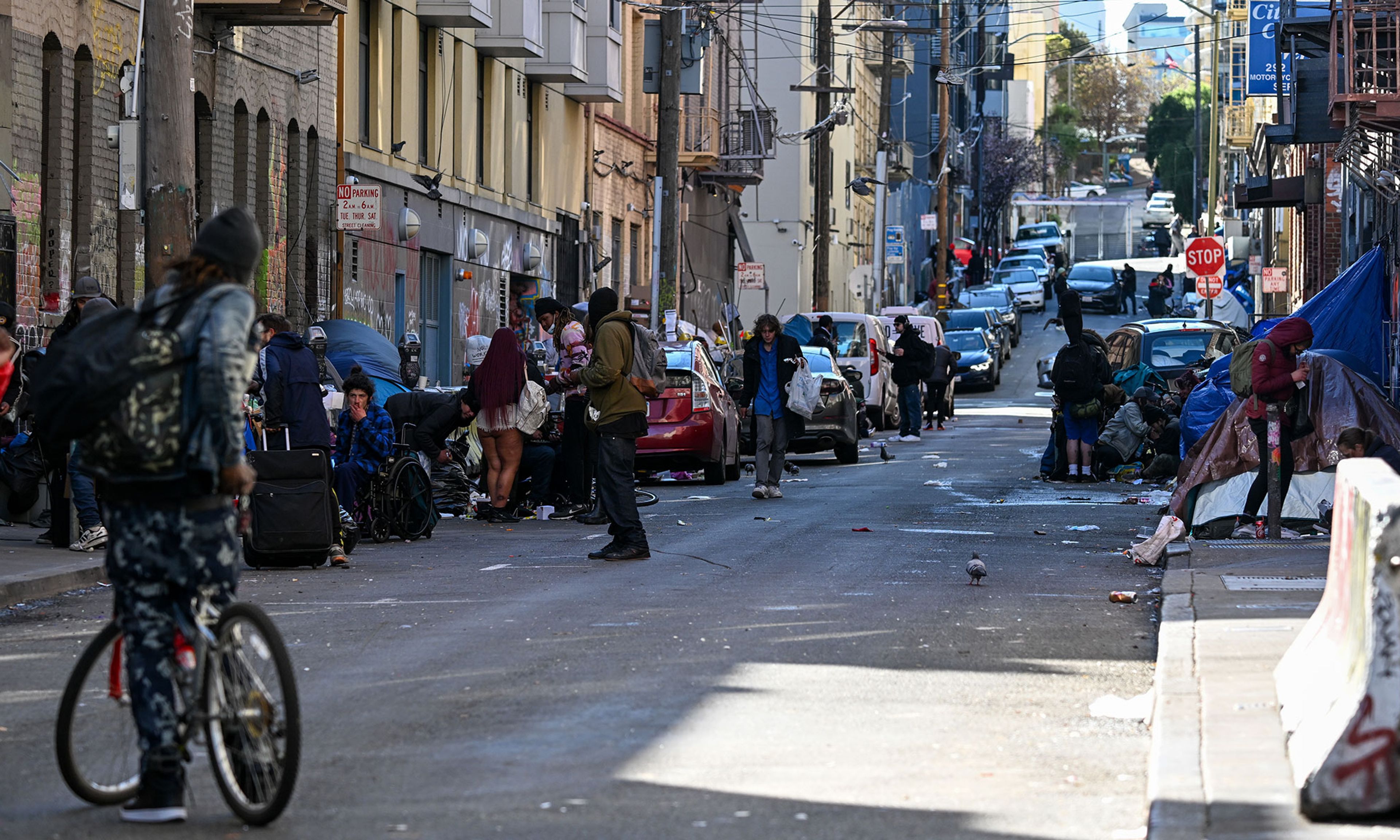
San Francisco was once a conservative city. Oh, sure, it had its bohemian side. The Beats of the ’50s were at home in North Beach, and Harry Bridges, the suspected communist who served for years as head of the longshoremen’s union, had a definite influence. But for the most part, San Francisco was well within the cultural mainstream. Indeed, the city was so staid that the Republican Party’s nominee for mayor won landslides in 1955 and 1959, and the GOP nominated the archconservative Barry Goldwater as its presidential candidate from the Cow Palace in 1964.
Then, San Francisco changed. Radically. In 1964, the University of California, Berkeley, a few miles across the bay, became the center of the “free speech” movement. Civil rights and then militant anti–Vietnam War advocacy found great sympathy. The Haight-Ashbury neighborhood became a hippy haven and the focus of a growing drug culture. The gay-rights movement sprang energetically out of the Castro District, and the once predominately Italian working-class neighborhood was transformed into a radical front of the sexual revolution. By the 1980s, the term “San Francisco values” — wielded by conservatives to describe the cultural and political radicalism of the Bay Area — had turned the city into something of a national joke.
Comments