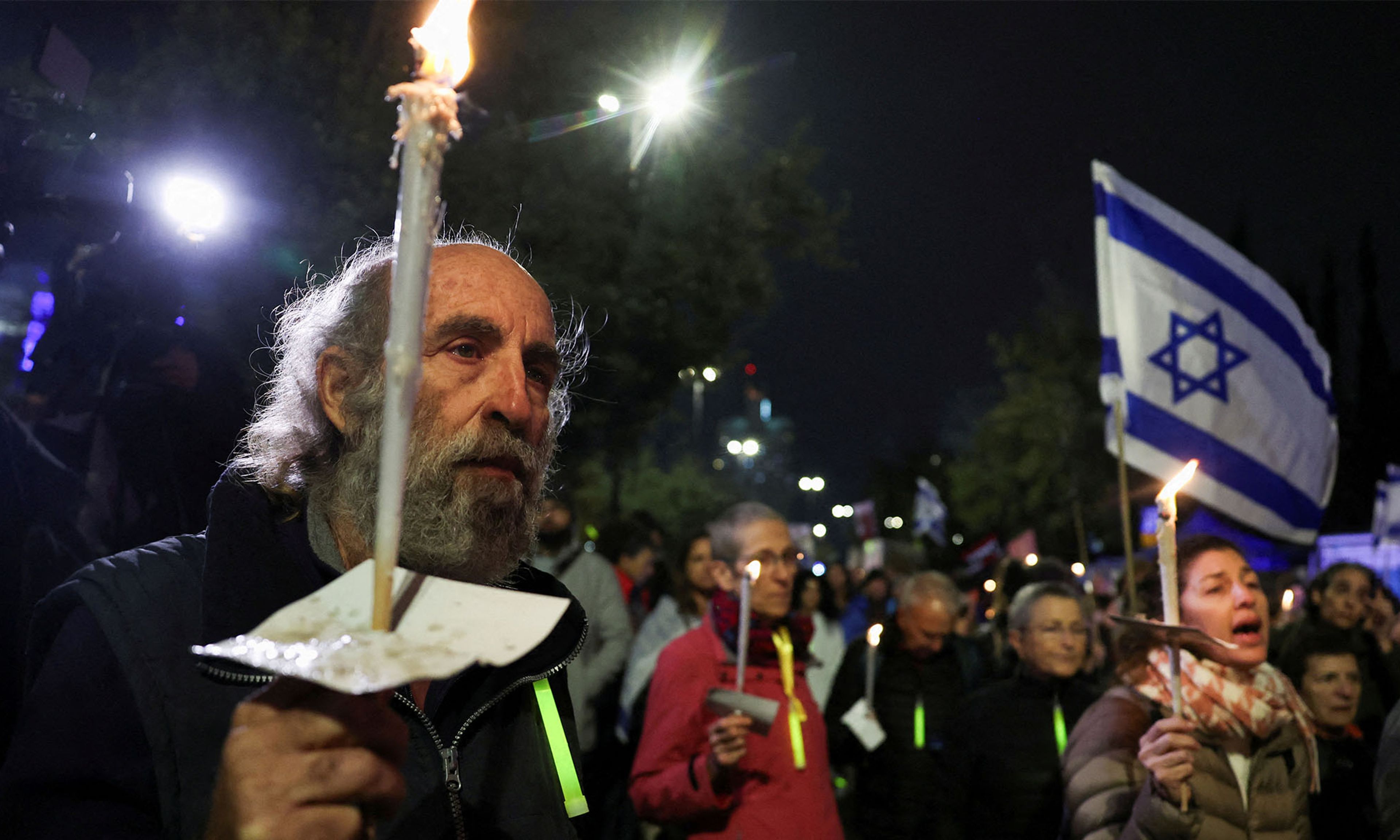
Tel Aviv — Before their seven-year anniversary last year, a young couple who had been long-distance for almost their whole relationship decided to close the distance. In September, the woman, a twentysomething from London, moved to Israel, where the man, a young IDF soldier, waited. He died three weeks later fighting in Gaza. She’s now not sure what to do or where to go. London is no longer home, and Israel is the country where she lost everything. Maybe being surrounded by communal grief is somehow more comforting than the alternative — isolation. In this sense, she is not alone.
Israelis greet one another now with “How is your family?” Almost everyone has a loved one or a connection to someone serving in the Israel Defense Forces, and upon meeting someone, it makes sense to ask that question. The best lens through which to understand another Israeli seems to be one of grief and also sacrifice: how much you’ve lost to the war, or how much you might have at stake. There’s no right way to grieve, but self-help literature usually suggests that tragedy is personal, subjective, and isolating. Since Hamas slaughtered children, whole families, and innocent civilians on October 7, Israel’s grieving process has been healthily reliant on unity.





Comments