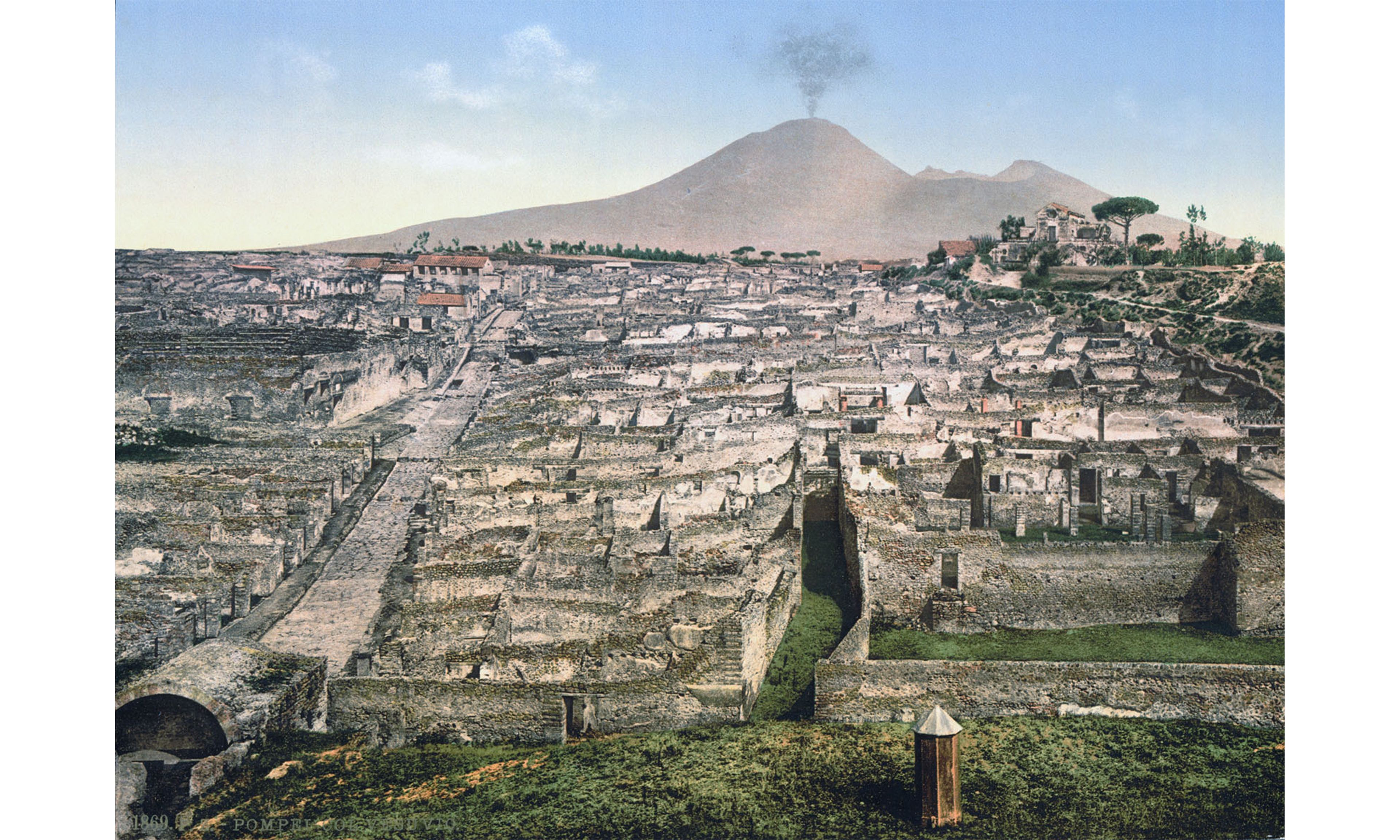
The devastation of prosperous, unsuspecting Pompeii in a.d. 79 is the stuff of pathos. Vesuvius spared nothing and no one. Pliny the Younger’s blow-by-blow account is definitive. Suffice it to say, few were scribblers then. He was nearby, a teenager visiting his uncle, the admiral Pliny the Elder, in Misenum, a premier Roman naval base. Uncle Pliny was a Vesuvius fatality. He died trying to rescue people, asphyxiated by sulphuric gas. “Snuffed like a candle” is how we think of Pompeii’s casualties. It was, of course, more complicated.
The eruption shocked as well as smote. Vesuvius had been more or less quiet for centuries. The concept of a volcano was vague. An apocalypse like Pompeii’s came from fate ruled by the gods. Or, many wondered then, were the gods dead? Pompeii today looks like a bombed-out city, rubble gone, no smoke, no fire, but battery of thousands of jagged walls sweep toward Vesuvius. It looms. Vesuvius isn’t part of a chain of mountains. It’s the one-and-only, the Boss, the Heap. And it seems to think. “What’s next?” It last blew its top in 1944, a warning to the just fled Germans not to darken its doorstep anytime soon.



Comments