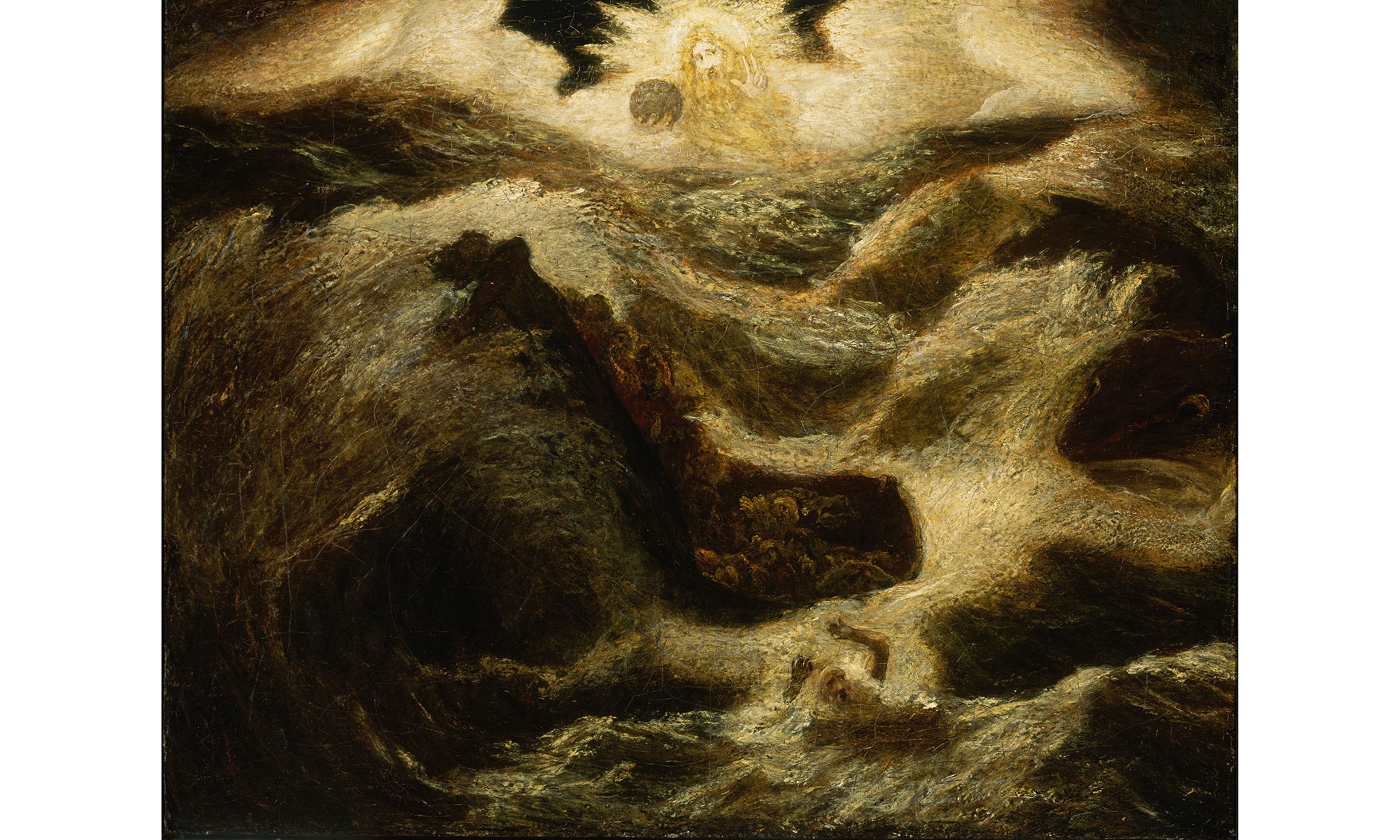
A Wild Note of Longing is the new survey exhibition at the New Bedford Whaling Museum on Albert Pinkham Ryder (1847–1917). Ryder, who grew up in New Bedford, is an unheralded lodestar in American art. His work was the centerpiece of the Armory Show in 1913, with ten of his enigmatic paintings in the central gallery and much fuss made over the recluse as he approached the end of his life. The Armory Show introduced America’s culture sophisticates to European avant-garde art, which gave them a jolt. An American avant-garde already existed, nascent in some ways but developed in others. The Armory Show displayed America’s best stab at a truly modern spirit through artists such as Ryder.
Ryder’s work is recognizable. With Sloping Mast and Dipping Prow, from 1880 to 1885, is one of his seascapes. A single ship, indistinct sailors, a simmering sea, and moonlight make for a scene that verges on a fevered dream. His paint surface is gnarly, as if made from thick wool. His skies are infinite but streaky, active and insistent rather than soothing. His format is on the small side. His art’s a weird, spooky thing, and riveting.


Comments