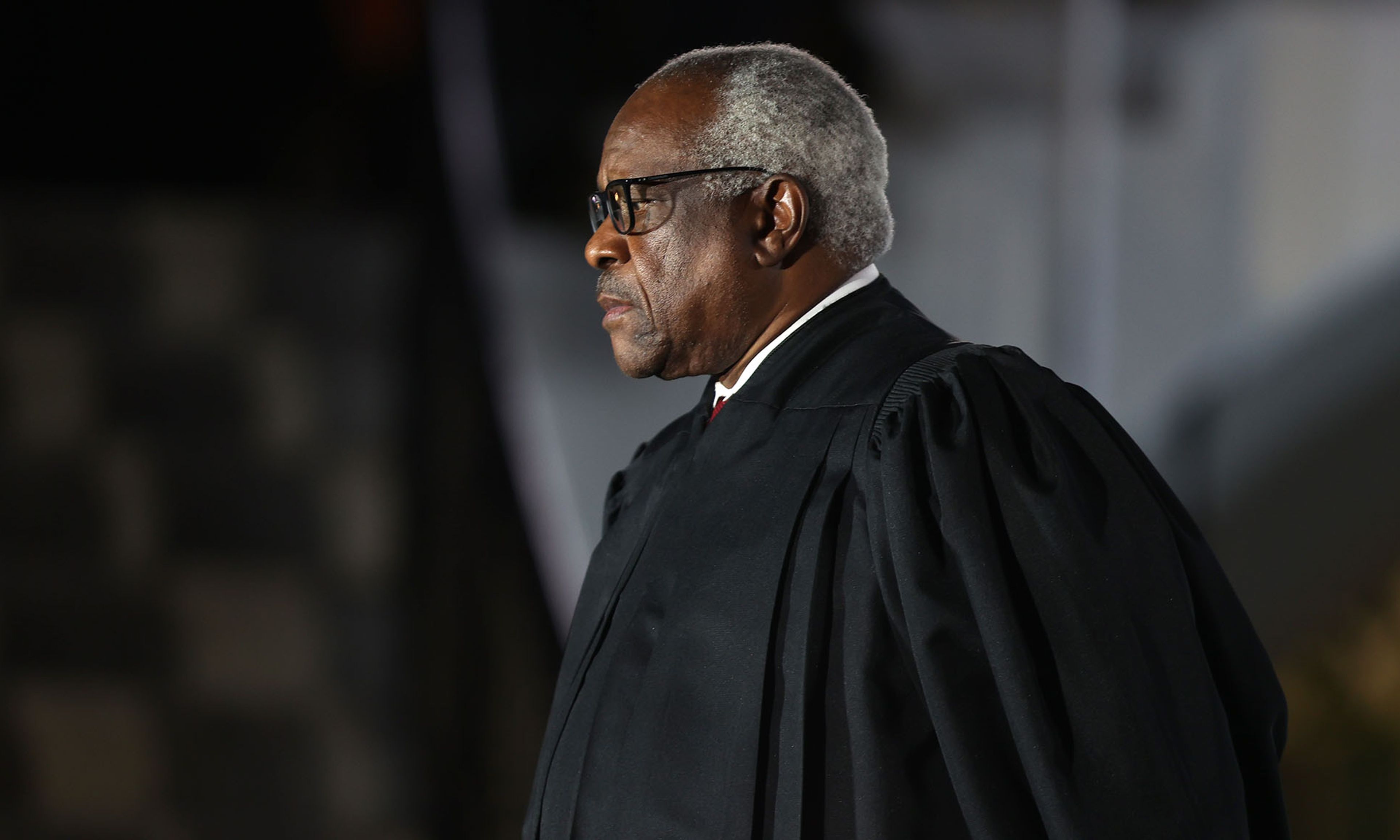
One of the many reasons that I have treated with reflexive contempt the insinuation that Justice Clarence Thomas is in some meaningful sense “corrupt” is that nobody has ever been able to explain to me to my satisfaction what tangible product that corruption is supposed to have yielded. Where, I have asked, is the evidence of inconsistency? In which of Thomas’s opinions can I detect the caprice? What suspicious shift in jurisprudential assumptions has hinted that something is off? I have never received an answer. For better or for worse, Thomas is always Thomas. Come hell or high water, condemnation or praise, momentum or inertia, his approach remains immediately recognizable. He is dismissive of error, unmoved by precedent, and deaf to political guile. There is one of him, and there will not be another any time soon. Day in, day out, he does his thing, and, if you don’t like it, he doesn’t care. He is an ideal candidate for the Supreme Court.
All of these qualities are on display throughout Thomas’s concurrence in Students for Fair Admissions, Inc. v. President and Fellows of Harvard College, a case in which the Supreme Court has held, 6–3, that “Harvard’s and UNC’s admissions programs violate the Equal Protection Clause of the Fourteenth Amendment,” and, more broadly, that affirmative action is unconstitutional. I will confess that, as a historical matter, I do not know whether Thomas’s long-held interpretation of the 14th Amendment as a bluntly “colorblind” measure is correct. I do know, however, that Thomas believes quite sincerely that he is right, and that he has believed it for years. Had he so wished, Thomas could have signed onto John Roberts’s opinion and left it there. That, I daresay, is what a mere “movement” pawn would have done. Instead, Thomas felt moved to “write separately to offer an originalist defense of the colorblind Constitution” to which only he, among his colleagues, put his name.


Comments