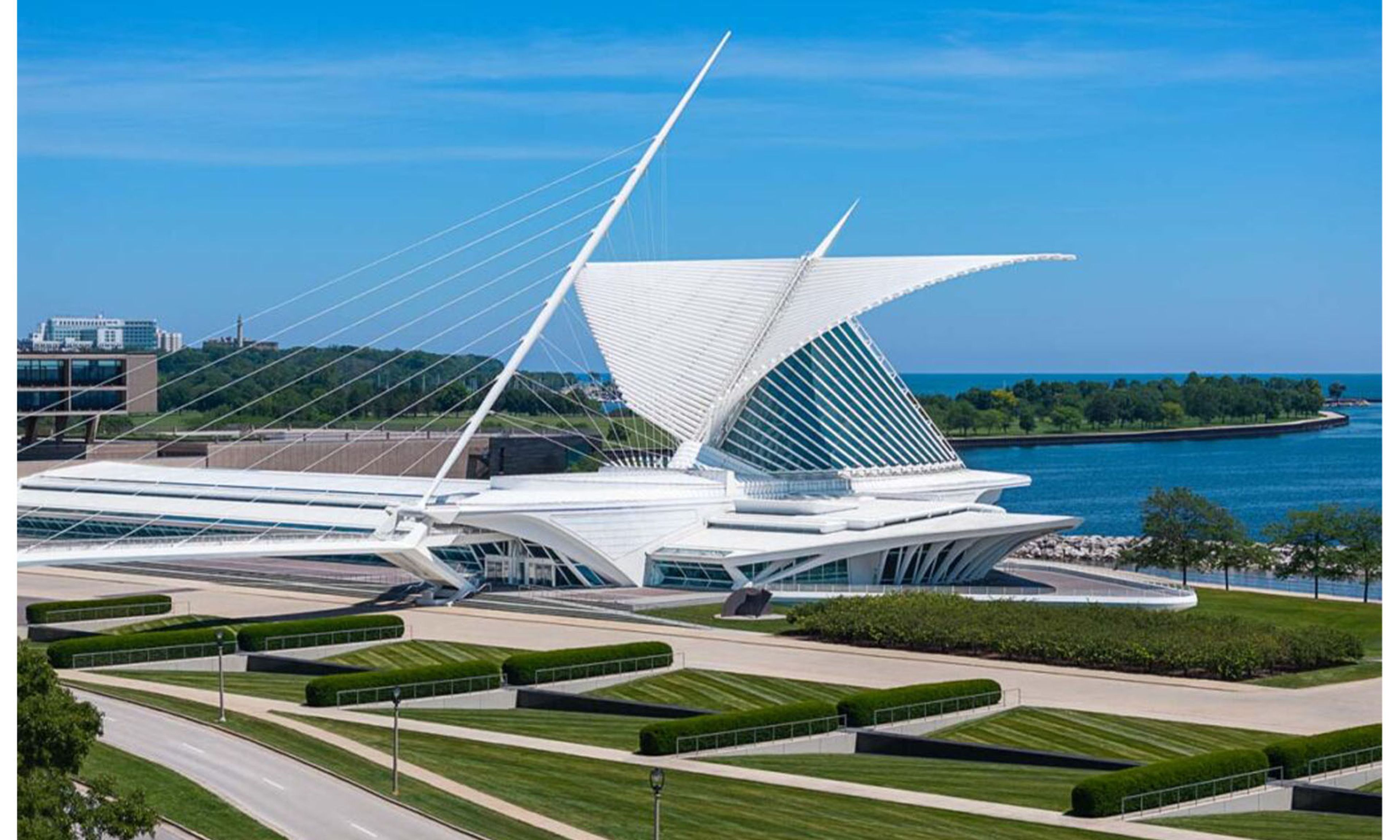
I’d never been to Milwaukee and knew very little about it aside from its breweries as well as Laverne and Shirley and the city’s Santiago Calatrava–designed art museum, which premiered in 2001 and which I imagined to be breathtaking, gutsy, and, for America, peerless. I don’t like beer and haven’t watched Laverne and Shirley reruns for eons but cherish the memories. The museum is a stunner and, set on Lake Michigan, evokes a ship fit for the Greek gods. It needs to be seen to be believed. Fantastic building aside, the collection is good and reflects local ambitions, with highs as well as voids.
Like most big-city civic museums, Milwaukee’s is an amalgam made over decades, starting with the inspired Layton Art Gallery in 1888. The meat-packing mogul Frederick Layton, born in England, came to frontier town Milwaukee as a teen with his family in the 1840s. A visionary, he bought art with a public art museum in mind. The Layton Art Gallery, together with the Milwaukee Art Society and Eero Saarinen’s 1957 war memorial and cultural center, evolved into the Milwaukee Art Museum, with about 35,000 works of art.


Comments