I am not the first and won’t be the last to remark on how utterly bizarre aspects of this campaign season are. It may begin, of course, with the fact that not long ago there were some serious adults with actual executive experience and plausible capacity for moral leadership in the mix as potential general-election candidates. But that moment has passed, and here we are — with bad choices and many people daydreaming about the person of virtue and substance they will write in on Election Day.
Personally, aside from concerns about the viability of the republic and even civilization itself under either of the candidates’ presidency, the most unsettling thing for me about this election is Breitbart.
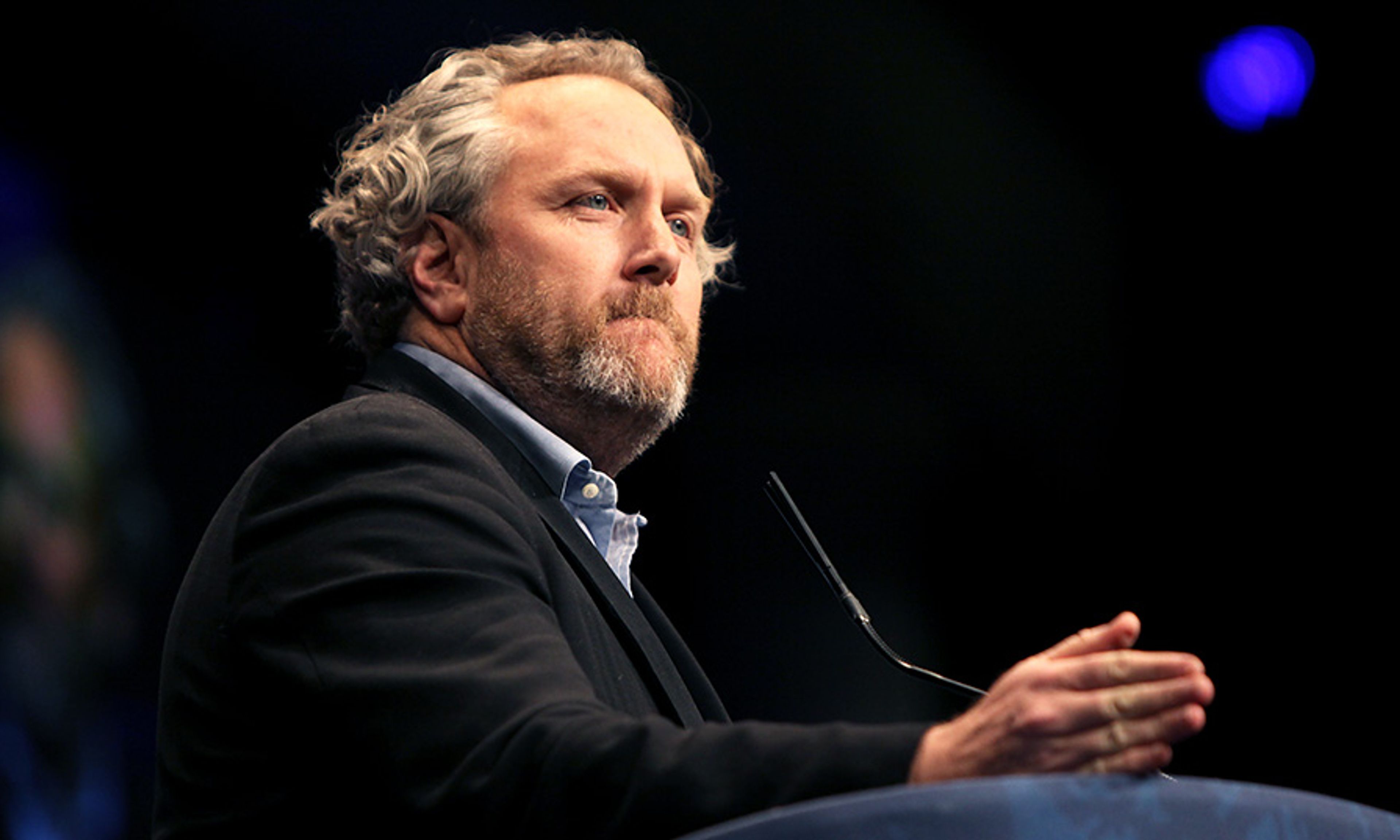
Breitbart, the news site whose former chairman is now CEO of the Trump campaign, was a wedding gift to Andrew Breitbart from friends. I say to Andrew because I don’t think anyone ever thought his lovely bride would have much hands-on connection with it. Andrew would become an Internet news and commentary trailblazer long before it became near-impossible not to be connected. Andrew was behind the scenes — at the Drudge Report and the Huffington Post, among other places (he was a dear friend and adviser and collaborator to me, my colleague Jonah Goldberg, and many others) — before he was making headlines, but he was always looking to what more he could do.
I was far from the only one who was shocked and devastated upon hearing the news, on March 1, 2012, that Andrew Breitbart had died. He left behind a beautiful young family who share his capacity for joy and friendship. His death was hardest to believe because he had such seemingly endless energy. I used to joke that I would introduce him to new people because I couldn’t keep up with him. His capacity to give, it sometimes seemed, was beyond my capacity to receive. There was a restlessness about him and an urgency to his questions. He knew that he had been given some tremendous gifts. He knew he could not waste them. And so he would dream and he would experiment and he would collaborate. He was not just ideas: He was also implementation.
RELATED: The Post-Reality Election
And the deeper he got into the conservative movement, the more he seemed to recoil from any ghetto. He would even occasionally talk about detaching and living a normal life off the grid, in the mountains. But he was never going to do that. It would have been more comfortable, but it wasn’t what he felt called to do.
Andrew didn’t live to know of an Argentinean cardinal who would become pope, but even as he worked against what he believed were dangerous ideologies of the Left, he knew there were dangers in ideological isolation on the Right. We’re seeing that play out this year. It’s been a long time in coming, as the pride that is only natural to politics often became its driving principle.
Andrew had a deep capacity for friendship, and I think that helped him see people. He would drop everything if he heard of someone suffering — I remember some heartbreaking phone calls at all hours. He worried when people who knew better weren’t seeing clearly. And he was relentless when he saw injustice and lies and people in power perpetuating them or even tolerating them.
RELATED: A Mandateless Election
I know Andrew made me work harder and be better. It’s so easy to tolerate all kinds of injustice, and to look away from things that seem too entangled to even begin to think about disentangling them. But that’s a dangerous complacency that often equates with complicity.
I won’t pretend to speak for a friend who cannot speak for himself about the choices before the country today. And I don’t pretend, either, to know how he would be running the website that bears his name. But I do feel confident that he would be reminding us to be grateful and feel responsible. We are heirs to a patrimony, and the decisions we make today — or fail to make, through indifference or distraction — could be something we will have to answer for.
#related#In his 2011 book, Righteous Indignation, Andrew wrote to his children: “Too many people fought to create this country” for us “to squander it in a generation. . . . I cannot stand on the sidelines as you and your generation are being handed the tab.”
This is an all-bad-choices election. The rebuilding should have begun a long time ago, and Andrew knew it. Andrew worked tirelessly to let truth be known. Next time you hear his name, instead of being distracted by the arguing that is probably happening, think about what needs to be done next, and then get to work. Whether it be family, community, church, or even politics — anywhere you have responsibilities or a call — don’t curse the darkness, but work to make things better. I think that’s what Andrew would be doing today. It’s what we all need to be doing.




Comments