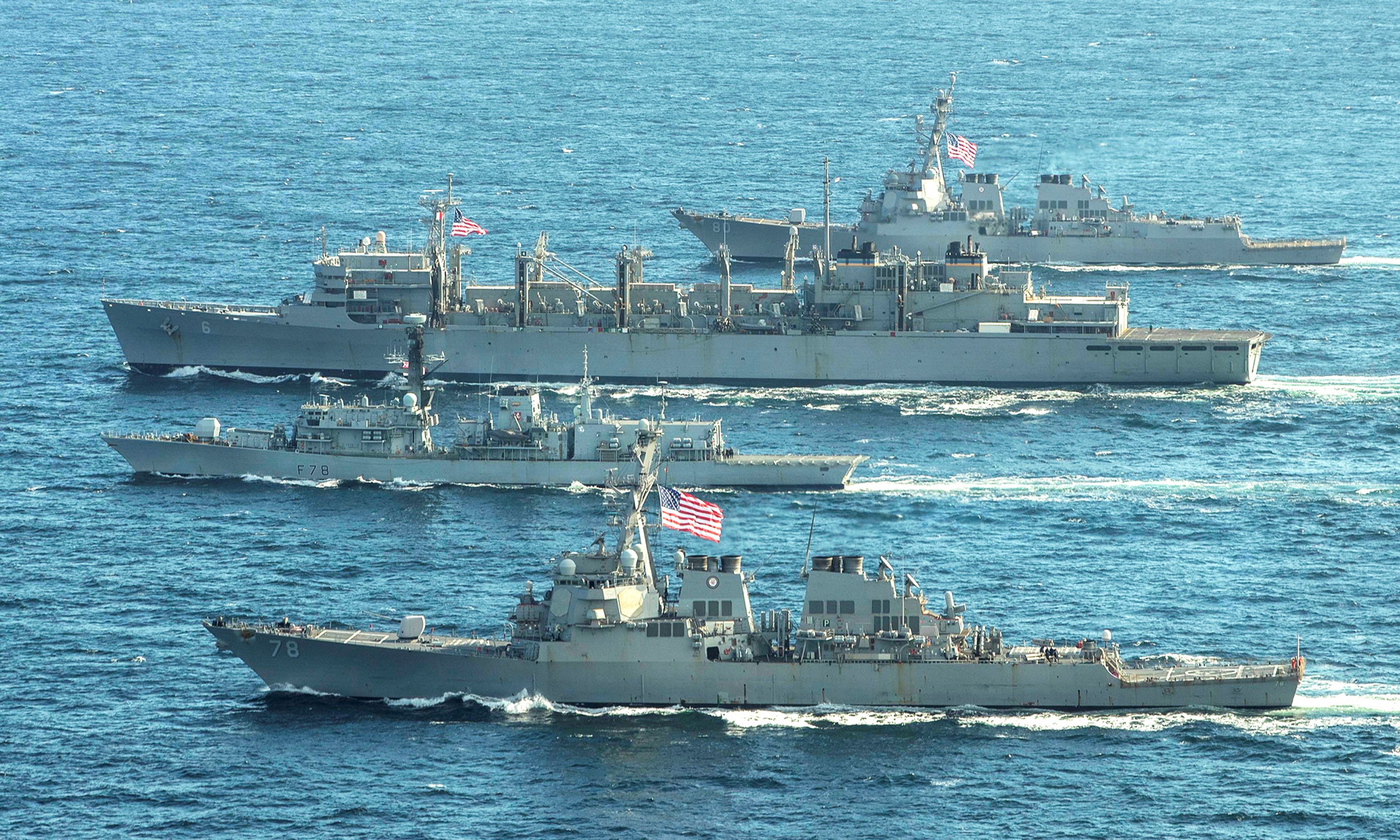
Last week, the United States Navy sent ships into the Barents Sea for the first time since 2010. The U.S. Naval Forces Europe announced that the exercise was intended “to assert freedom of navigation and demonstrate seamless integration among allies.” This was a good first step. But four ships operating in an ice-free Barents Sea will not reverse the decades of neglect and lack of investment in the types of ships necessary for the United States to protect its interests and those of its allies in the Arctic region. Currently, its lack of investment in icebreakers and other types of ships that can operate consistently and safely in ice-laden seas is freezing the U.S. out of conversations about the Arctic Ocean. This lack of investment has translated into U.S. diplomatic and military reluctance to push back against Russia’s expanded maritime Arctic claims. As a result, the historic principle of mare liberum (freedom of the seas) — a bedrock of international norms since the Dutch jurist Grotius conceived it — may yield to a maritime “Iron Curtain,” as Russia restricts who and what can travel through its near waters. To reverse this trend, the U.S. must immediately begin conducting consistent Freedom of Navigation Operations (FONOPs) in the high north.
Since 1983, U.S. policy has been to exercise U.S. ships to assert its navigation rights and freedoms in a manner consistent with the 1982 U.N. Convention on the Law of the Sea (UNCLOS), even though the U.S. is not a signatory to the convention. Since that time, according to a Department of Defense website, the United States Navy has conducted well over 400 FONOPs, countering the excessive maritime claims of some 60 nations. The reasons stated for these FONOPs have ranged from rejection of requirements that foreign warships not enter a territorial sea without prior authorization, to rejecting baselines not drawn in accordance with current laws and norms and attempts to restrict transit or innocent passage through international straits. More recently the U.S. Navy has used FONOPs to push back on new attempts to limit foreign vessels from entering exclusive economic zones, or attempts by China to create artificial islands and then use these illegal constructs to serve as justification for territorial sea claims. As might be expected, a large proportion of FONOPs have been conducted against authoritarian nations, such as China and Iran, which reject a free sea, or freedom generally.





Comments