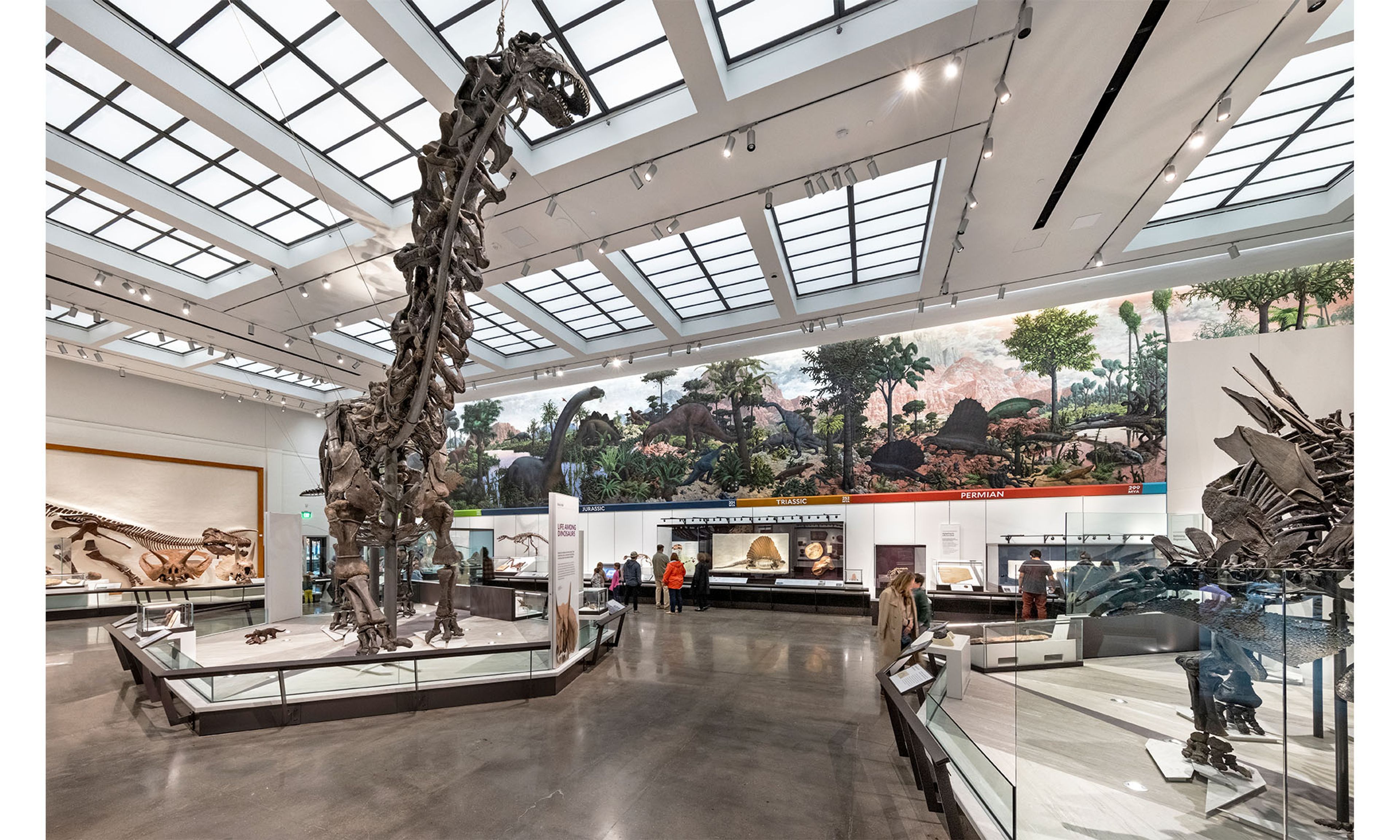
This past weekend, for my 50th high school reunion, I was in New Haven. Afterward, to feel bouncy and young, I went to the enthralling Peabody Museum, Yale’s natural history museum. Established in 1866, the Peabody owns, displays, and researches a phenomenal collection of dinosaur bones and fossils, but it’s best to call it a museum of the history of life. The raw material of my reunion was 50 years. The Peabody works with hundreds of millions. It has just had a massive, lovely overhaul, the first since the 1930s. The dinosaurs haven’t looked this good since right before an asteroid annihilated them, 66 million years ago, possibly tuned to “Candle in the Wind,” Elton John’s big 1974 hit. Certainly the dinosaurs deserved an exit melody more than Princess Diana did.
It’s a revelation to young people who might not understand that the misadventures and calamities and miracles of the world — and of life — didn’t start in 1619, 1776, or when their grandparents were born, right about when I finished high school. It’s good for all of us to think of life as a millions-of-years-old proposition, not a matter of a news cycle, and definitely not of “settled science,” a term I hate. At the Peabody, we learn how our oceans came to be born, why sea critters became landlubbers, why some learned to fly, what extinctions destroyed, what new life they kindled, and from whom we of 2024 descend. Nothing’s ever settled in nature, though a display of skulls of small-brained and big-brained human-like creatures does suggest that some things never change.



Comments