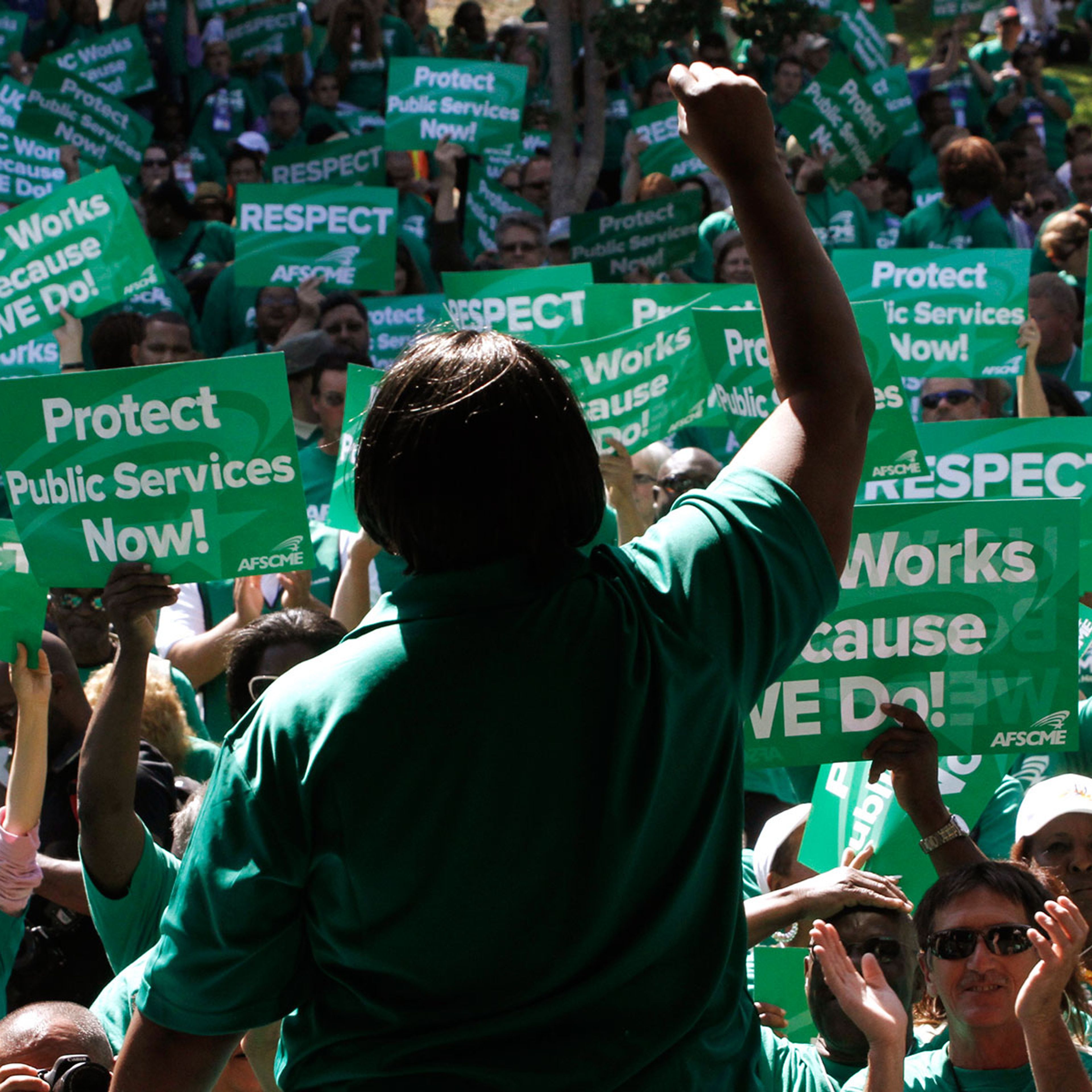
Big labor has never liked a fair fight, so it’s no surprise that with union membership flagging, union leaders have begun to push Congress to give them a major legislative boost in their efforts to recruit new members.
Instead of allowing workers to vote on unionization democratically through secret ballots, labor leaders and House Democrats are advocating legislation that would mandate what’s known as “card check,” a procedure in which workers must publicly declare either support or opposition to unionization — thereby exposing them to union-led peer pressure and intimidation.
That unions would favor such a baldly anti-democratic move speaks to their desperation in the face of quickly declining numbers. They can’t compete, so their response is to get congressional Democrats to change the rules. Democrats, all too aware that labor is a key source of both votes and financial support for their party, are only too happy to oblige.
Fortunately, the Bush administration isn’t buying it.
At a Wednesday morning speech delivered to the National Association of Manufacturers, Vice President Cheney announced that the president would veto card-check legislation if it reached his desk. “Our administration rejects any attempt to short-circuit the rights of workers. We will defend their right to vote yes or no by secret ballot and their right to fair bargaining,” Cheney said.
The announcement comes on the heels of renewed activity around the almost comically misnamed Employee Free Choice Act of 2007, Rep. George Miller’s (D., Calif.) mandatory card-check bill. The House Education and Labor Committee, which Miller chairs, signed off on the legislation last Wednesday, and House Democrats reportedly hope to quickly bring it to a vote. Last year, a version of the law garnered significant support but eventually failed in the House. With their newly acquired congressional majority, however, Democrats believe they now have the necessary support to pass the legislation.
The law has been the subject of much derision amongst conservatives and free-market advocates. “Labor law is already convoluted, and card check mandates would only make it worse,” said Ivan Osorio, a labor analyst at the Competitive Enterprise Institute (CEI). Osorio praised Cheney’s veto announcement, saying that the administration “may have recognized this as an opportunity to regain some support amongst his conservative base.”
Greg Mourad, director of legislation for the National Right to Work Foundation, was similarly supportive, saying, “I’m glad to hear that the administration plans to veto the Card Check Forced Unionism Bill.” He cautioned, however, that “it is still essential that Republicans and moderate Democrats in the Senate vote against it to make sure that the bill never gets to the President’s desk.”
National Association of Manufacturers President John Engler also expressed approval for Cheney’s statement during a question-and-answer session following the speech.
Labor leaders and House Democrats have touted the law as a way to prevent employees from being subject to employer intimidation, yet tales of bullying tactics by labor organizers are in no short supply. In written testimony to the House Education and Labor Committee, Mike Ivey, a materials handler for the Freightliner Custom Chassis Corporation, called his experience with card-check organizing “abusive,” and said that it created “a hostile work environment” by splitting employees into pro and anti-union camps. Ivey also wrote that workers were subjected to “badgering and pressure” if they declined to sign cards supporting unionization.
Similar stories are easy to find. In other written testimony, Kaiser Permanente employee Karen Mayhew reported being subjected to written and verbal attacks for declining to support unionization during a card-check drive. In an article written for Capital Research Center’s Labor Watch, CEI’s Osorio noted that unions employ tough tactics against employers as well, threatening boycotts and public smears if companies don’t accede to labor demands.
These problems have been exacerbated by the neutrality agreements between unions and employers that accompany card-check organizing drives. Neutrality agreements force employers to remain silent during union drives, and allow union organizers to repeatedly pester employees while at work. Card check works in the favor of labor unions because it opens up the gate to coercive tactics and tosses out worker rights to secret ballot votes, giving union organizers a clear — if decidedly undemocratic — advantage.
It’s no surprise that Democrats are so keen to pass such legislation. Union members are one of the party’s prime constituencies. With union membership in a perpetual slide, the party sees such legislation as a way to shore up both votes and financial support. With Cheney’s announcement, however, it’s likely that congressional Democrats will remain frustrated as one of their major bases of support continues to erode.
–Peter Suderman is managing editor of NRO.




Comments