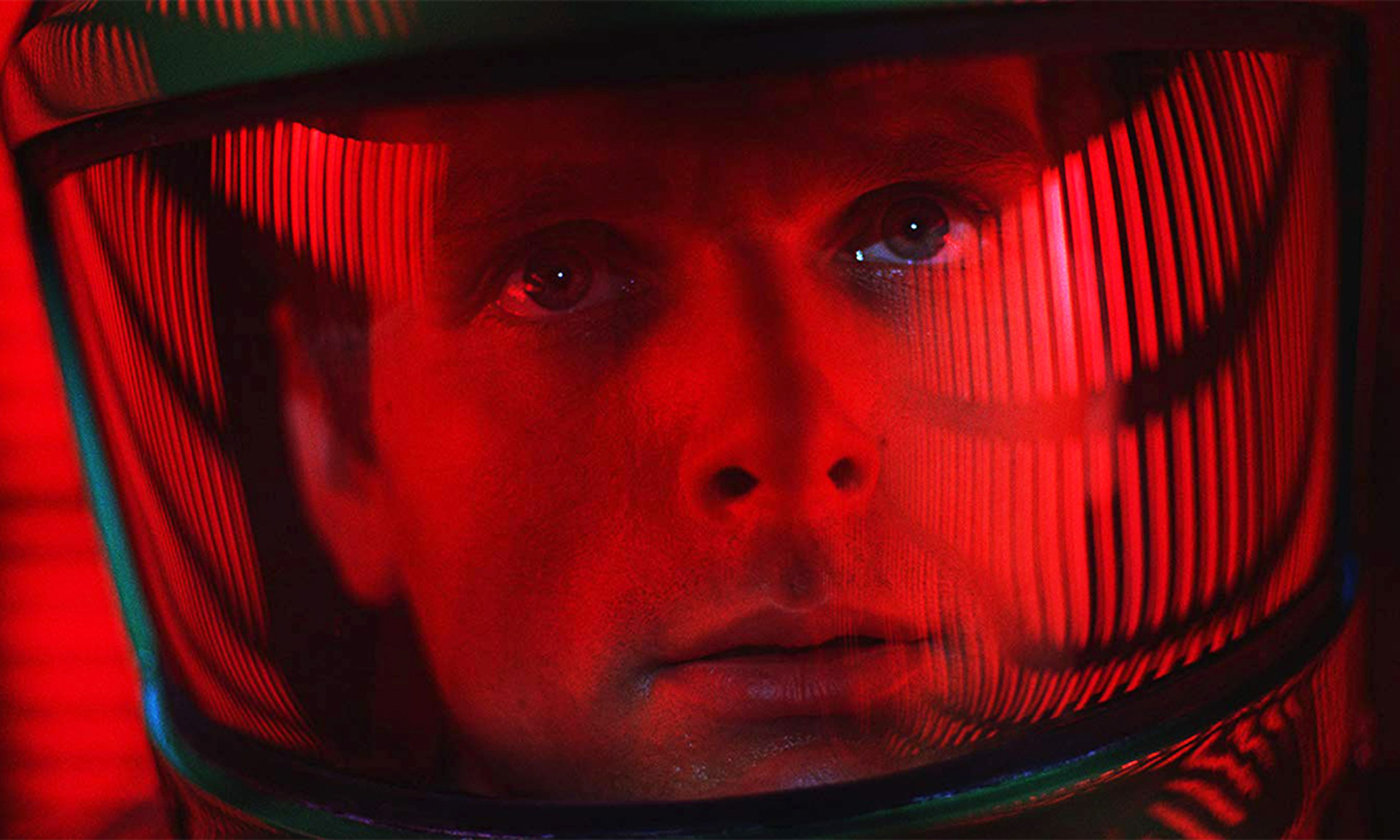
Earlier this year, Stanley Kubrick’s 2001: A Space Odyssey was reissued in a quadrangular IMAX format that stupidly ruined its original rectangular design, but most critics, and many film buffs, didn’t mind the difference. This state of consumer naïveté signifies the millennium’s disregard of history, including the moral and aesthetic basis of our cultural heritage.
Now, with the convenient resurgence of socialist, Communist, and Marxist sentiments in media, at universities, and among desperate politicians on the left, it is worth revisiting the year of Kubrick’s masterpiece to see how it anticipated today’s cultural upheaval and un-ignorable decline in the laughably pathetic cinema of 2018. As Marx understood, “history repeats itself, first as tragedy, then as farce.”
The movies of 1968 revived the medium’s past advances in genre, narrative structure, and social relevance. It was the beginning of a cinematic ferment that would explode during the 1970s, but 1968 movies complemented the political upheaval of the Vietnam years, women’s liberation, urban unrest, and the draft — subjects that would come back to haunt the millennium. Today, 1968’s memorable films accuse us, asking, “What have we learned?”
2001: A Space Odyssey. It wasn’t the best film that year, but its legend has overwhelmed its competition. Nothing less than an epic comedy on mankind’s folly from the Stone Age to the stoned age, it used the decade’s space exploration to laugh at American hubris. Now, First Man frowns at American exceptionalism, turning executive producer (and Kubrick devotee) Steven Spielberg’s former optimistic amazement into grim, anti-American, anti-optimistic cynicism. Aspiration is zapped. No wonder it flopped.
Weekend. Jean-Luc Godard’s adversarial prophecy of revolution and “the end of cinema” proved all too prescient, but it remains a thrill to watch. This cavalcade of human folly uncovers still-recognizable social compulsions from sex to materialism, climaxing in an extended single-shot traffic jam that summarizes the modern condition. Still, it’s the best film of 1968.
La Chinoise. Godard worked fast, and U.S. distributors were slow to import this satire on Western youth’s romance with revolution, but the subject is evergreen — and its bright pop-art primary colors are stunning. Boys and girls in a Parisian Maoist cell confuse fervor with righteousness. Their loss of interpersonal humanity becomes sad comedy with tragic social implications. Everyone can still learn from this, the movie that nobody ever showed to gun-control puppet David Hogg.
Shame. Ingmar Bergman prophesied war on Western shores. The disintegration of Max von Sydow and Liv Ullmann’s upper-middle-class marriage, in Sven Nykvist’s crystalline black and white, was analogous to the moral breakdown of global warfare.
Romeo & Juliet. At last a teenage version of Shakespeare. Franco Zeffirelli transcended marketplace calculation with timely genius, romance, and beauty. The tragedy of youth being reduced to political chattel. A movie no one ever showed Antifa.
China Is Near. Marco Bellocchio confronts the dangerous appeal of radical politics and finds its roots in the emotional disintegration of a middle-class Italian family where neurosis is passed on ahead of principal.
Belle de Jour. Luis Buñuel understood how the Left projects its fears and shame onto its adversary. Catherine Deneuve’s pervy bourgeoise prefigures the idiocy of #MeToo gals. The genius erotic satire laid waste to feminist pretense.
Les Carabiniers. Godard, again, summarizes the waste of war as civilization’s collapse. Armed revolutionaries misinterpret cultural artifacts (the great sequence in which postcards condense human history) and then recall their deepest personal yearnings. Is it too late?
Planet of the Apes. Upside-down Darwin in which Charlton Heston’s space exploration confronted modern social hypocrisy. How the inner beast threatens civilized man.
Oliver! A cheerful musical adaptation of Charles Dickens and the year’s Oscar winner. Director Carol Reed shows how class difference always hides common humanity until goodwill triumphs.
We Still Kill the Old Way. Elio Petri understands the difficulty of accepting private, academic, and religious rationales for social discord. Gian Maria Volontè, possibly Italy’s greatest film actor, conveyed the constant state of shock.
Pretty Poison. The boy-meets-girl clash of attraction and alienation that Millennials pretend is over. Youth icons Anthony Perkins and Tuesday Weld personify the eternal “Me, Too!” cry of both sexes.
Night of the Living Dead. George Romero perceived racial unrest in zombie-movie terms, anticipating the “postracial” discomfort that defined Obama-era insecurities.
The Scalphunters. Burt Lancaster and Ossie Davis’s irresistible buddy-movie Western satirized the economics of slavery and should have won Davis an Oscar.
Targets. Peter Bogdanovich’s compelling assassination drama examining the lone-wolf phenomenon is still timely.
Uptight. As an act of social compassion, Jules Dassin remade John Ford’s The Informer into a black American folk tale, tense with urban pressure.
Greetings. Brian De Palma’s comedy about draft-dodging was also full of counterculture paranoia; both would change American patriotism forever.
It’s worth recalling that the New York Times’ 1968 10 Best List noted only two of these films. Its transitory film critic Renata Adler affirmed the paper’s intellectual preferences in such films as Faces, Rosemary’s Baby, The Bride Wore Black, A Report on the Party and the Guests and The Fifth Horseman Is Fear — the same agnostic, leftist political prejudices of today’s mainstream media.
The best films of 1968 survive the test of time, and, 50 years later, they all test our own current movies that repeat the same serious concerns, but this time as farce.





Comments