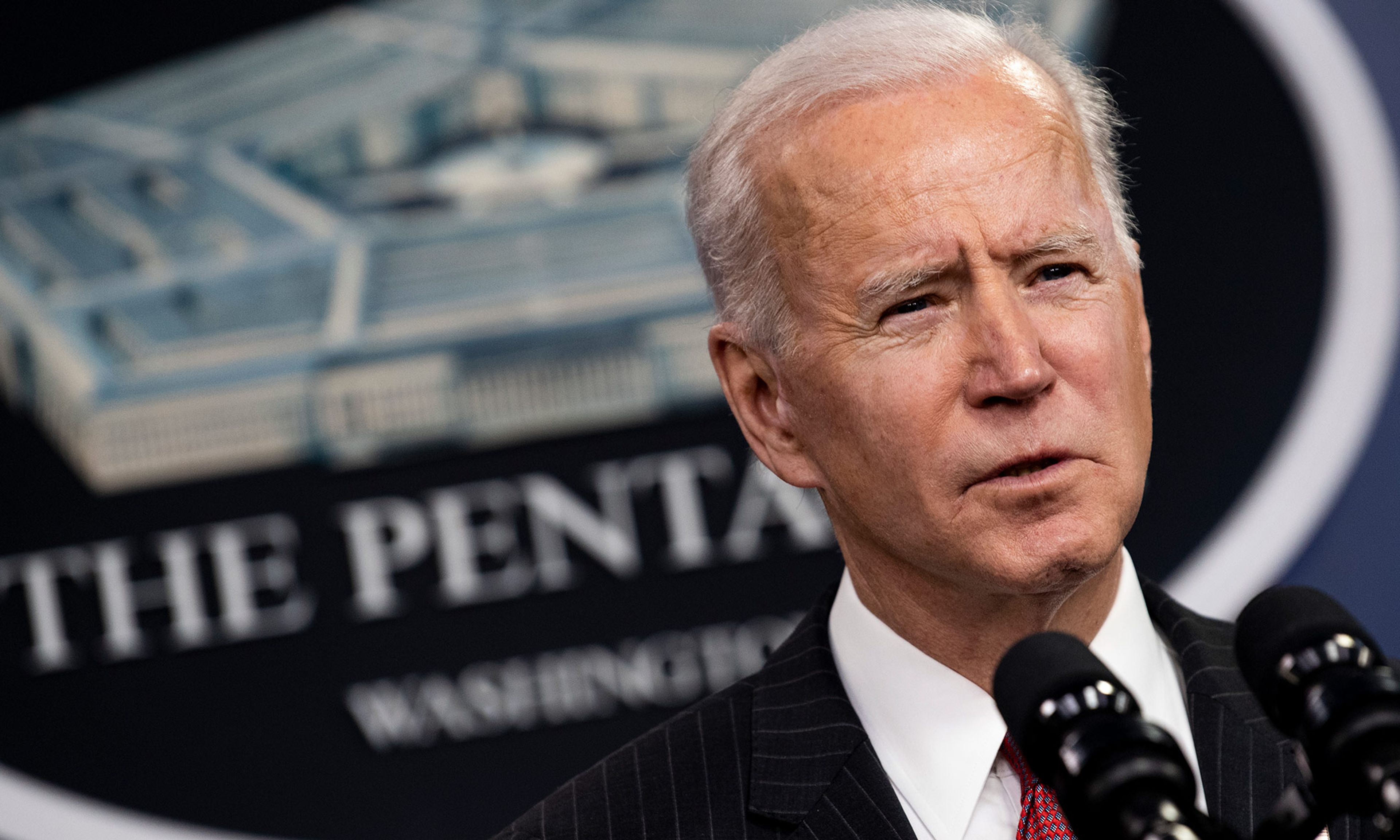
President Biden’s airstrike against a pro-Iran militia base in Syria on February 26 may do little to change the balance of power in the Middle East. A few bombs, which allegedly killed or wounded one or two fighters, did little to deter Tehran’s low-intensity campaign against the U.S. military in Iraq. Nevertheless, the Biden administration hopes that its light tap on militant wrists that will restore the Iran nuclear deal and usher in a new understanding with the mullahs over the Middle East.
Biden’s strike reflects similar ambitions to reset the constitutional order at home. Like the strike’s strategic effects, however, it will change little in the real world. In the wake of the attacks, the new president last Friday agreed to demands — raised over the years by both progressives and libertarians (including several prominent National Review editors) — to repeal the 2001 and 2002 congressional authorizations for the use of military force (AUMFs) used to justify the strike. Biden never raised a public complaint about these AUMFs when the Obama administration invoked them to defend its interventions in the Syrian civil war or its sweeping drone-strike campaign against terrorists. But now that he is in charge, apparently he seeks to return to his roots as a critic of presidential power.





Comments